Habitat
 Depth
 Group
 Role
WHAT DOES IT LOOK LIKE?
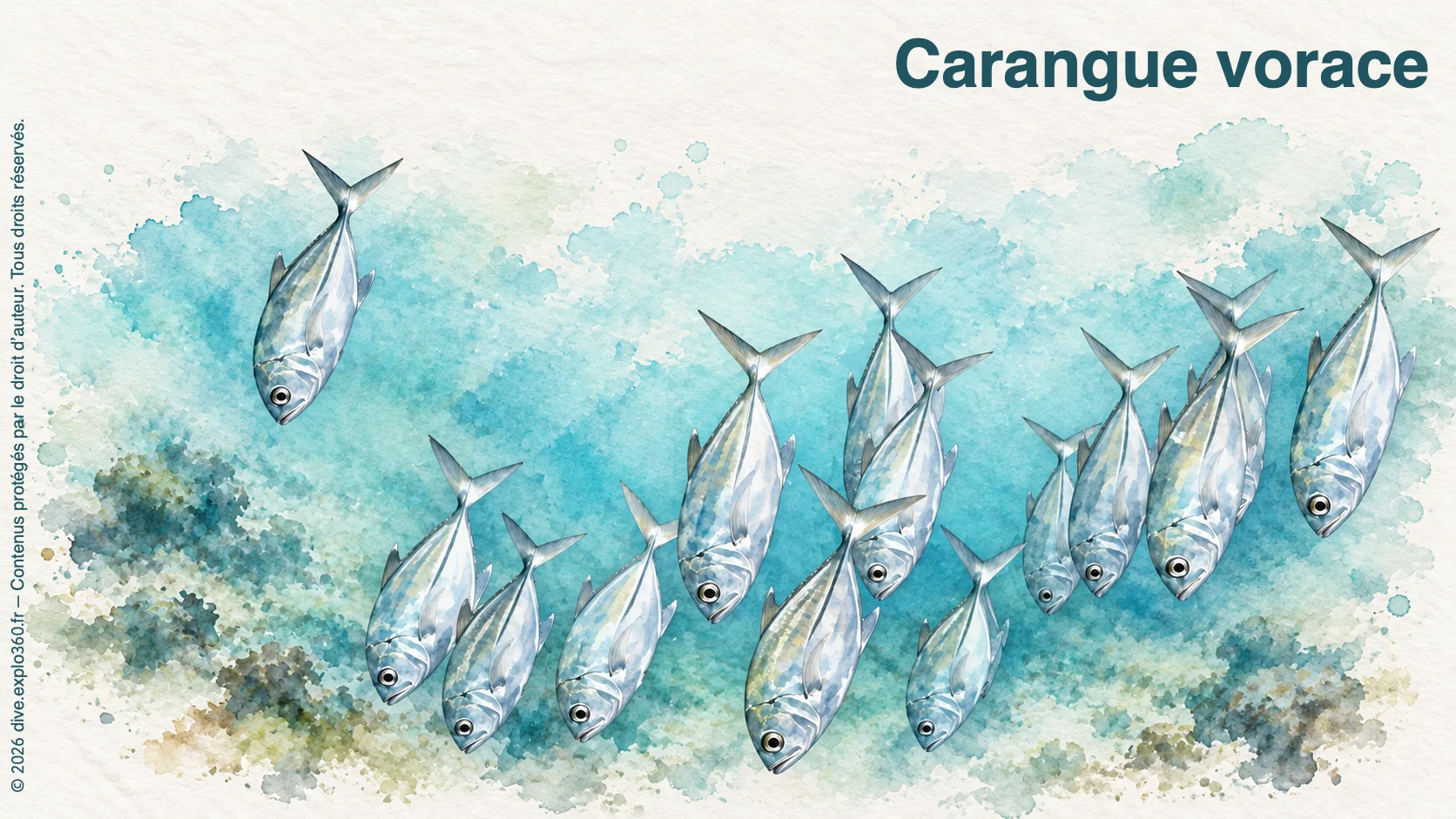
The compressed body, large eyes and long pectoral fins accompany a deeply forked tail. A small dark spot marks the gill cover; juveniles have cross-bars. A common length of 60 cm is measured to the tail fork, rather than to the farthest tail tip.WHERE DOES IT LIVE?
Adults are associated with coral reefs, while juveniles also occupy sandy bays, mangrove estuaries and some coastal creeks. These movements connect different shore habitats. The Maldives are an observation site within a much wider natural range.WHAT DOES IT EAT?
Prey searching is mainly crepuscular and nocturnal. Fishes, crustaceans and cephalopods form its documented diet. Nearby snappers in the video are not sufficient evidence for a feeding link between those species: no capture is shown.GO FURTHER WITH AMIGANSEAU
Unlock the full profile
Deepen your knowledge with the exclusive chapters and interactive resources included in an AMIGANSEAU licence.
- HOW DOES IT REPRODUCE?
- OUR OBSERVATIONS
Also included in the full profile
- Advanced navigation between description, ecological context, observations and behaviour
- Interactive food chain to explore the species’ feeding relationships
- Infographic and illustrated summary profile