


 Habitat
 Depth
 Group
 Role
 Size
 Good to know
WHAT DOES IT LOOK LIKE?
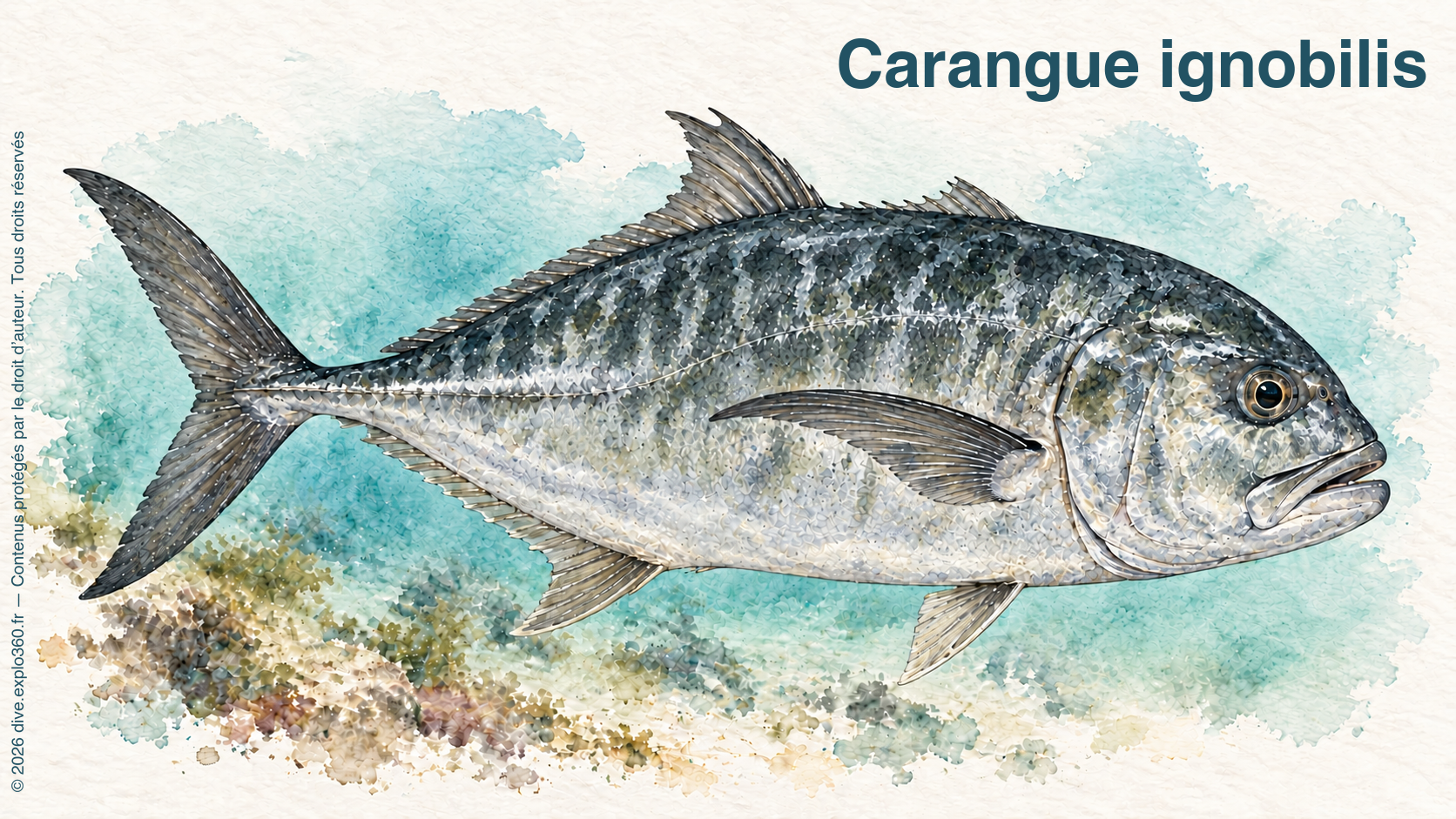
Young bigeye trevally (Caranx sexfasciatus) have bars across their sides that are less distinct in adults. The body is flattened from side to side, with a dark back and silvery sides.
Its large eyes and long, curved pectoral fins are distinctive. A small dark spot marks the operculum, the bony plate covering the gills just behind the eye. Its tail fin is deeply forked.
WHERE DOES IT LIVE?
Adults are associated with coral reefs, while juveniles (young animals) also occupy sandy bays, mangrove estuaries and some coastal creeks. These movements connect different shore habitats. The Maldives are an observation site within a much wider natural range.
WHAT DOES IT EAT?
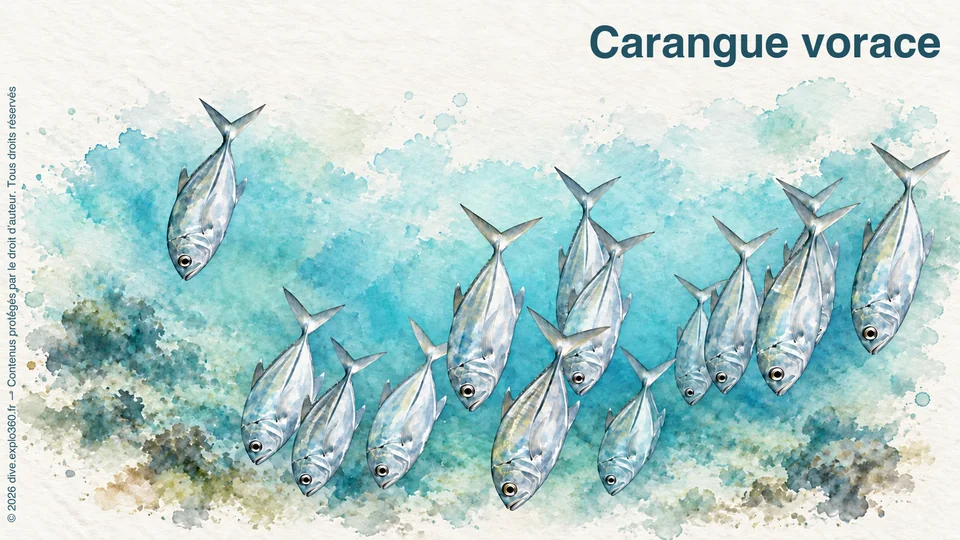
During the day, bigeye trevally may form large schools near reefs without actively hunting. Feeding intensifies at dusk and during the night, when the schools disperse. They mainly capture fish, crustaceans and cephalopods, including squid.
GO FURTHER WITH AMIGANSEAU
Unlock the full profile
Deepen your knowledge with the exclusive chapters and interactive resources included in an AMIGANSEAU licence.
- HOW DOES IT REPRODUCE?
- OUR OBSERVATIONS
- ARTICLE
Also included in the full profile
- Advanced navigation between description, ecological context, observations and behaviour
- Interactive food chain to explore the species’ feeding relationships
- Infographic and illustrated summary profile
 Understand the species