Habitat
 Depth
 Group
 Role
WHAT DOES IT LOOK LIKE?
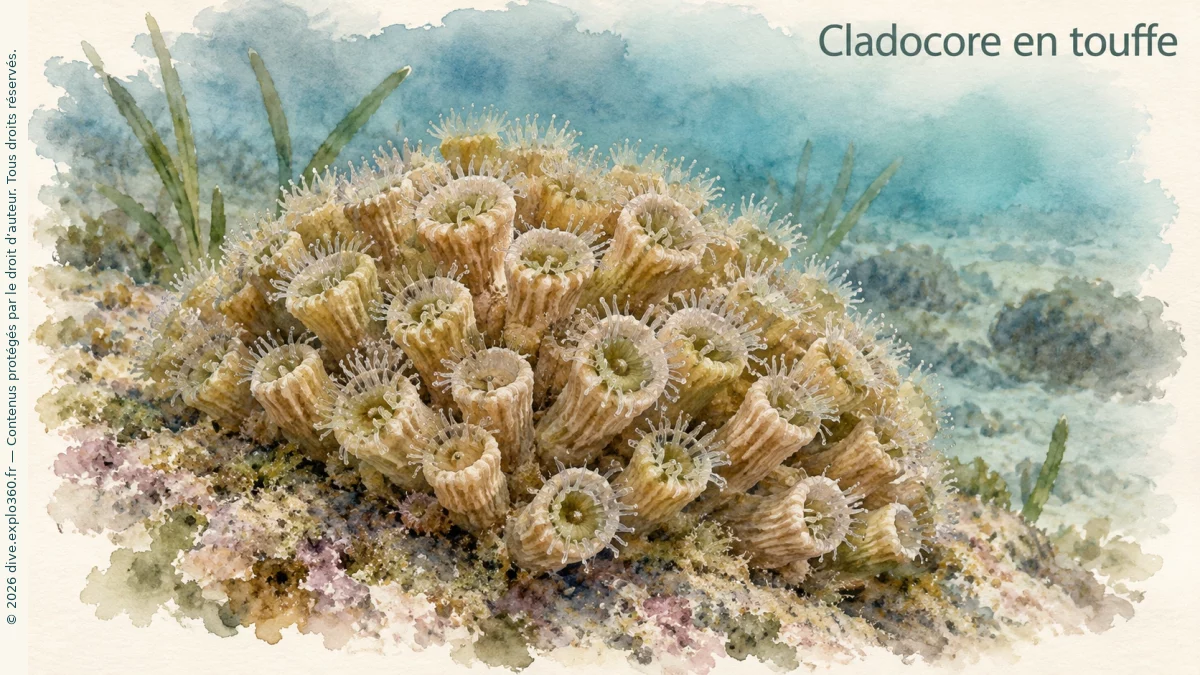
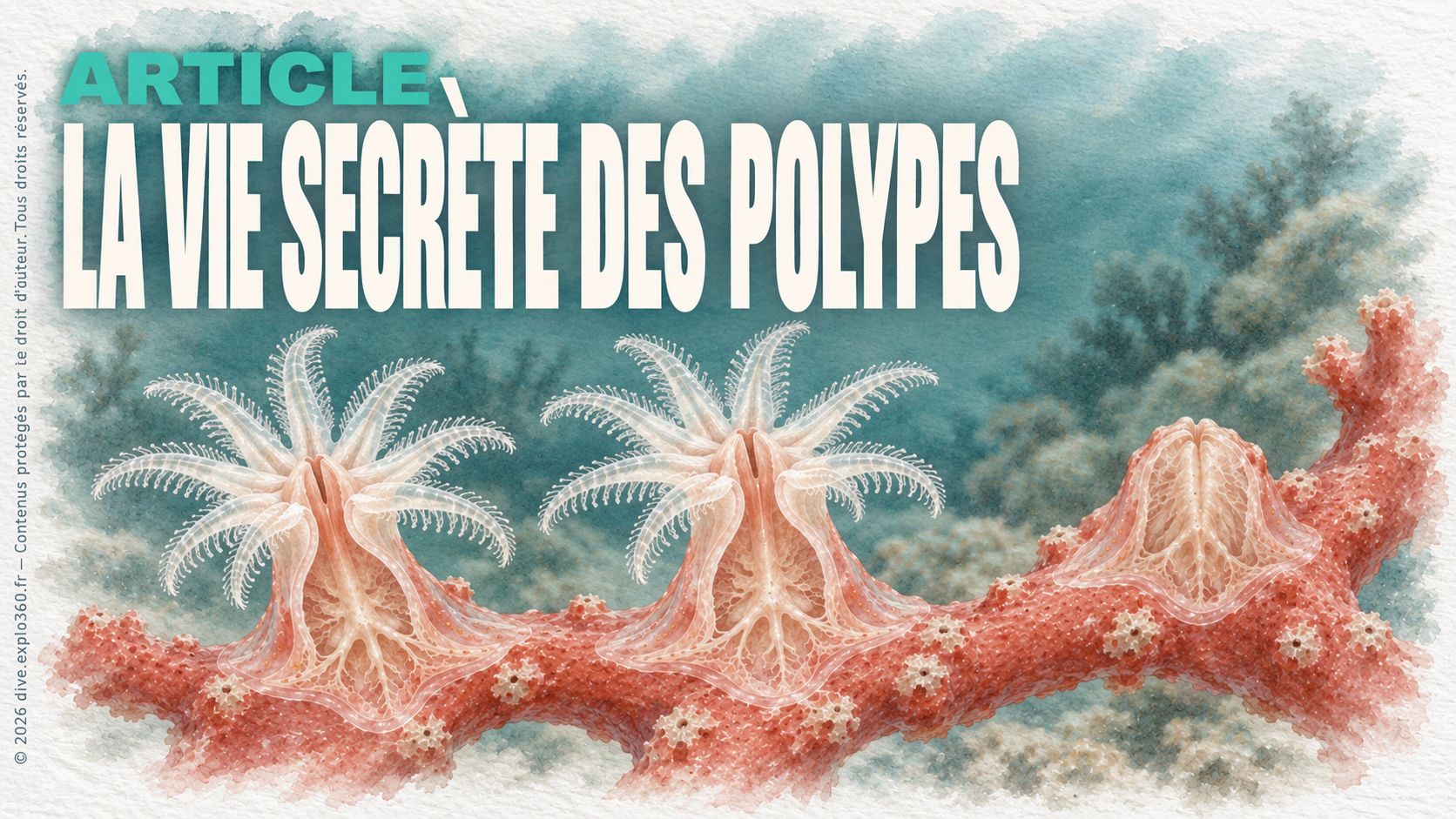
The Mediterranean pillow coral is a colonial coral with small individual tubular corallites. Their phaceloid arrangement produces more or less compact tufts or cushions. Polyps may extend tentacles from the openings. Beige and brown shades reflect tissues and associated microorganisms. The tubes are generally under five millimetres across; this measures the limestone units, not the highly variable span of the entire colony.
WHERE DOES IT LIVE?
The coral occupies illuminated Mediterranean settings on rock and other hard surfaces, sometimes among seagrass. Reported depth intervals depend on locality and conditions. Water clarity, surface orientation and exposure to water movement complement depth. Calling it Mediterranean coral refers here to a documented biological presence, not to an assumption that every other coral form in the sea belongs to this species.
WHAT DOES IT EAT?
Feeding combines heterotrophy, through capture of small planktonic resources, with contributions from photosynthetic microorganisms in the tissues. Symbiotic algae use light and transfer compounds to the animal partner. This does not turn the polyp into a plant or represent grazing on external algae. Limestone construction adds a structural dimension to predation: colonies contribute to the physical organisation of the surfaces they occupy.
GO FURTHER WITH AMIGANSEAU
Unlock the full profile
Deepen your knowledge with the exclusive chapters and interactive resources included in an AMIGANSEAU licence.
- HOW DOES IT REPRODUCE?
- OUR OBSERVATIONS
- ARTICLE
Also included in the full profile
- Advanced navigation between description, ecological context, observations and behaviour
- Interactive food chain to explore the species’ feeding relationships