


 Habitat
 Depth
 Group
 Role
 Average size
 Good to know
WHAT DOES IT LOOK LIKE?
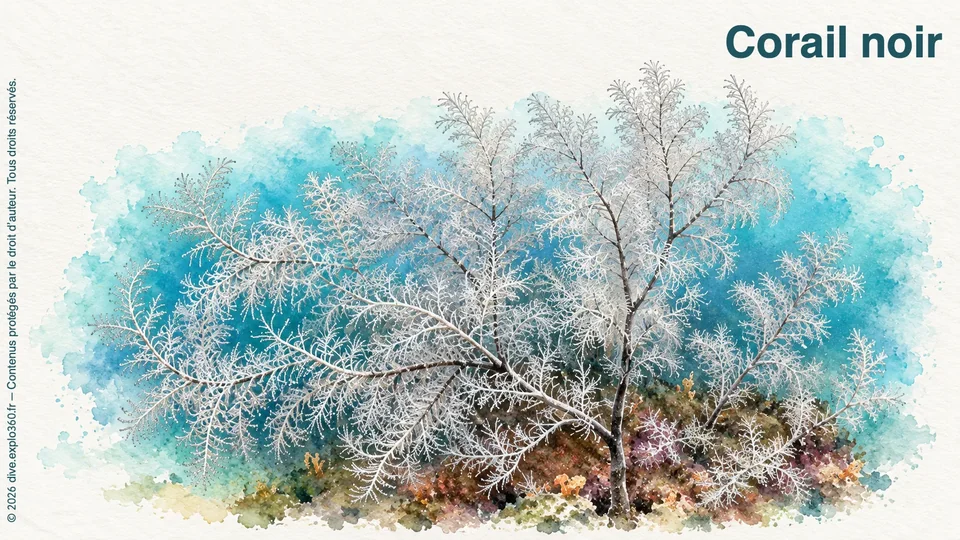
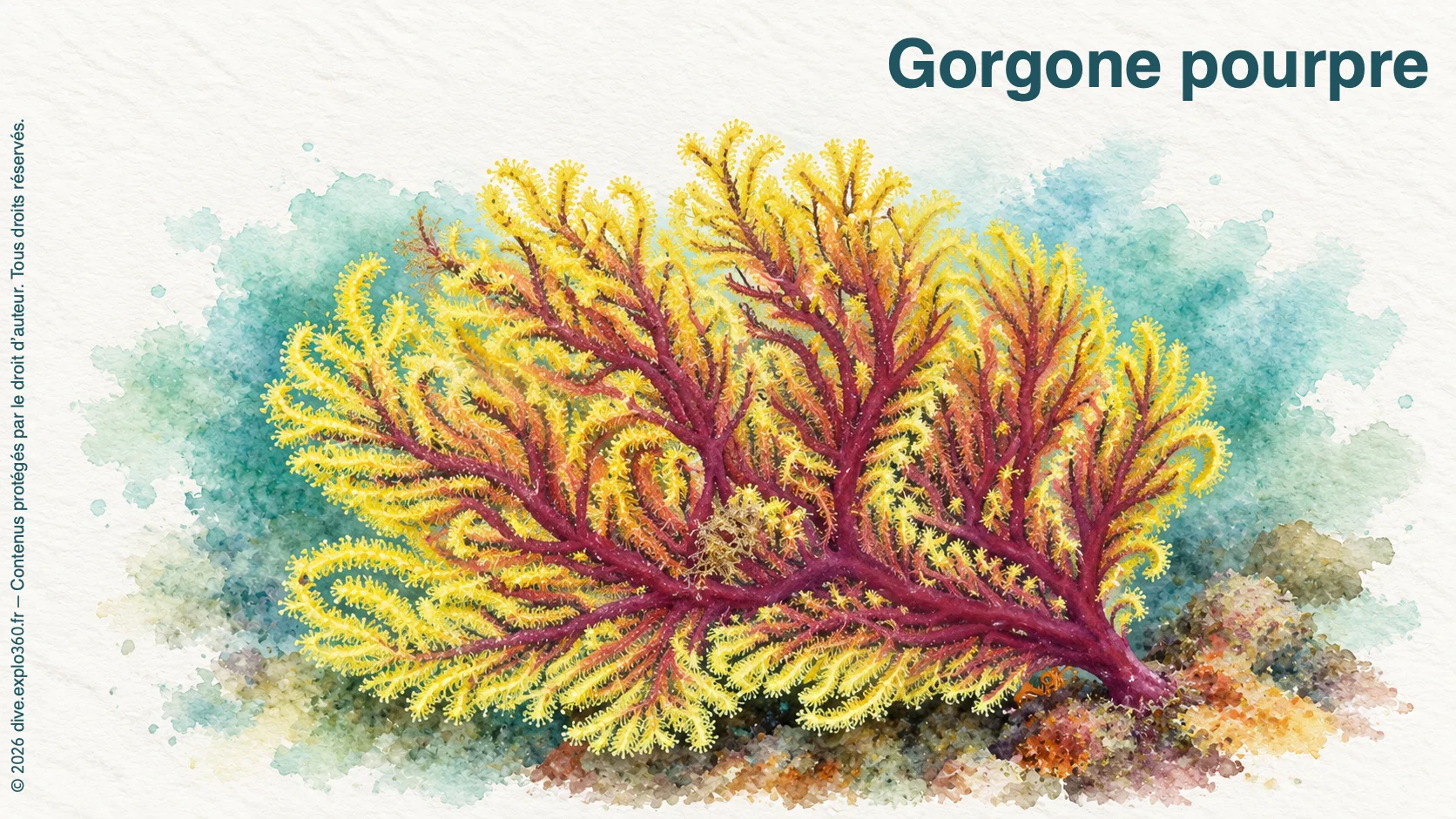
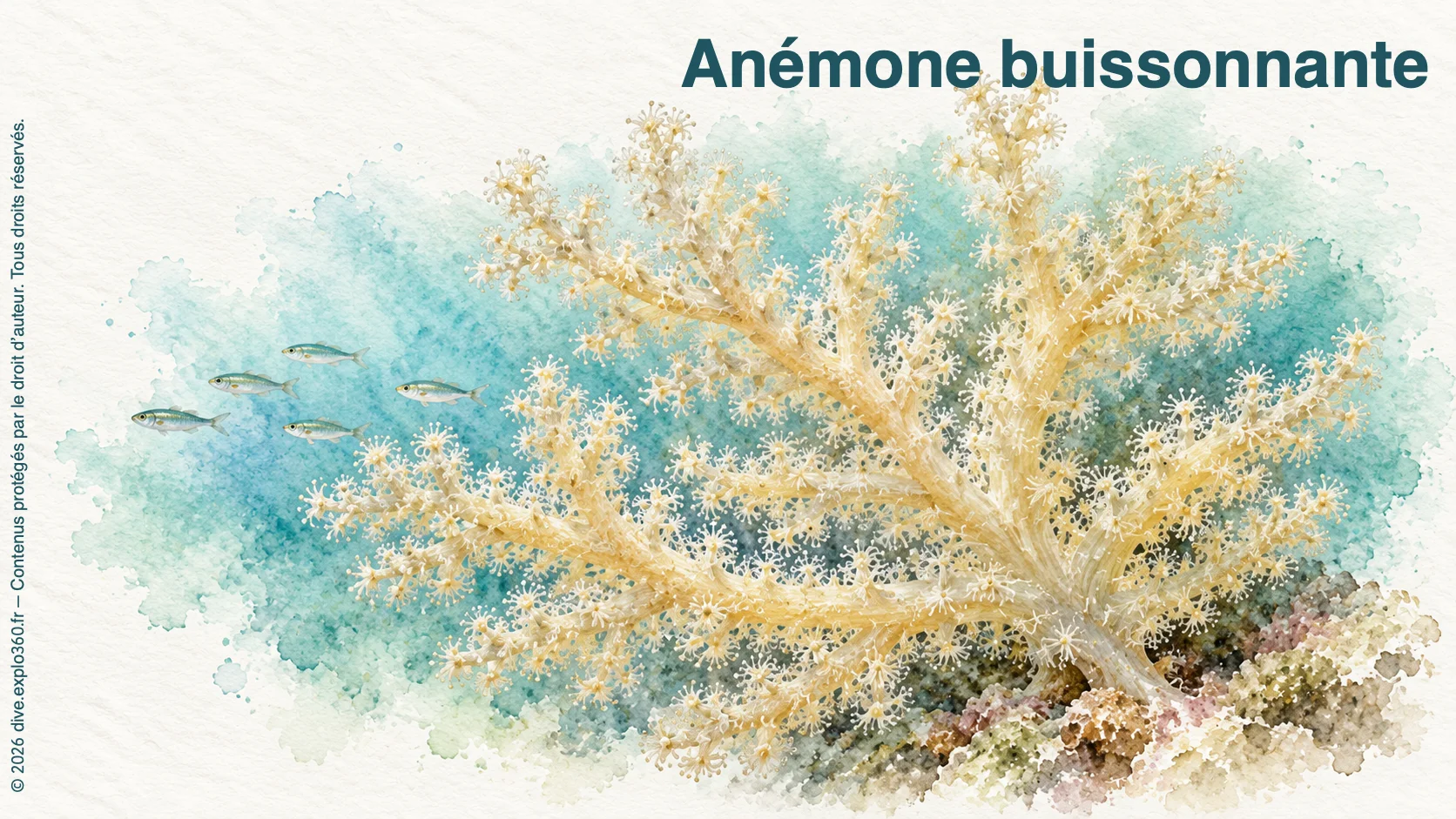
Black coral (Antipathella subpinnata) often appears as a white, fluffy bush. Its polyps, the tiny animals living together in the colony, line long, thin, flexible branches.
The dense branching can exceed a metre. The polyps give the branches a pale appearance that contrasts with the coral’s name.
WHERE DOES IT LIVE?
Black coral lives attached to hard substrates, mainly rocky walls or features exposed to currents. It is most often found at depth, generally between several tens and a few hundred metres.
It occurs in dimly lit areas. Under certain conditions, it can be seen at shallower depths in shaded areas.
WHAT DOES IT EAT?
Black coral branches carry numerous small polyps whose tentacles intercept planktonic animals. Currents renew prey within reach, and stinging cells help capture them. Each food item reaches a polyp’s mouth. This is passive suspension feeding without an internal pump comparable to a sponge’s.
GO FURTHER WITH AMIGANSEAU
Unlock the full profile
Deepen your knowledge with the exclusive chapters and interactive resources included in an AMIGANSEAU licence.
- HOW DOES IT REPRODUCE?
- OUR OBSERVATIONS
- ARTICLE
Also included in the full profile
- Advanced navigation between description, ecological context, observations and behaviour
- Interactive food chain to explore the species’ feeding relationships
- Infographic and illustrated summary profile
 Understand the species