Partners and information

Contact us

Verification code

Sponge Crab

Distribution : Mediterranean · Atlantic Ocean

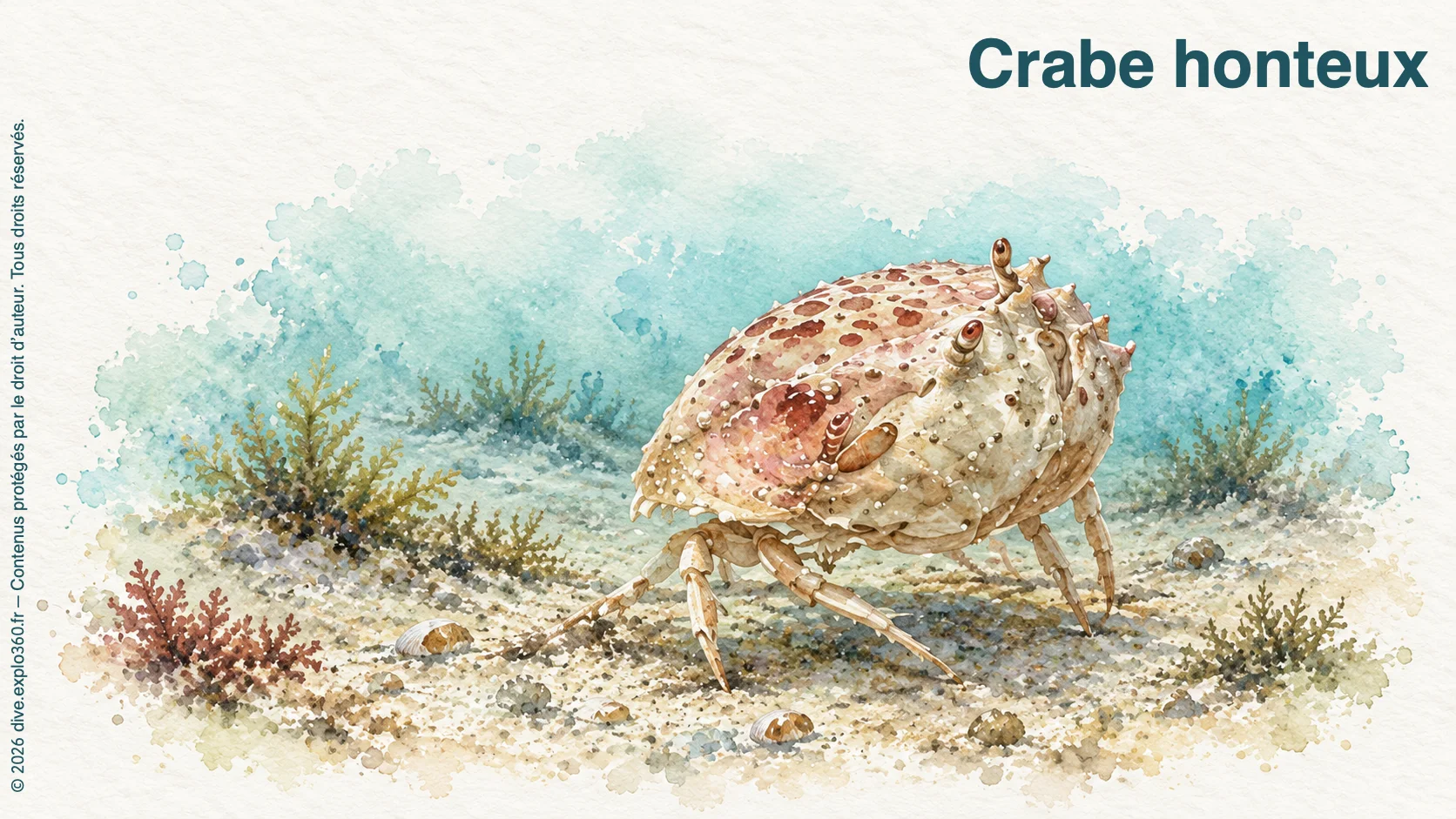
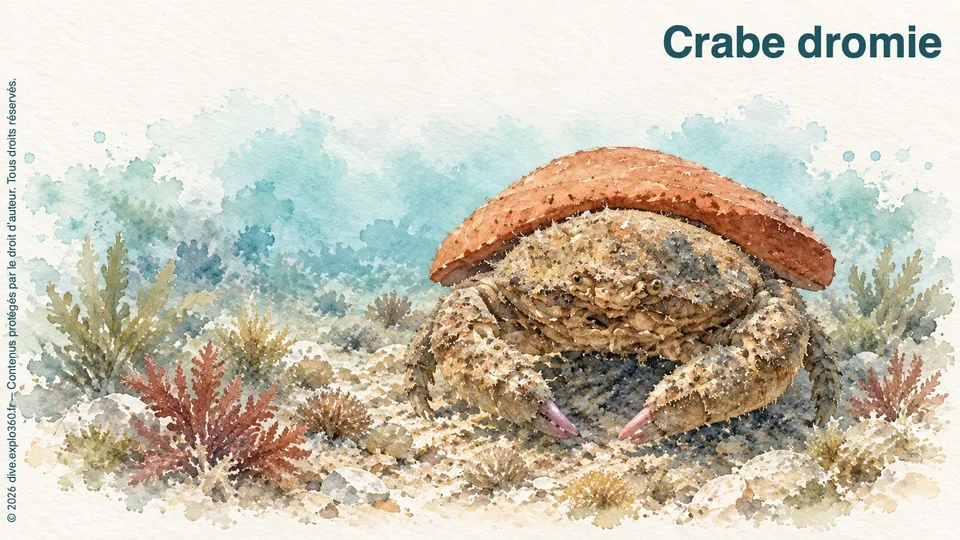
“Basque beret crab”, “wool crab”, “sleeping crab”: it is hard to believe all these names describe the same animal. People on the coast used familiar images to talk about the sponge crab. Its hairy body and the sponge it carries inspired these unusual names.

Photos being acquired · Your photos here

Habitat of Sponge Crab Habitat
Sand, Detrital bottom, Maerl, Rocky habitat
Depth range of Sponge Crab Depth
5-100 m
Biological group of Sponge Crab Group
Ecological role of Sponge Crab Role
Predator

Average size

10 cm

WHAT DOES IT LOOK LIKE?

The smooth pink tips of its large claws catch the eye: the rest of the sponge crab is covered in short brown to purplish hairs. Its shell forms a rounded dome.

A sponge or another organism often covers the back. Two pairs of small legs, raised at the rear of the body, hold this covering in place and change the crab’s outline.

GO FURTHER WITH AMIGANSEAU

Unlock the full profile

Deepen your knowledge with the exclusive chapters and interactive resources included in an AMIGANSEAU licence.

Choose my licence
  • WHERE DOES IT LIVE?
  • WHAT DOES IT EAT?
  • HOW DOES IT REPRODUCE?
  • OUR OBSERVATIONS

Also included in the full profile

  • Advanced navigation between description, ecological context, observations and behaviour
  • Interactive food chain to explore the species’ feeding relationships
  • Infographic and illustrated summary profile
An active licence gives access to enriched profiles and AMIGANSEAU exploration tools.
Sponge Crab

Understand the species

What is this species’ ecological role?

AMIGANSEAU Explorer Premium

Access enriched species profiles with advanced content (audio, infographics and detailed articles).

Explore all species easily through a single interface.

Enjoy a smooth, fast learning experience suited to every level.

🔒 The full profile is available with a paid subscription only.

Discover licences

POURSUIVRE L’EXPLORATION

Articles related to this species

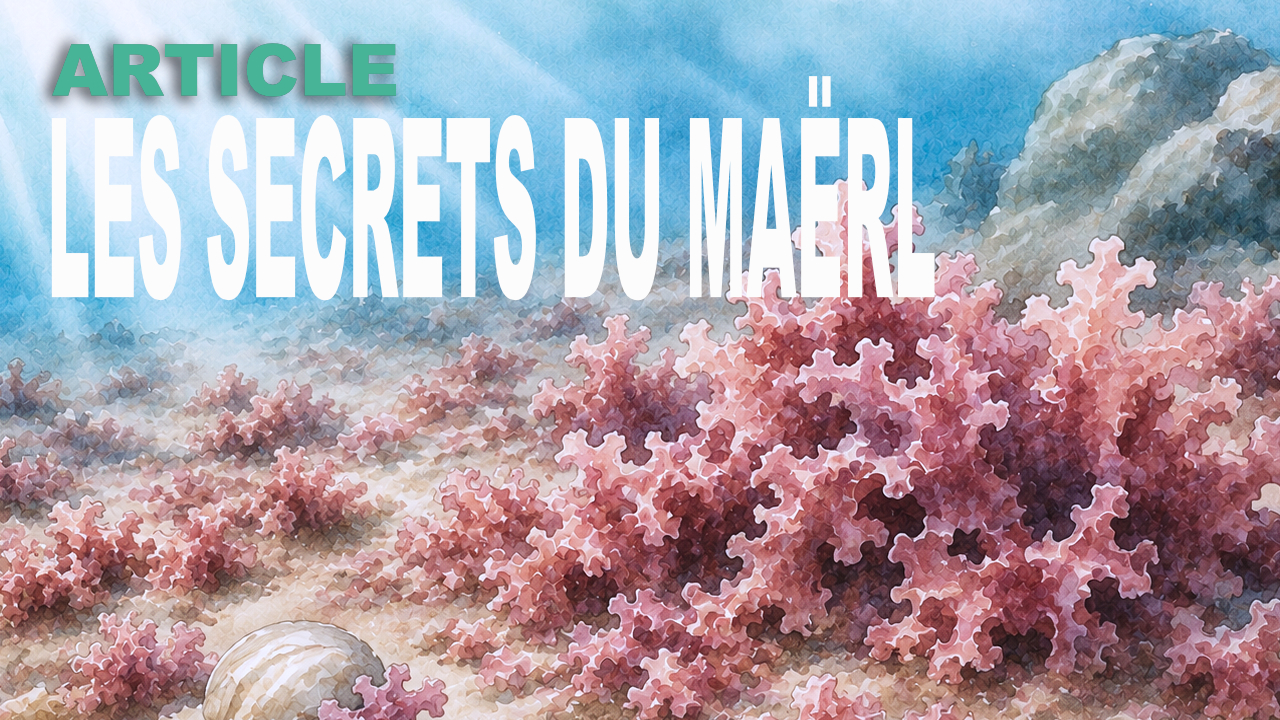
ArticleTHE SECRETS OF MAERLRead the article →