Habitat
 Depth
 Group
 Role
WHAT DOES IT LOOK LIKE?
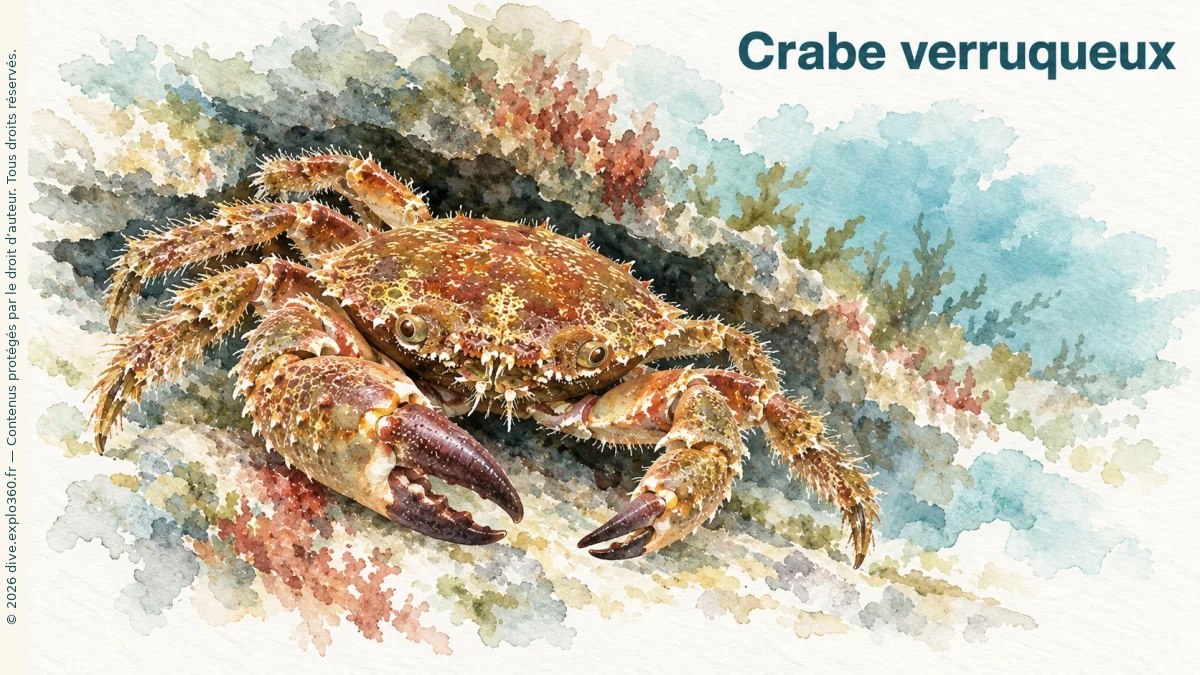
This crab has a broad, flattened shell with a rather angular outline, many small bumps and spines along the front edges. A central notch marks the front. Colour is brown to reddish or greenish with yellowish patches. Large individuals can have shells around seven to nine centimetres wide.
The two claws are massive and unequal, ending in dark fingers. Numerous setae, fine hair-like projections, cover the legs. Surface relief and proportions together are more useful for recognition than colour alone.
WHERE DOES IT LIVE?
It uses algae-covered rocky coasts, especially fissures and cavities near the surface, generally in the first few metres. Some large animals occur deeper. Activity is mainly at dusk or night.
The species occurs in the Mediterranean and north-eastern Atlantic. On Atlantic coasts it can remain exposed for several hours at low tide under the conditions of its coastal refuges.
WHAT DOES IT EAT?
It eats living prey, dead animals and other foods. Strong claws allow it to process shelled molluscs in particular. Mussels and limpets appear in studies of its diet.
There is nevertheless no single meal shared by every individual. Available resources, crab size and claw condition can influence accessible foods and how they are used.
GO FURTHER WITH AMIGANSEAU
Unlock the full profile
Deepen your knowledge with the exclusive chapters and interactive resources included in an AMIGANSEAU licence.
- HOW DOES IT REPRODUCE?
- OUR OBSERVATIONS
- ARTICLE
Also included in the full profile
- Advanced navigation between description, ecological context, observations and behaviour
- Interactive food chain to explore the species’ feeding relationships