Habitat
 Depth
 Group
 Role
 Average size
WHAT DOES IT LOOK LIKE?
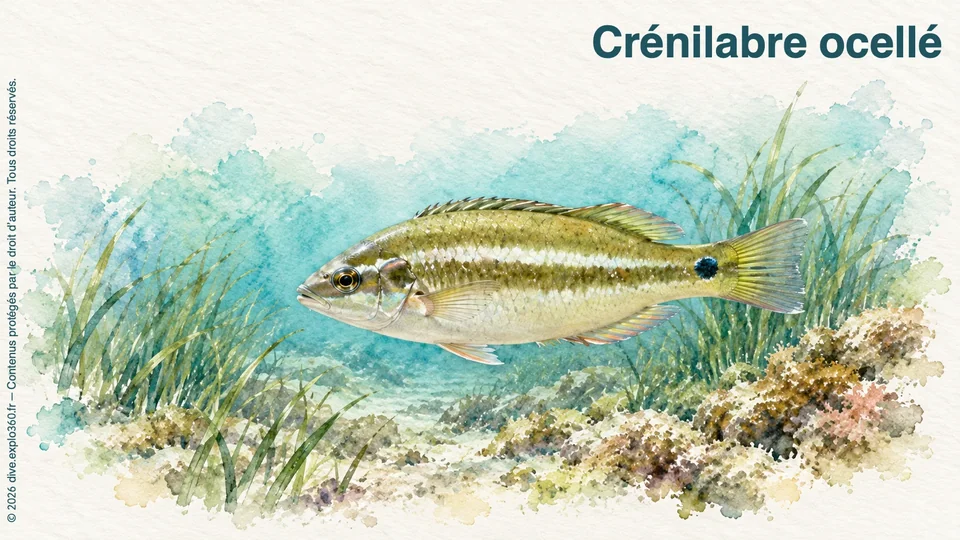
The ocellated wrasse (Symphodus ocellatus) has a brownish-green spot with a red ring on its cheek. This eyespot, or ocellus, sits on the operculum, the plate that covers the gills. It is more brightly coloured in males.
The rest of the colouring is not always as striking as this mark: the small, elongated body is often greenish or brown, sometimes orange. During the breeding season, male colours brighten and blue lines appear on the head and around the eye-spot.
WHERE DOES IT LIVE?
It moves close to the seabed in Posidonia seagrass beds, algal fields and shallow rocky areas. The best observation sites combine vegetation and varied underwater terrain.
WHAT DOES IT EAT?
The ocellated wrasse feeds on small crustaceans, marine worms and molluscs. It searches for them on rocks, among algae and in small crevices on the seabed. It grasps prey with its mouth, often making quick head movements. Small animals may remain hidden among plants or stones until the fish catches them.
GO FURTHER WITH AMIGANSEAU
Unlock the full profile
Deepen your knowledge with the exclusive chapters and interactive resources included in an AMIGANSEAU licence.
- HOW DOES IT REPRODUCE?
- OUR OBSERVATIONS
- ARTICLE
Also included in the full profile
- Advanced navigation between description, ecological context, observations and behaviour
- Interactive food chain to explore the species’ feeding relationships
- Infographic and illustrated summary profile
 Understand the species