


 Habitat
 Depth
 Group
 Role
 Average size
WHAT DOES IT LOOK LIKE?
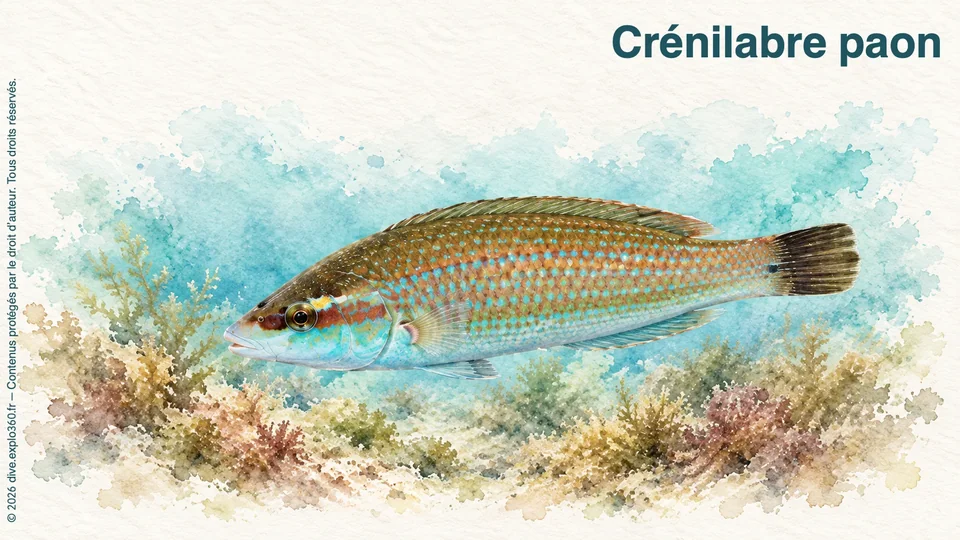
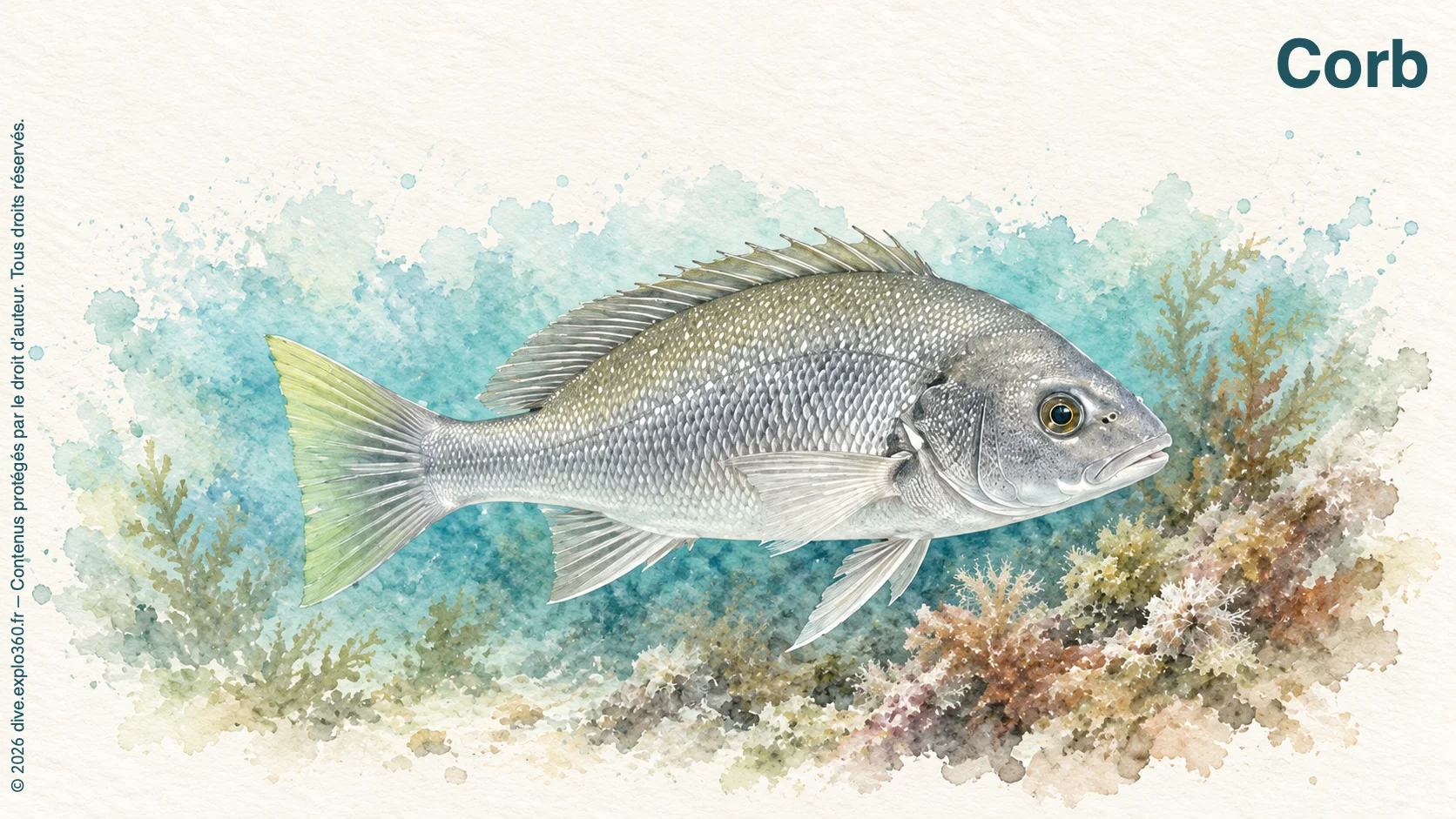
The peacock wrasse (Symphodus tinca) has fleshy lips and a long, bulky body. Males and females have strikingly different colour patterns.
Against the male’s greenish yellow background, red and blue markings accompany three bands of variable contrast. Females show three dark brown bands against greyish brown colouring. Male colours intensify during breeding, while the robust outline remains the same.
WHERE DOES IT LIVE?
It mainly lives in shallow waters, often between the surface and around thirty metres. It is found on algae-covered rocks, in Posidonia seagrass beds and on mixed seabeds, where it has many hiding places.
WHAT DOES IT EAT?
The peacock wrasse feeds on small animals it searches for on rocks and among algae. These include marine worms, crustaceans, shelled molluscs and small sea urchins. It explores seabed surfaces and grasps prey with its mouth, sometimes dislodging animals from their hiding places.
GO FURTHER WITH AMIGANSEAU
Unlock the full profile
Deepen your knowledge with the exclusive chapters and interactive resources included in an AMIGANSEAU licence.
- HOW DOES IT REPRODUCE?
- OUR OBSERVATIONS
- ARTICLE
Also included in the full profile
- Advanced navigation between description, ecological context, observations and behaviour
- Interactive food chain to explore the species’ feeding relationships
- Infographic and illustrated summary profile
- Additional photographic observations
 Understand the species