


 Habitat
 Depth
 Group
 Role
 Average size
WHAT DOES IT LOOK LIKE?
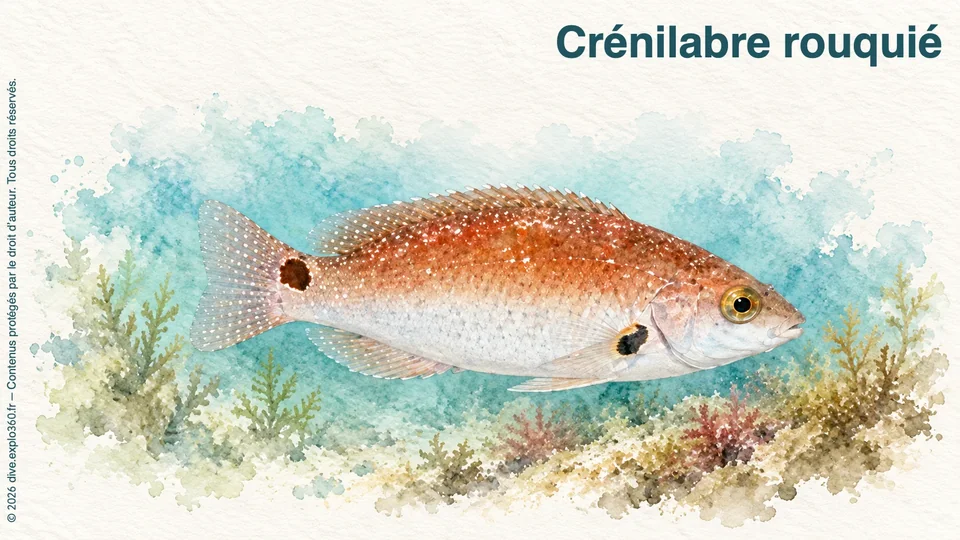
A small, round black spot stands out high on the orange-brown body of the goldsinny wrasse (Ctenolabrus rupestris), just ahead of its rounded tail fin. Some individuals have a second spot at the front of the dorsal fin.
The snout and back may have a reddish tinge, while the belly remains white. Yellow-orange lines alternate with fine, sometimes faint white lines along the sides. Together they form the outline of a small, elongated fish in warm colours.
WHERE DOES IT LIVE?
It is mainly found in algae-rich rocky areas, but also in seagrass beds. It mostly lives in shallow water, generally between the surface and around thirty metres, although some individuals can be found deeper.
WHAT DOES IT EAT?
The goldsinny wrasse searches for small animals among seaweed and on rocks. It eats marine worms, crustaceans and molluscs. It may also catch larvae and very young fish, as well as bryozoans, tiny animals that form colonies attached to rocks or seaweed. It picks up prey with its mouth while exploring small hiding places on the seabed.
GO FURTHER WITH AMIGANSEAU
Unlock the full profile
Deepen your knowledge with the exclusive chapters and interactive resources included in an AMIGANSEAU licence.
- HOW DOES IT REPRODUCE?
- OUR OBSERVATIONS
- ARTICLE
Also included in the full profile
- Advanced navigation between description, ecological context, observations and behaviour
- Interactive food chain to explore the species’ feeding relationships
- Infographic and illustrated summary profile
 Understand the species