


 Habitat
 Depth
 Group
 Role
 Average size
 Good to know
WHAT DOES IT LOOK LIKE?
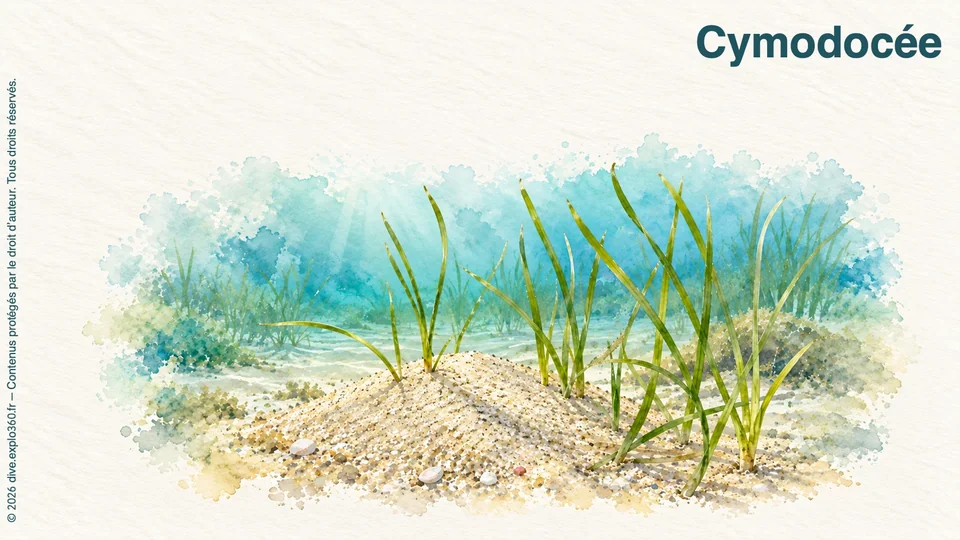
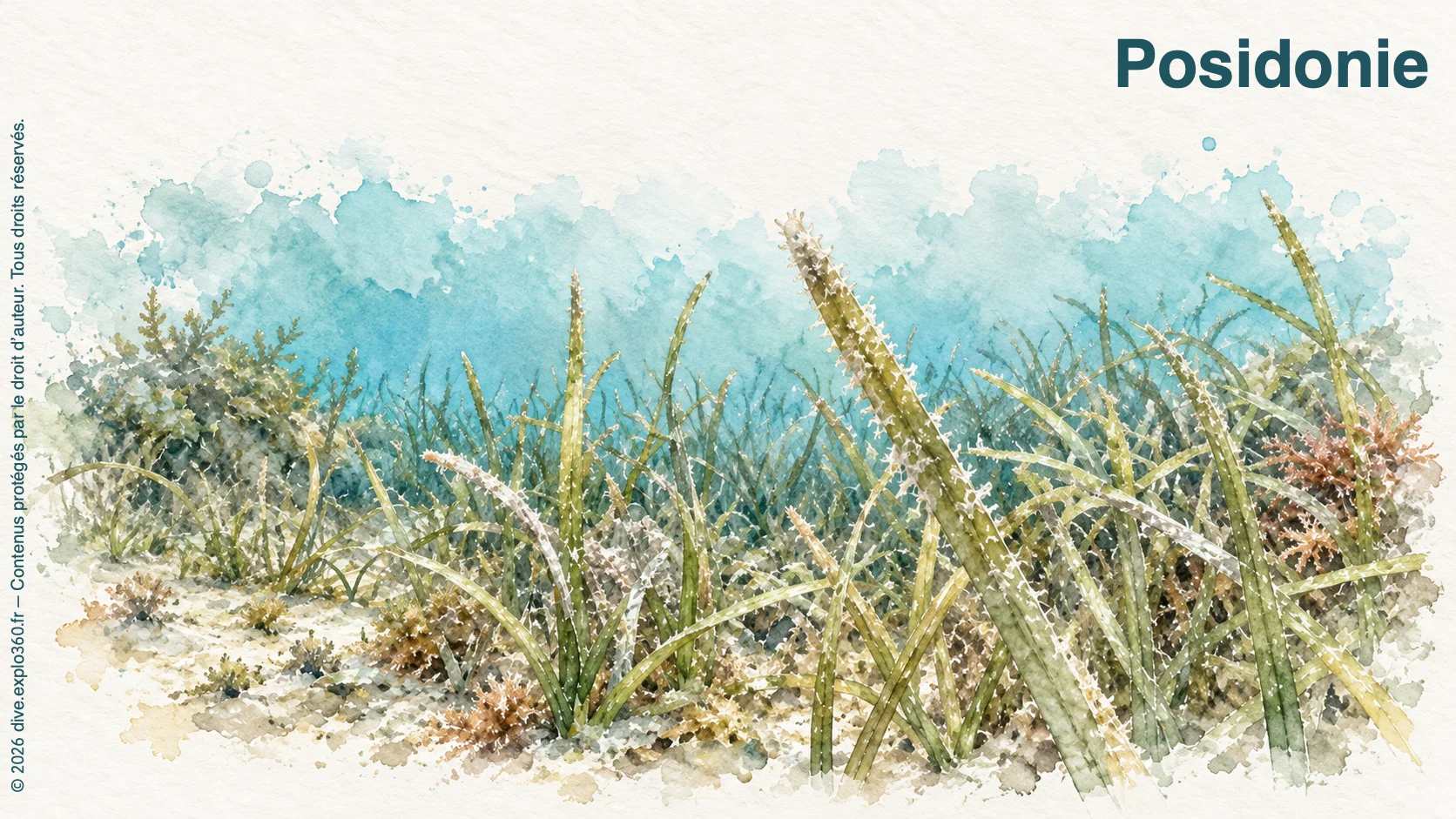
Slender seagrass (Cymodocea nodosa) has long, narrow, flexible leaves like pale green ribbons. Its leaves are narrower than those of Neptune grass, giving the two plants a different appearance. The tufts sway as the water moves.
The rhizomes, creeping stems linking these tufts, are thin and marked with regularly spaced rings.
WHERE DOES IT LIVE?
It is mainly found in shallow coastal areas on well-lit sandy or sandy-muddy seabeds. It forms meadows from the surface to a few tens of metres deep, depending on water clarity.
It tolerates sometimes rough environments and readily colonises areas where the sand shifts.
WHAT DOES IT EAT?
Slender seagrass makes its own food through photosynthesis. In its leaves, light enables it to turn water and dissolved carbon dioxide into sugars needed for growth. Its roots also take up minerals from the sand. Like other flowering plants, it does not catch prey: it produces the organic matter it needs from substances in its surroundings.
GO FURTHER WITH AMIGANSEAU
Unlock the full profile
Deepen your knowledge with the exclusive chapters and interactive resources included in an AMIGANSEAU licence.
- HOW DOES IT REPRODUCE?
- OUR OBSERVATIONS
- ARTICLE
Also included in the full profile
- Advanced navigation between description, ecological context, observations and behaviour
- Interactive food chain to explore the species’ feeding relationships
- Infographic and illustrated summary profile
- Additional photographic observations
 Understand the species