


 Habitat
 Depth
 Group
 Role
 Average size
WHAT DOES IT LOOK LIKE?
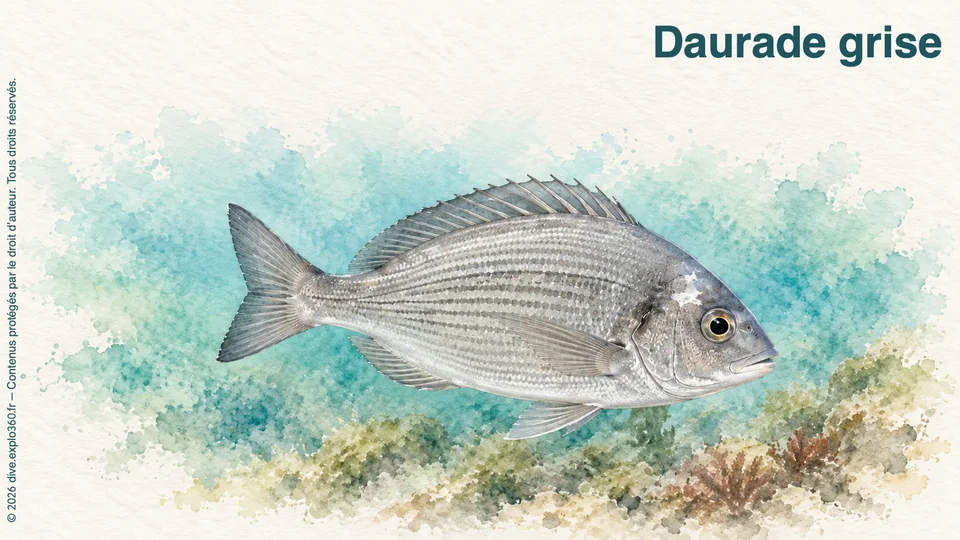
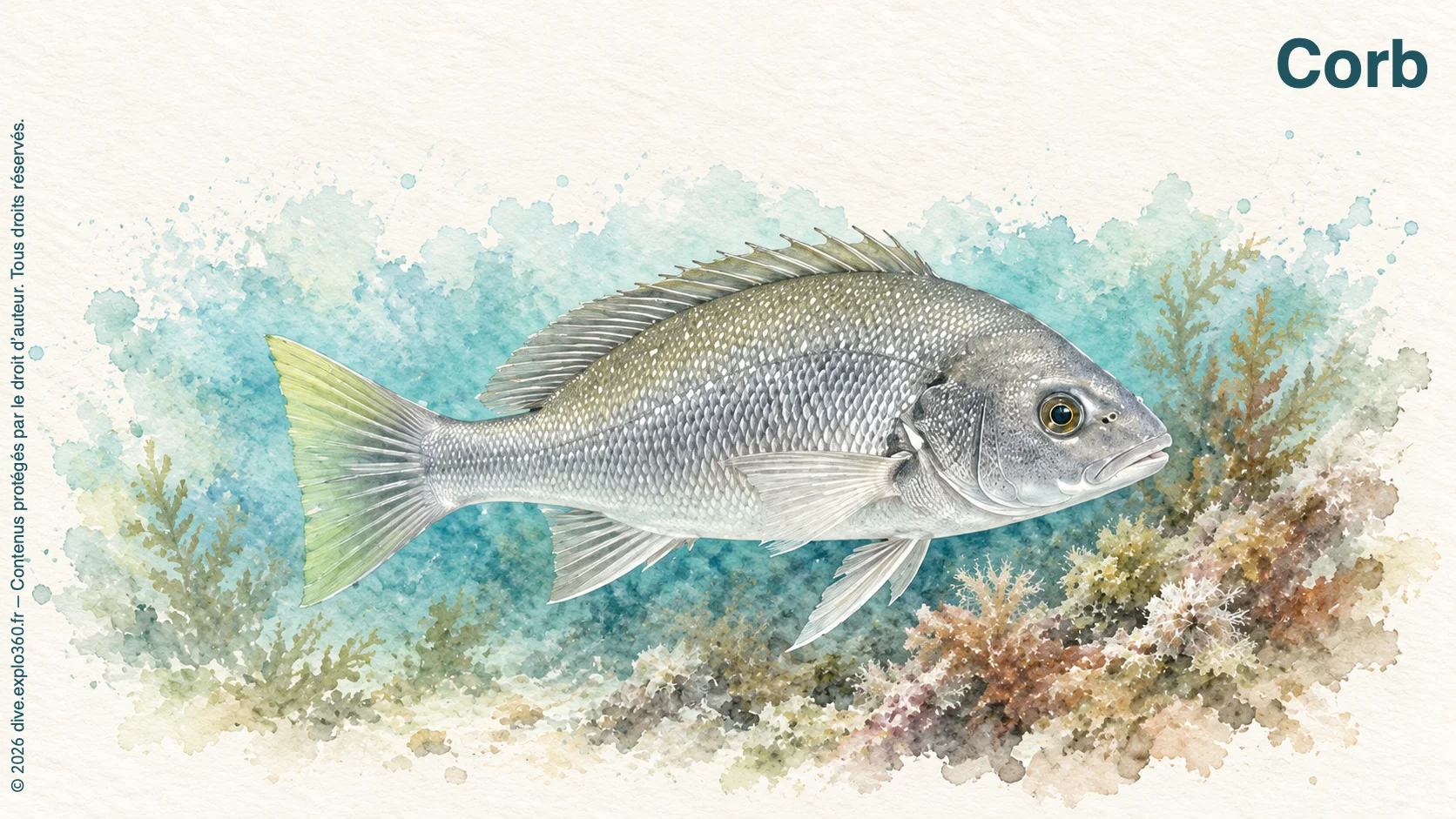
Fine, broken lines can be hard to see against the silvery sides of the black seabream (Spondyliosoma cantharus). The belly is paler. The body is oval in profile, curving out along both the back and the belly. Viewed head-on, it is narrow because it is flattened from side to side.
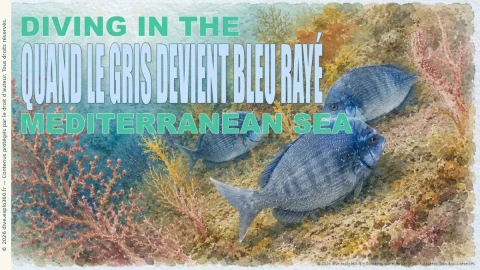
A long fin runs along the back. The snout is more pointed in young fish. The colouring is not fixed: at night, broad dark vertical bands appear and transform the silvery pattern.
WHERE DOES IT LIVE?
The black seabream mainly lives near the coast. It is found between the surface and around thirty metres deep, near rocks, Posidonia seagrass beds or on varied seabeds.
Adults can also live deeper, sometimes down to around 200 metres, on sandy or debris-covered seabeds.
WHAT DOES IT EAT?
The black seabream mainly feeds on small animals it finds near the seabed. It eats marine worms, crustaceans, brittle stars, young cuttlefish and small attached animals such as hydroids. It also eats algae, but these are not the main part of its diet. It picks up prey with its mouth on sand, rocks or among seaweed.
GO FURTHER WITH AMIGANSEAU
Unlock the full profile
Deepen your knowledge with the exclusive chapters and interactive resources included in an AMIGANSEAU licence.
- HOW DOES IT REPRODUCE?
- OUR OBSERVATIONS
- ARTICLE
Also included in the full profile
- Advanced navigation between description, ecological context, observations and behaviour
- Interactive food chain to explore the species’ feeding relationships
- Infographic and illustrated summary profile
 Understand the species