Habitat
 Depth
 Group
 Role
WHAT DOES IT LOOK LIKE?
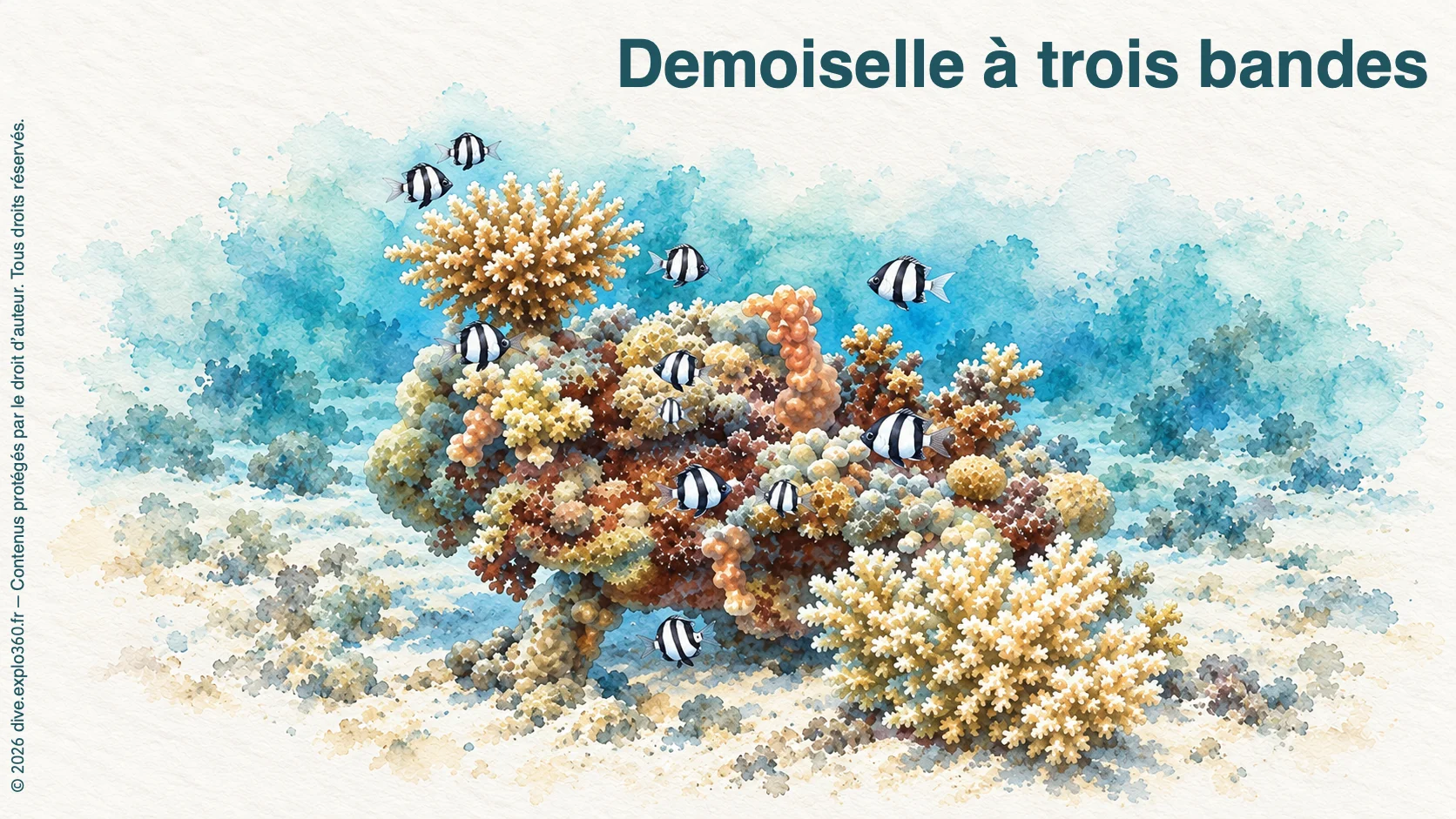
Three black bands cross the white body, and the caudal-fin base is greyish. Maximum size is about 10 cm. Distinction from the Pacific sibling combines these features with geographical distribution.WHERE DOES IT LIVE?
Small groups occupy branching corals in lagoons and shallow reefs at 1–12 m. Their structural shelter allows feeding excursions into nearby water.WHAT DOES IT EAT?
The diet combines zooplankton, small invertebrates and filamentous algae. Using coral as shelter must be distinguished from feeding on its polyps.GO FURTHER WITH AMIGANSEAU
Unlock the full profile
Deepen your knowledge with the exclusive chapters and interactive resources included in an AMIGANSEAU licence.
- HOW DOES IT REPRODUCE?
- OUR OBSERVATIONS
Also included in the full profile
- Advanced navigation between description, ecological context, observations and behaviour
- Interactive food chain to explore the species’ feeding relationships
- Infographic and illustrated summary profile