Habitat
 Depth
 Group
 Role
WHAT DOES IT LOOK LIKE?
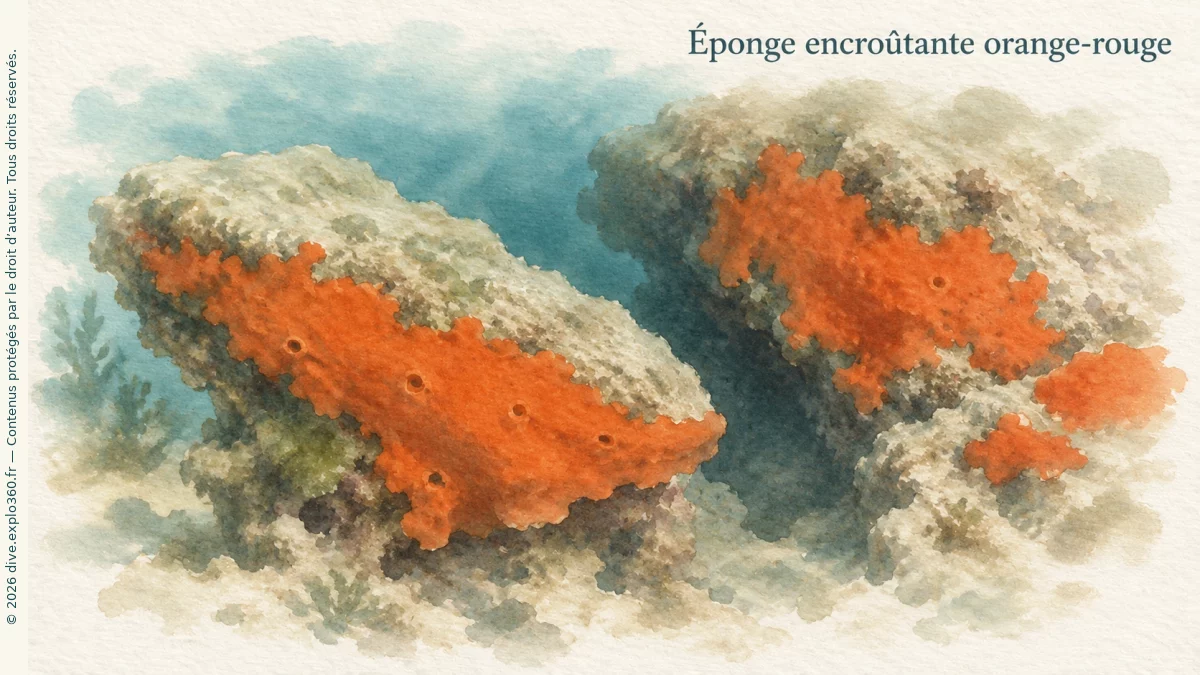
The orange-red encrusting sponge usually forms a thin orange to orange-red layer against its surface. Rounded or irregular forms may partly reproduce shell or rock relief beneath. Area covered varies considerably among individuals.
Vein-like channels lead to oscula, the outlets through which water leaves. This visible organisation provides identification clues but does not always separate it from other orange sponges.
WHERE DOES IT LIVE?
It uses hard Mediterranean surfaces from shallow water to several tens of metres. French observations show it on rocks, parts of Posidonia and mollusc shells, including Noah’s ark shells and thorny oysters.
A sponge coating living shellfish and a sheet on rock therefore need not be different species. The surface can explain some appearance differences. Record light exposure rather than reducing habitat to depth alone.
WHAT DOES IT EAT?
It filters water to retain bacteria, single-celled organisms and other minute particles. Pumping cells circulate water through the body. It enters small pores and leaves through oscula after passing through internal structures.
Large outlets are therefore not separate mouths. The sponge is an animal without polyps or tentacles, with feeding organisation different from an anemone or coral.
GO FURTHER WITH AMIGANSEAU
Unlock the full profile
Deepen your knowledge with the exclusive chapters and interactive resources included in an AMIGANSEAU licence.
- HOW DOES IT REPRODUCE?
- OUR OBSERVATIONS
- ARTICLE
Also included in the full profile
- Advanced navigation between description, ecological context, observations and behaviour
- Interactive food chain to explore the species’ feeding relationships