


 Habitat
 Depth
 Group
 Role
 Average size
WHAT DOES IT LOOK LIKE?
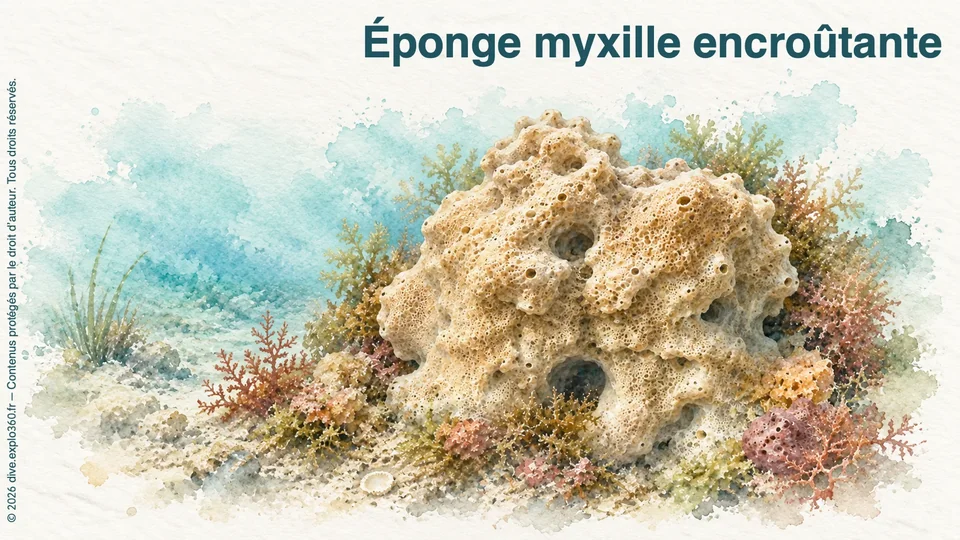
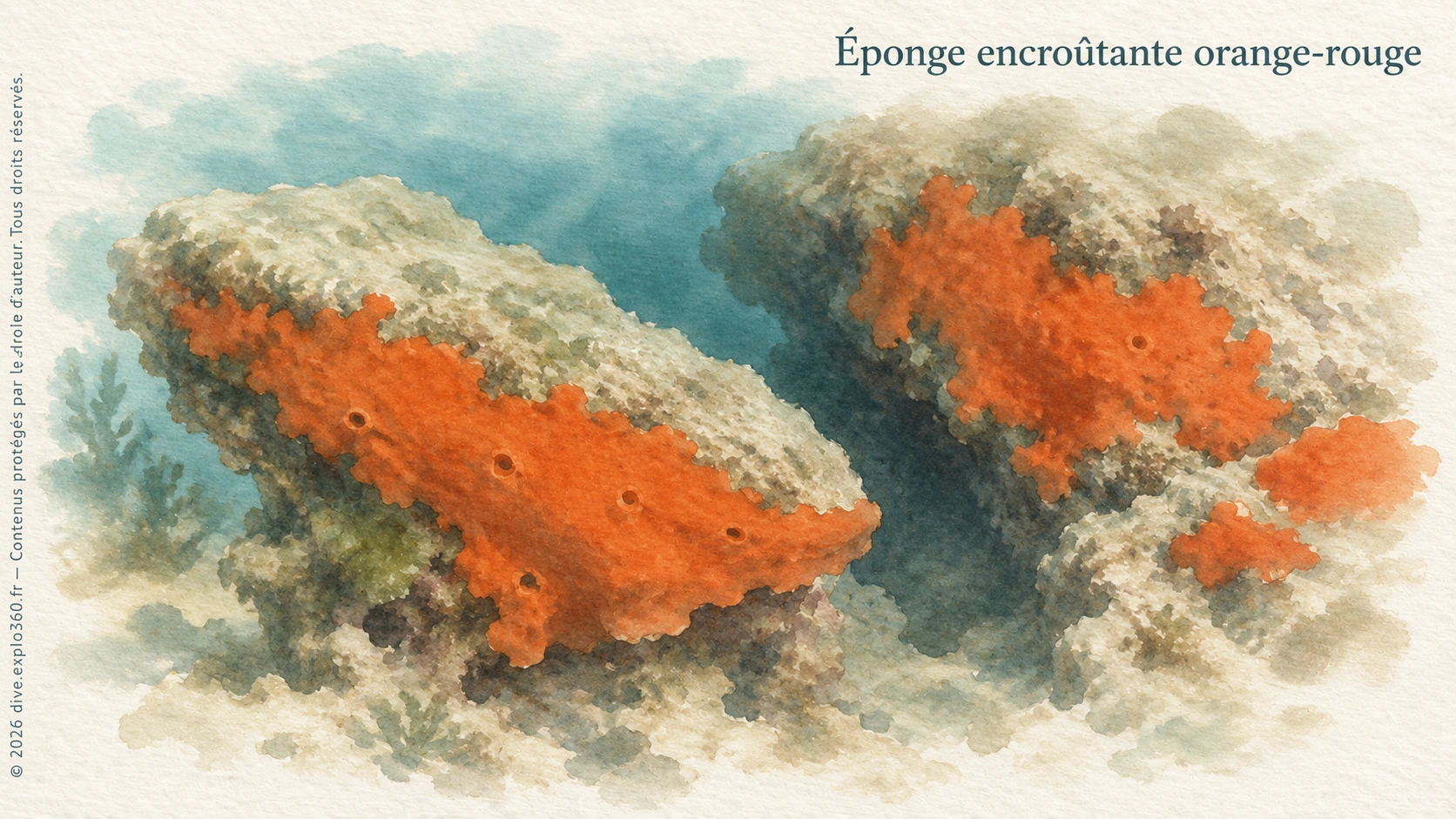
A maze of grooves covers the sulphur-yellow cushion of this encrusting sponge (Myxilla incrustans). Thin strands of tissue bridge the gaps between the ridges.
Circular openings, the oscules, scatter across or follow these raised areas. Related Myxilla sponges share a similar appearance and require finer features for species confirmation.
WHERE DOES IT LIVE?
It occurs on hard substrates such as rocks, coralligenous structures or artificial substrates such as wrecks. It generally lives in areas with reduced light, at shallow to medium depths, in well-flushed water.
WHAT DOES IT EAT?
The encrusting Myxilla sponge feeds by filtering seawater. Water enters through tiny pores across its surface. Inside, cells called choanocytes keep water moving with their beating flagella and trap bacteria, single-celled algae and fine organic particles. Digestion takes place inside the cells. Filtered water leaves through the oscula, openings visible among the sponge's raised surface features.
GO FURTHER WITH AMIGANSEAU
Unlock the full profile
Deepen your knowledge with the exclusive chapters and interactive resources included in an AMIGANSEAU licence.
- HOW DOES IT REPRODUCE?
- OUR OBSERVATIONS
- ARTICLE
Also included in the full profile
- Advanced navigation between description, ecological context, observations and behaviour
- Interactive food chain to explore the species’ feeding relationships
- Infographic and illustrated summary profile
 Understand the species