Habitat
 Depth
 Group
 Role
WHAT DOES IT LOOK LIKE?
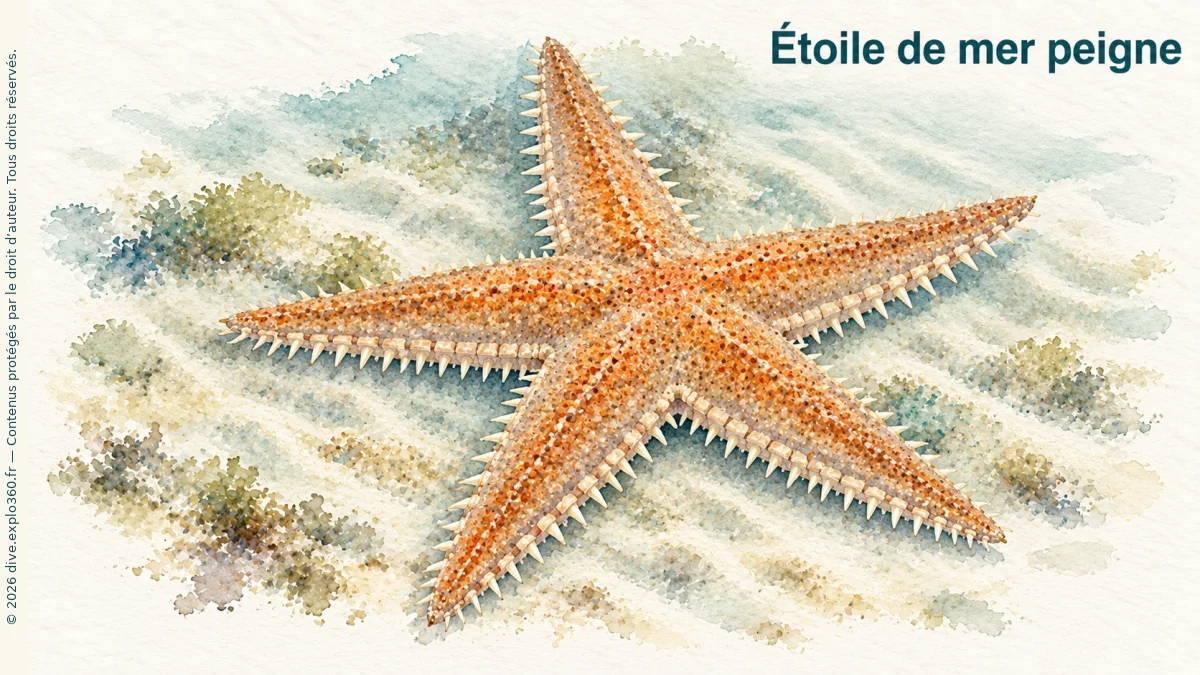
The red comb star normally carries five robust triangular arms around a domed disc. Dorsal paxillae produce a finely grainy orange to pale brown surface. Marginal plates support a comb-like fringe of strong pale spines. Edge structures are more informative than a general colour impression. Tube feet on the oral side lack terminal suckers in this species.
WHERE DOES IT LIVE?
The range covers the Mediterranean and nearby Atlantic, from Portugal towards western Africa. Sand is the principal habitat, with some records near seagrass. DORIS gives a range from shallow water to around 100 m. Frequently nocturnal activity and burial reduce daytime detectability. A survey without a sighting should therefore not be treated as proof of local absence.
WHAT DOES IT EAT?
Molluscs are important prey, supplemented by other benthic invertebrates. Mediterranean stomach-content studies document ingestion of whole prey and later expulsion of indigestible remains through the mouth. The proportions of bivalves, gastropods and other prey vary between substrates and sampling periods, connecting diet with accessible resources.
GO FURTHER WITH AMIGANSEAU
Unlock the full profile
Deepen your knowledge with the exclusive chapters and interactive resources included in an AMIGANSEAU licence.
- HOW DOES IT REPRODUCE?
- OUR OBSERVATIONS
- ARTICLE
Also included in the full profile
- Advanced navigation between description, ecological context, observations and behaviour
- Interactive food chain to explore the species’ feeding relationships