


 Habitat
 Depth
 Group
 Role
 Average size
WHAT DOES IT LOOK LIKE?
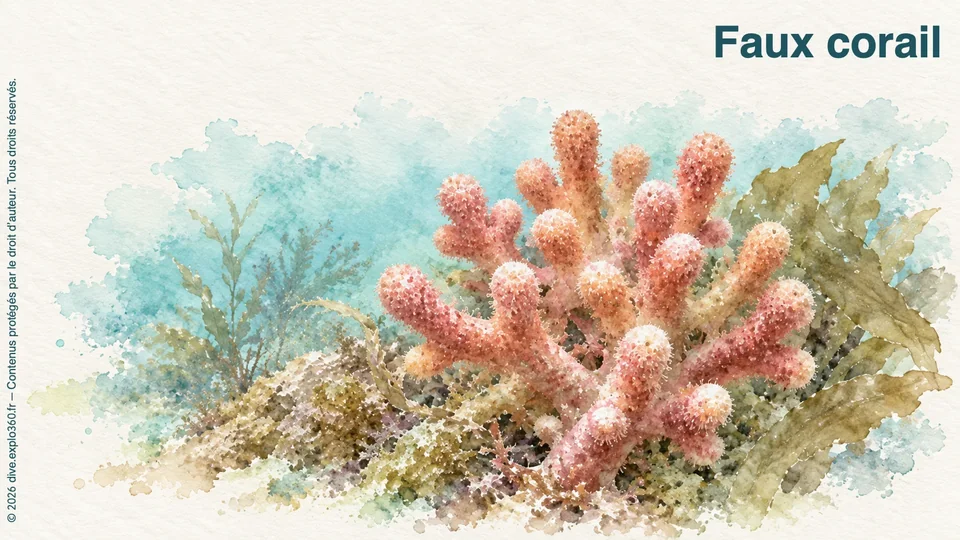
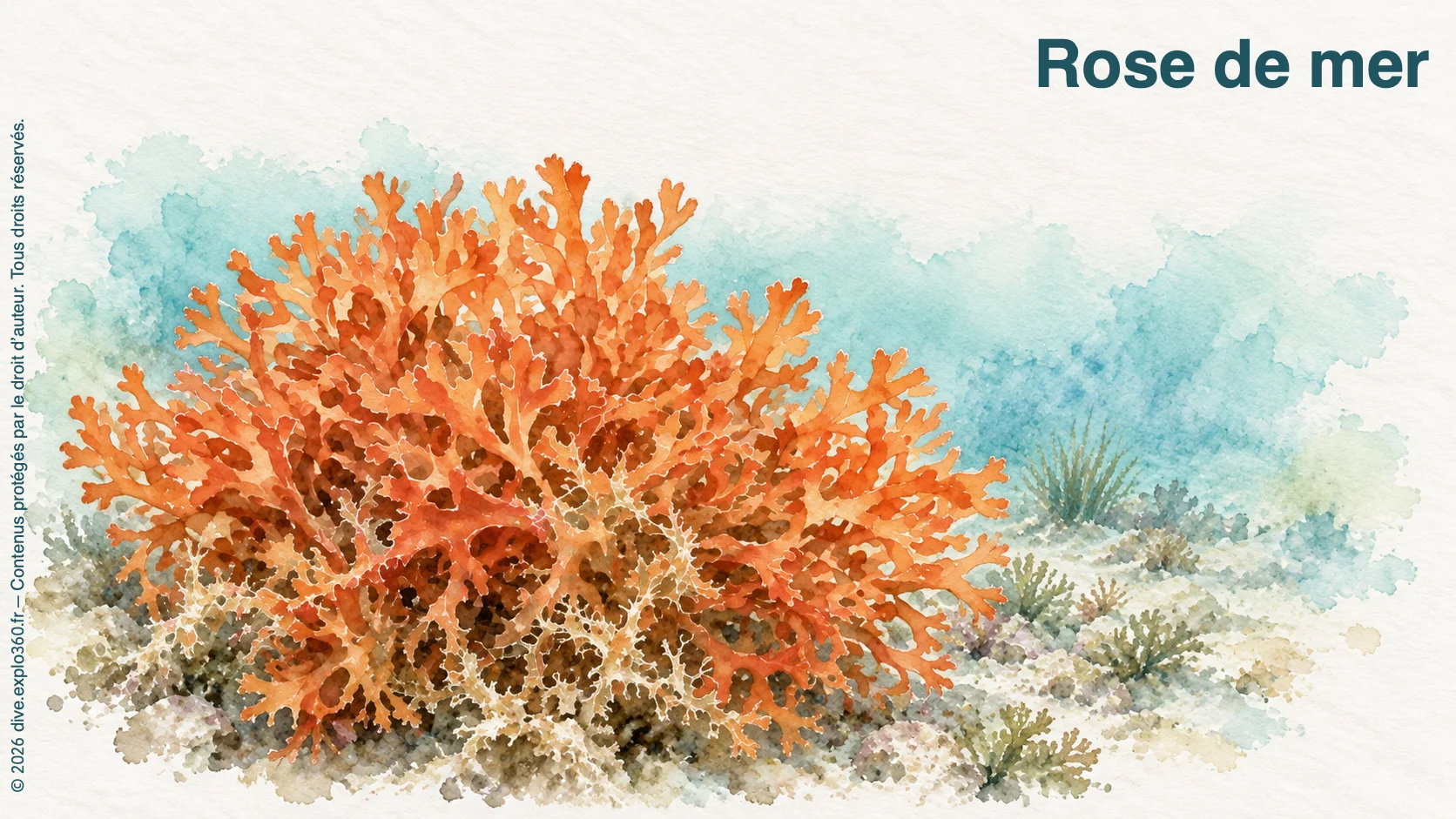
The sharply cut-off ends shape the branches of false coral (Myriapora truncata). This rigid bush is orange, with branches that are round in cross-section and of even thickness within a colony.
Its smooth surface is dotted with minute pores. These open into the chambers of the zooids, the small animals of the colony. The result is a compact bush with blunt ends rather than finely tapering branches.
WHERE DOES IT LIVE?
It occurs on rocky seabeds and coralligenous substrates, most often in shaded or dimly lit areas. It is common on walls, beneath overhangs and sometimes at the entrances to underwater cavities. It grows from a few metres deep down to deeper areas of the continental shelf.
WHAT DOES IT EAT?
To understand how false coral eats, look at the scale of its individual inhabitants. Each minute opening in a branch houses an animal able to extend its own tentacle crown. This lophophore moves nearby water and helps capture the microscopic organisms that feed the colony. Feeding is distributed among numerous collection points along the branches. Extended crowns form a delicate fuzz above the surface; when they withdraw, the tiny chambers become much easier to distinguish.
GO FURTHER WITH AMIGANSEAU
Unlock the full profile
Deepen your knowledge with the exclusive chapters and interactive resources included in an AMIGANSEAU licence.
- HOW DOES IT REPRODUCE?
- OUR OBSERVATIONS
- ARTICLE
Also included in the full profile
- Advanced navigation between description, ecological context, observations and behaviour
- Interactive food chain to explore the species’ feeding relationships
- Infographic and illustrated summary profile
- Additional photographic observations
 Understand the species