


 Habitat
 Depth
 Group
 Role
 Average size
WHAT DOES IT LOOK LIKE?
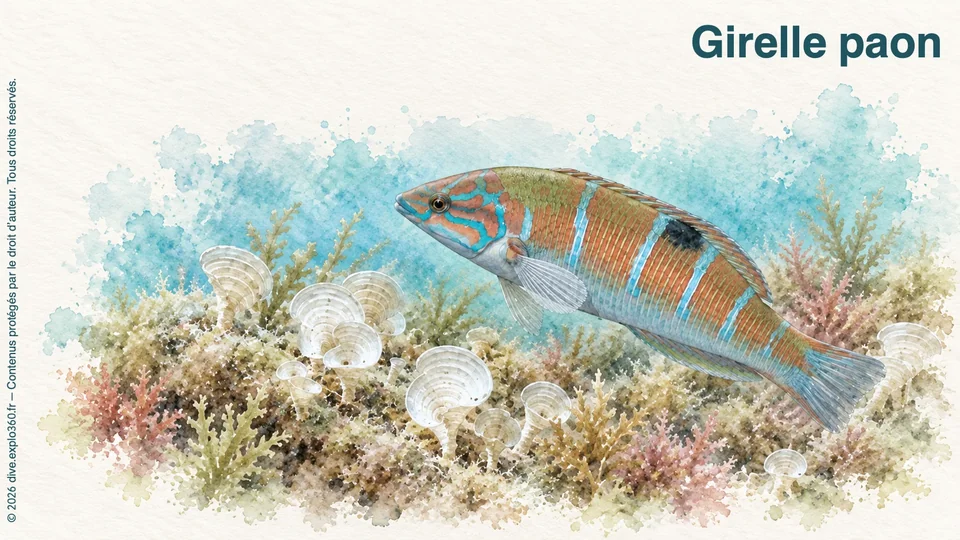
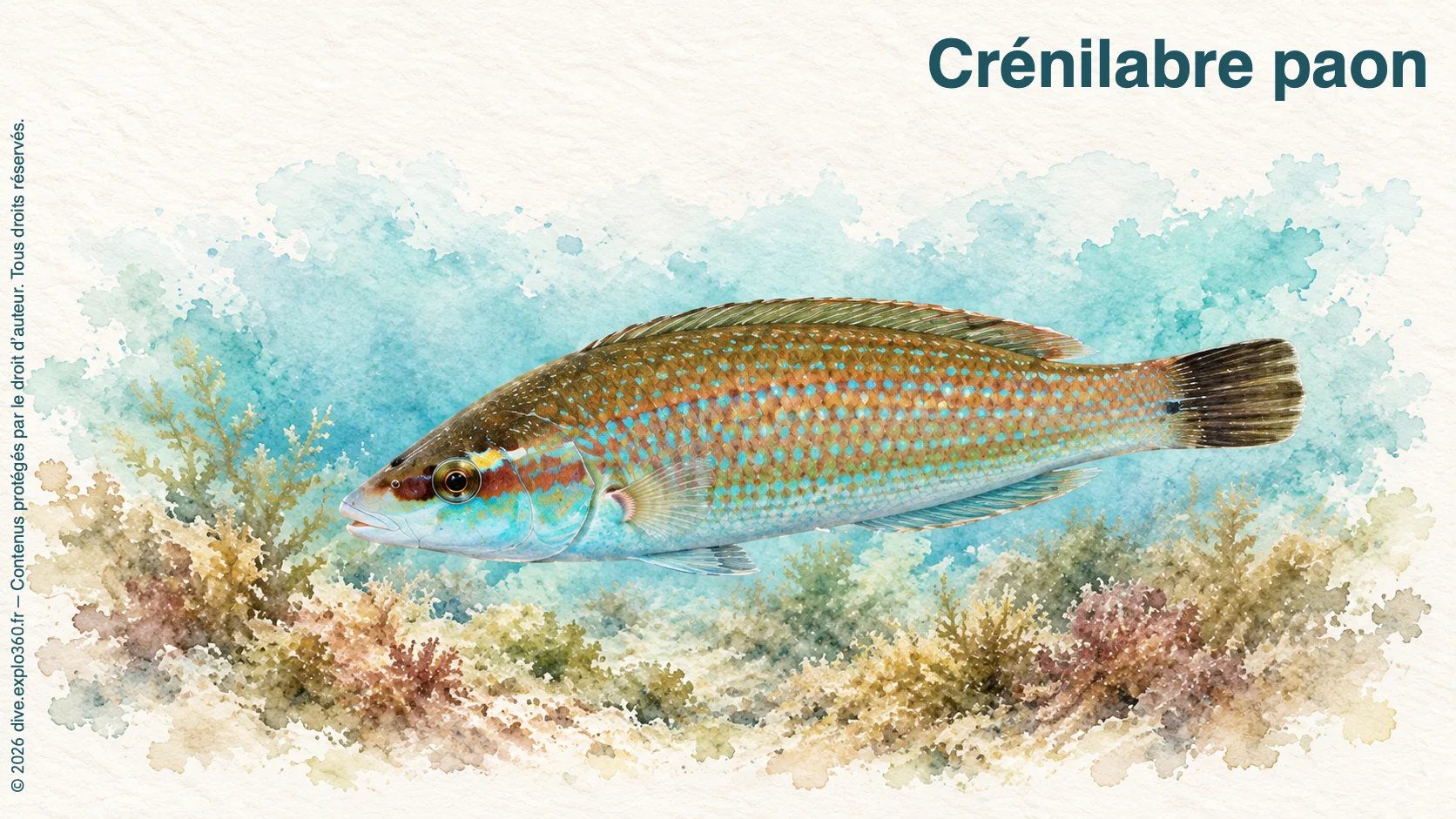
The blue network on the head gives the adult ornate wrasse (Thalassoma pavo) a finely drawn pattern. In females and some males, several blue bands cross a green to yellow-orange background.
In the most colourful males, a broad blue and red band stands out behind the head and the rear body becomes more uniform. Young fish offer another appearance: green, with a dark spot on the back, they do not yet carry the blue head lines.
WHERE DOES IT LIVE?
It frequents shallow coastal areas, particularly Neptune grass meadows, rocky areas and places rich in algae. It is found mainly in the warm waters of the Mediterranean and some regions of the eastern Atlantic.
WHAT DOES IT EAT?
From sand to seagrass leaves, the ornate wrasse searches for crustaceans, molluscs and worms. Larger fish also attack very young sea urchins while their test is less than a centimetre across. Hunting is only part of its menu: it can nibble certain sponges and seize opportunities to eat other fishes’ eggs. It finds food both on the seabed and among marine vegetation.
GO FURTHER WITH AMIGANSEAU
Unlock the full profile
Deepen your knowledge with the exclusive chapters and interactive resources included in an AMIGANSEAU licence.
- HOW DOES IT REPRODUCE?
- OUR OBSERVATIONS
- ARTICLE
Also included in the full profile
- Advanced navigation between description, ecological context, observations and behaviour
- Interactive food chain to explore the species’ feeding relationships
- Infographic and illustrated summary profile
- Additional photographic observations
 Understand the species