Habitat
 Depth
 Group
 Role
WHAT DOES IT LOOK LIKE?
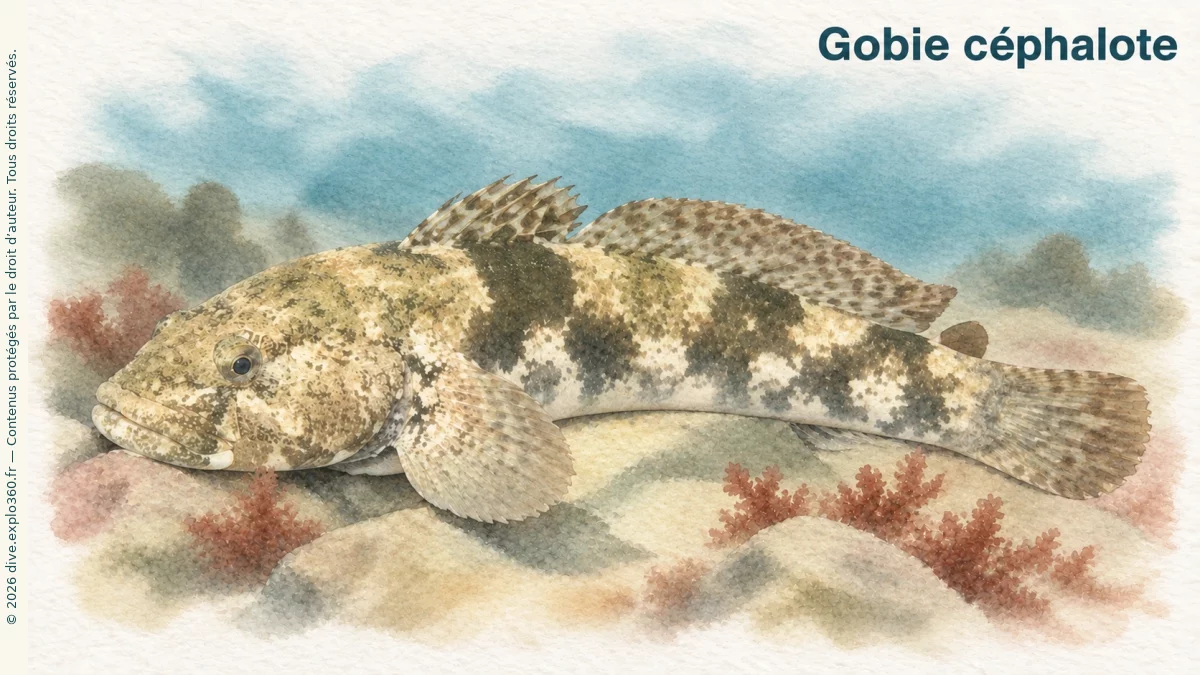
Giant gobies commonly measure 20 to 25 centimetres. They have thick bodies, heavy heads and fairly high-set eyes.
Brown, blackish and pale patches produce mottling. Two dorsal fins are separate, the first short. Pectoral fins on the sides are broad and rounded.
Fins beneath the belly form a supporting disc. Unlike rock gobies, the species lacks a distinct yellow or orange edge on the first dorsal fin.
WHERE DOES IT LIVE?
It frequents rocks and boulder fields in shallow water, often within the upper ten metres. Rocky shelters may border sandy patches.
Young fish also use coastal lagoons. A goby remains close to a hiding place and may withdraw after a sudden movement.
WHAT DOES IT EAT?
Food includes limpets, crabs, small crustaceans and worms. Powerful jaws give access to prey with shells or hard coverings.
A fish can wait for a passing animal or seek it inside a hole. Green algae also supplement meals.
GO FURTHER WITH AMIGANSEAU
Unlock the full profile
Deepen your knowledge with the exclusive chapters and interactive resources included in an AMIGANSEAU licence.
- HOW DOES IT REPRODUCE?
- OUR OBSERVATIONS
- ARTICLE
Also included in the full profile
- Advanced navigation between description, ecological context, observations and behaviour
- Interactive food chain to explore the species’ feeding relationships