Habitat
 Depth
 Group
 Role
WHAT DOES IT LOOK LIKE?
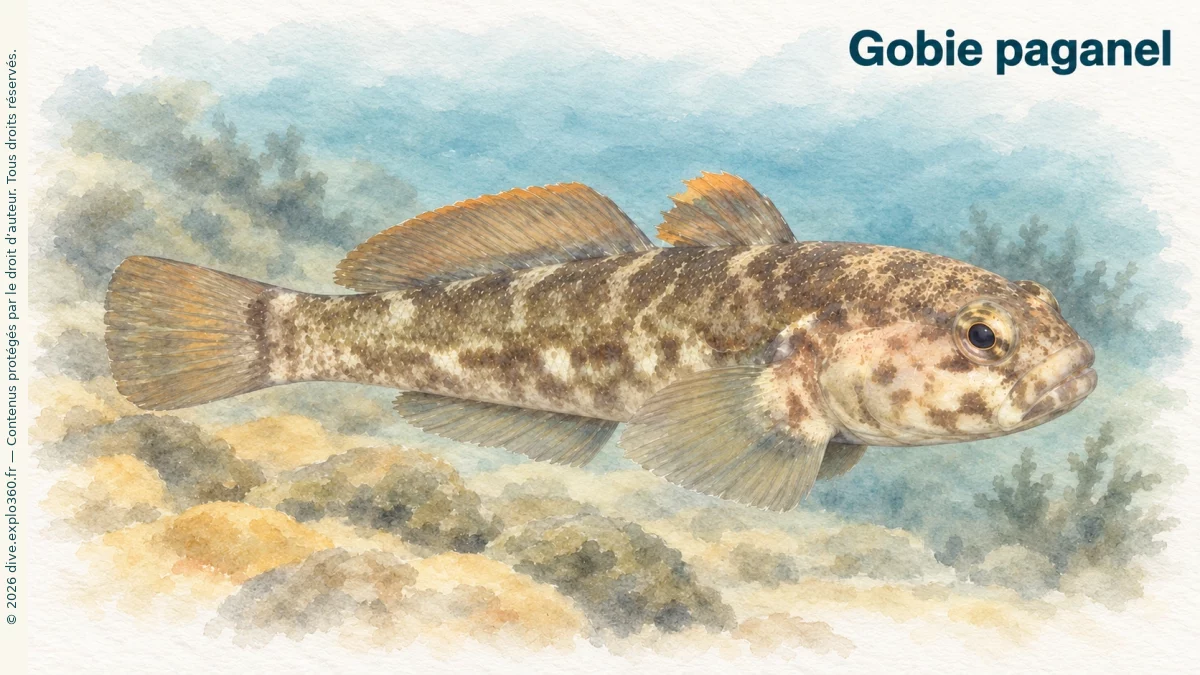
Rock gobies have stocky, cylindrical bodies, heavy heads and prominent eyes. They reach about 12 centimetres. Brown colour may be pale, mottled or very dark.
Two dorsal fins are clearly separate. The first is rounded and edged in yellow to orange. This edge brightens in breeding males, whose bodies can become almost black.
Joined fins beneath the body form a disc that helps the fish rest on the bottom.
WHERE DOES IT LIVE?
The species frequents stones, algae-covered rocks and cavities in shallow water, mainly within the upper ten metres. It also occurs on mud, in ports and in shore pools.
It tolerates brackish water, mixed with fresh water, allowing it to use coastal habitats of different salinities.
WHAT DOES IT EAT?
It catches small crustaceans, worms and other animals close to the bottom. Small brittle stars and fish may also form part of its meals.
Diet depends partly on size: a young goby and a large individual do not have the same opportunities for capturing prey.
GO FURTHER WITH AMIGANSEAU
Unlock the full profile
Deepen your knowledge with the exclusive chapters and interactive resources included in an AMIGANSEAU licence.
- HOW DOES IT REPRODUCE?
- OUR OBSERVATIONS
- ARTICLE
Also included in the full profile
- Advanced navigation between description, ecological context, observations and behaviour
- Interactive food chain to explore the species’ feeding relationships