


 Habitat
 Depth
 Group
 Role
 Average size
 Precautions
WHAT DOES IT LOOK LIKE?
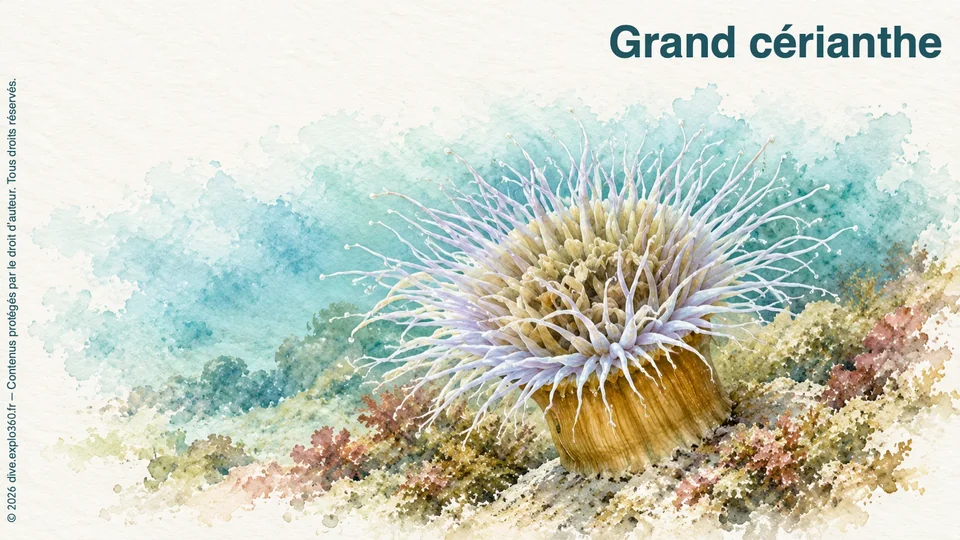
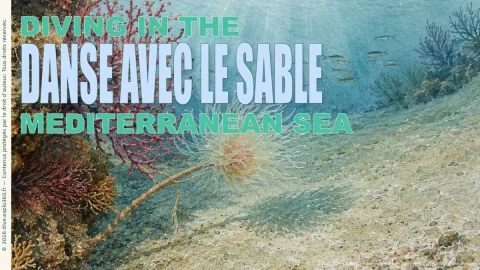
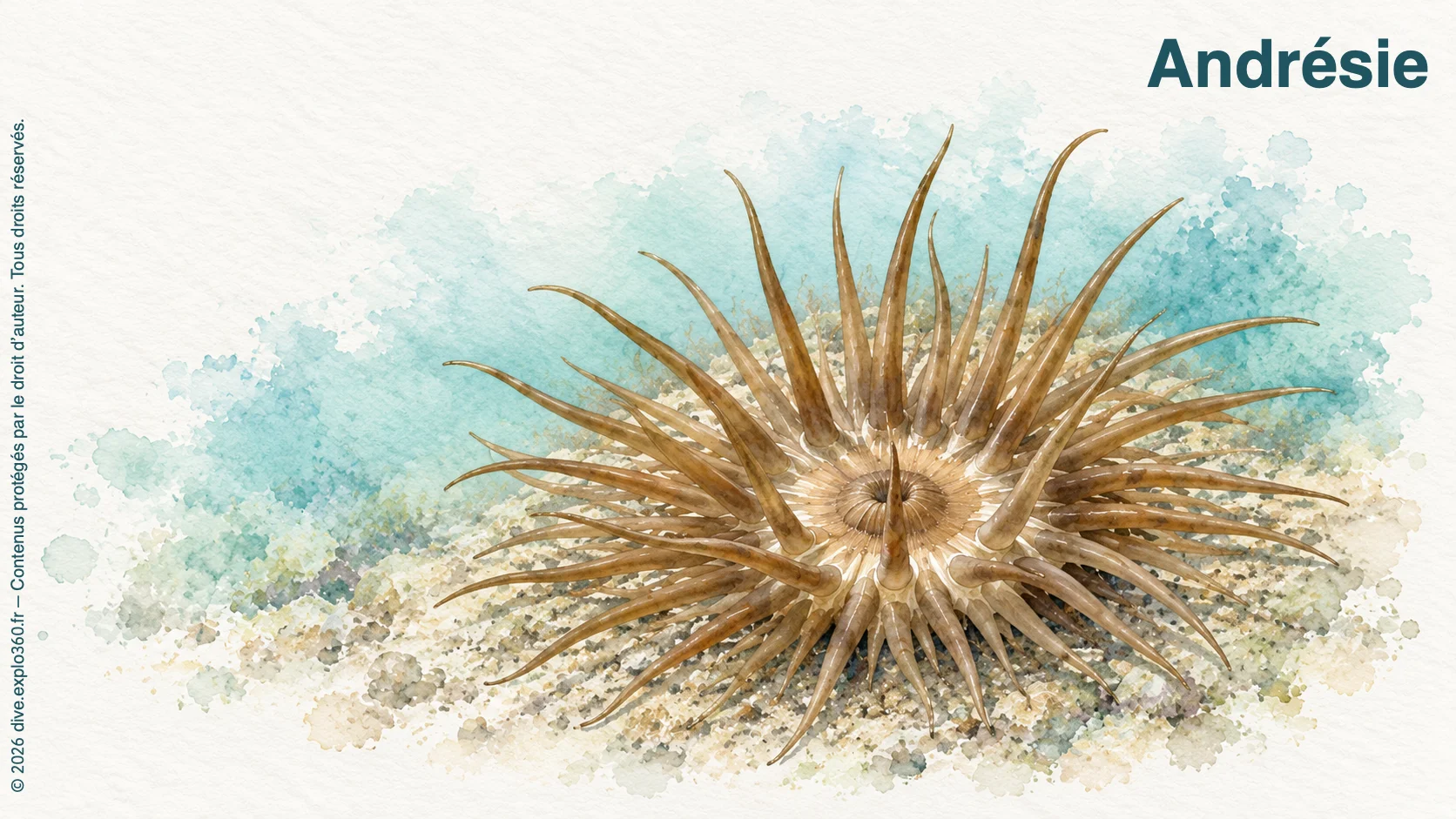
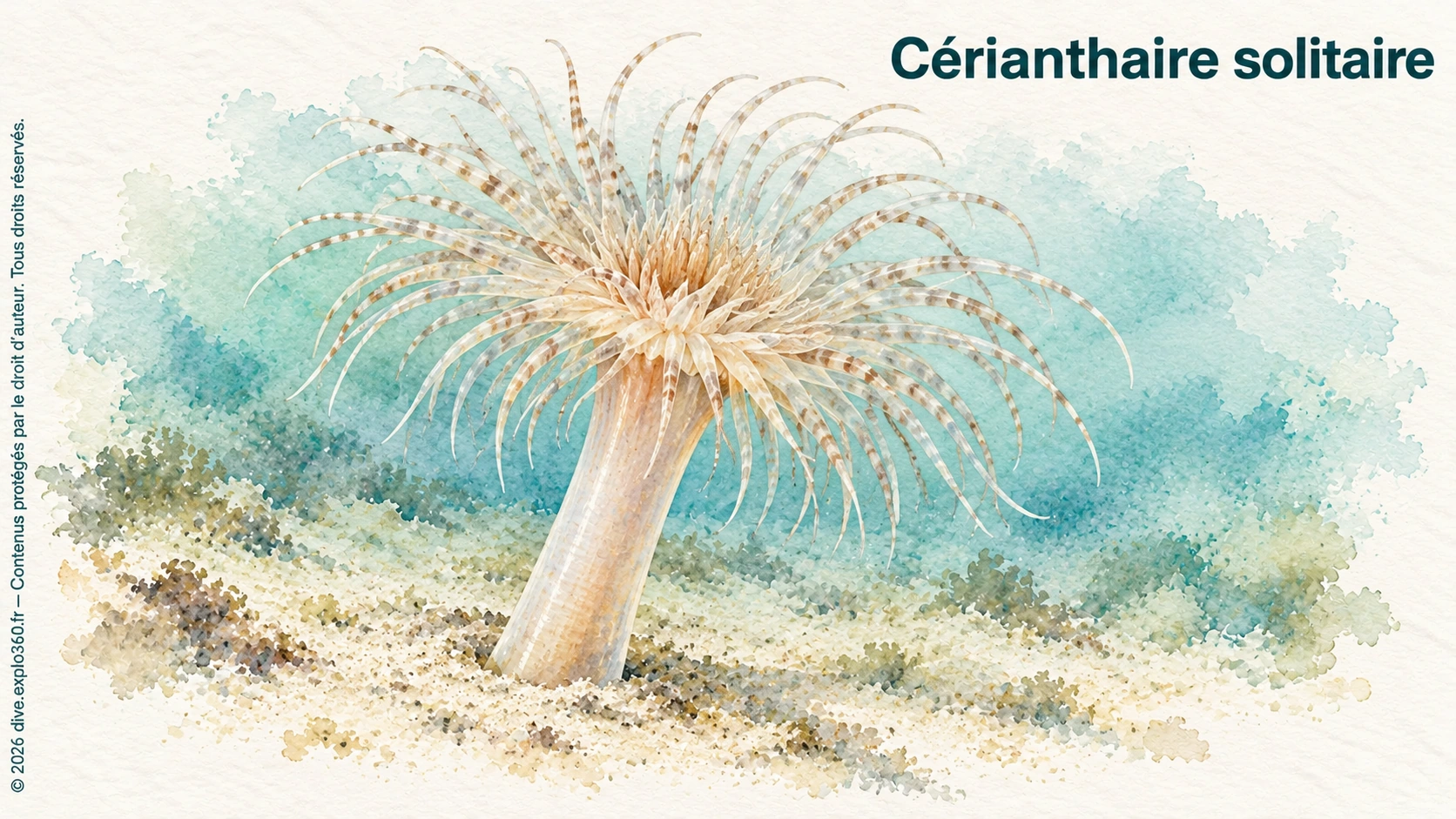
At the centre of the tube anemone (Cerianthus membranaceus), short tentacles form a dense crown around the mouth. They contrast with the long filaments of the outer crown, widely spread and very mobile.
Colours vary from beige and brown to green or violet, and the two crowns may have different shades. Beneath this display, the body continues into a tube into which the animal can disappear completely.
WHERE DOES IT LIVE?
It is found buried in soft seabeds such as sand or mud, often in coastal areas. It can be observed in seagrass meadows, detrital areas or at the foot of rocks, where the substrate allows it to build its tube.
WHAT DOES IT EAT?
The tube anemone’s large crown is a feeding apparatus. Its long tentacles intercept small animals and suspended organic debris; stinging cells secure prey, then tentacle movements bring food towards the mouth. Small fish and crustaceans can also be swallowed. Feeding ranges from scattered particles to visible animals. At the centre of the crown, the arrival of food at the mouth marks the final stage of a meal taken without leaving its position.
GO FURTHER WITH AMIGANSEAU
Unlock the full profile
Deepen your knowledge with the exclusive chapters and interactive resources included in an AMIGANSEAU licence.
- HOW DOES IT REPRODUCE?
- OUR OBSERVATIONS
- ARTICLE
Also included in the full profile
- Advanced navigation between description, ecological context, observations and behaviour
- Interactive food chain to explore the species’ feeding relationships
- Infographic and illustrated summary profile
- Additional photographic observations
 Understand the species