Habitat
 Depth
 Group
 Role
WHAT DOES IT LOOK LIKE?
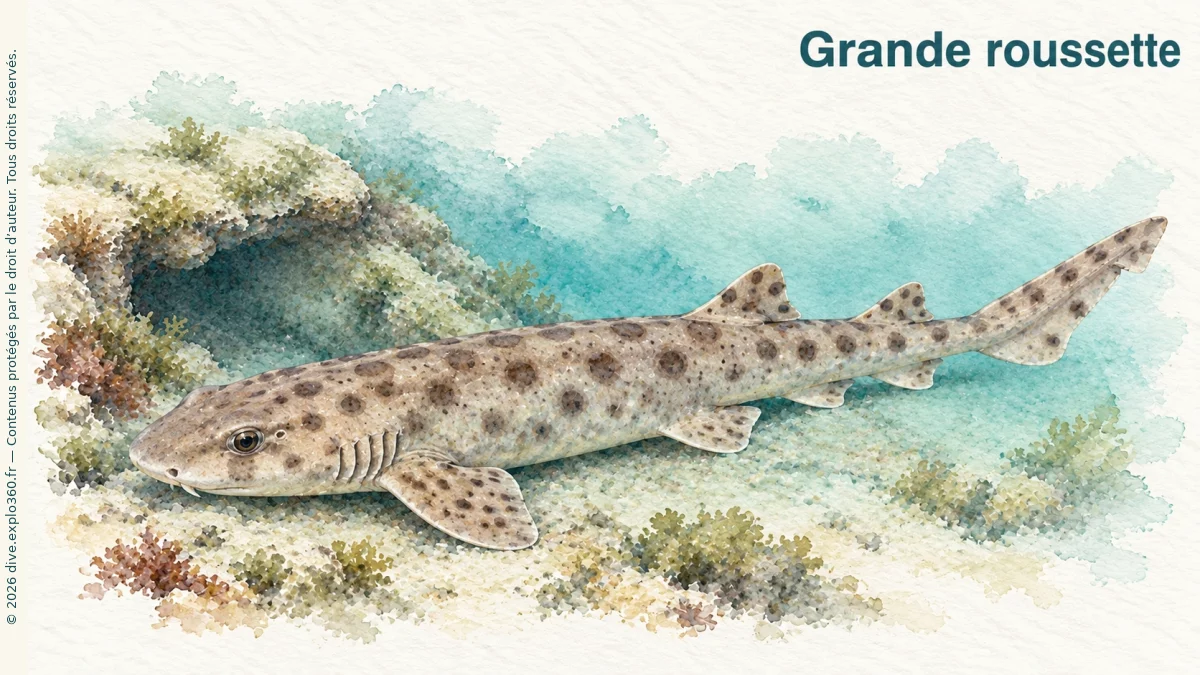
The nursehound has an elongated grey-sand to beige body with large dark spots and sometimes smaller marks. The short rounded snout bears nasal folds separate from the mouth. Oval eyes and five lateral gill slits accompany a first dorsal above the pelvics. A smaller second dorsal begins around mid-anal fin, followed by an extended tail.
WHERE DOES IT LIVE?
The range includes Mediterranean and eastern Atlantic waters. It favours rocky bottoms with shelters, usually at depths of 20–63 m. It also occurs in very shallow water and down to 400 m. Daytime rest beneath rocks or in recesses can precede greater night activity. This helps explain irregular sightings despite apparently suitable habitat.
WHAT DOES IT EAT?
It hunts seabed animals, including crabs, shrimps, small cephalopods and fish. Resting shelters and hunting grounds are both parts of its living space.
GO FURTHER WITH AMIGANSEAU
Unlock the full profile
Deepen your knowledge with the exclusive chapters and interactive resources included in an AMIGANSEAU licence.
- HOW DOES IT REPRODUCE?
- OUR OBSERVATIONS
- ARTICLE
Also included in the full profile
- Advanced navigation between description, ecological context, observations and behaviour
- Interactive food chain to explore the species’ feeding relationships