


 Habitat
 Depth
 Group
 Role
 Average size
 Good to know
WHAT DOES IT LOOK LIKE?
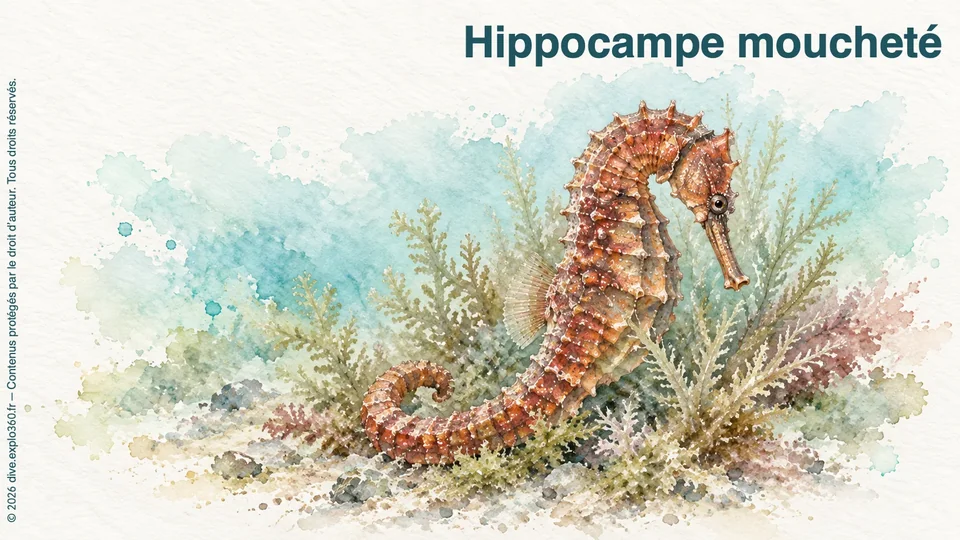
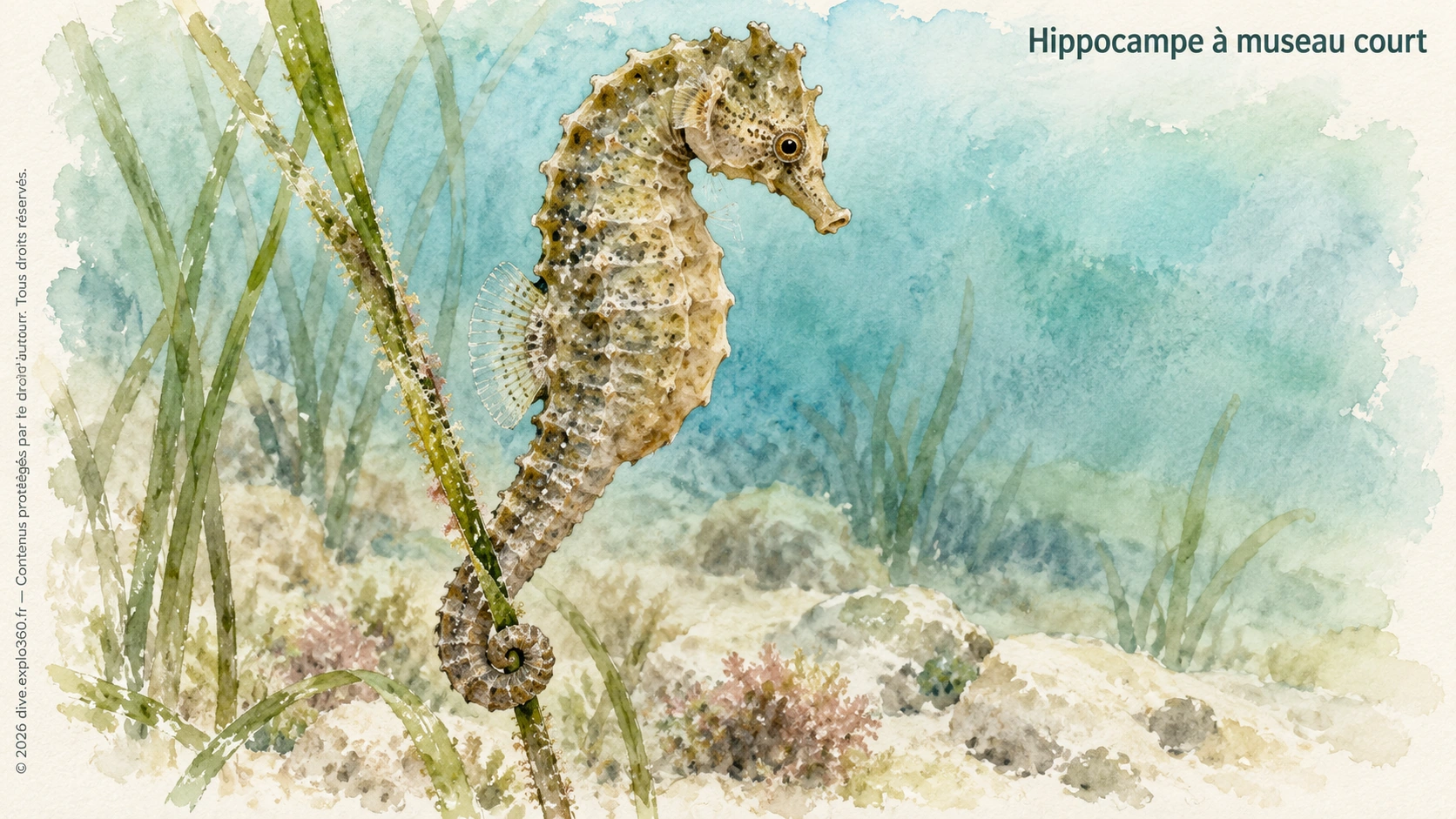
The long tube-shaped snout and angled head shape the profile of the long-snouted seahorse (Hippocampus guttulatus). Under the skin, bony plates create a rigid body with angular ridges, continued by a curling tail.
Brown to yellow colouring is often dotted with white. Cutaneous filaments, fine skin extensions on the head and back, vary in development between individuals. Their apparent absence therefore does not erase the fish’s other features.
WHERE DOES IT LIVE?
It is mainly encountered in seagrass meadows, particularly Posidonia meadows, but also in algae-rich areas or on mixed sandy and rocky substrates. It generally frequents shallow coastal waters, where it finds both refuge and food.
WHAT DOES IT EAT?
The long-snouted seahorse’s slow movements do not prevent a lightning-fast capture. After spotting small prey, it brings its snout closer and sucks the animal through the terminal mouth. Small crustaceans dominate its diet, including amphipods and mysids. Their importance varies between habitats: food includes accessible creatures near the seabed and vegetation as well as swimming organisms. The snout moves closer slowly, then the prey is sucked in almost instantly.
GO FURTHER WITH AMIGANSEAU
Unlock the full profile
Deepen your knowledge with the exclusive chapters and interactive resources included in an AMIGANSEAU licence.
- HOW DOES IT REPRODUCE?
- OUR OBSERVATIONS
- ARTICLE
Also included in the full profile
- Advanced navigation between description, ecological context, observations and behaviour
- Interactive food chain to explore the species’ feeding relationships
- Infographic and illustrated summary profile
 Understand the species
