Habitat
 Depth
 Group
 Role
 Average size
WHAT DOES IT LOOK LIKE?
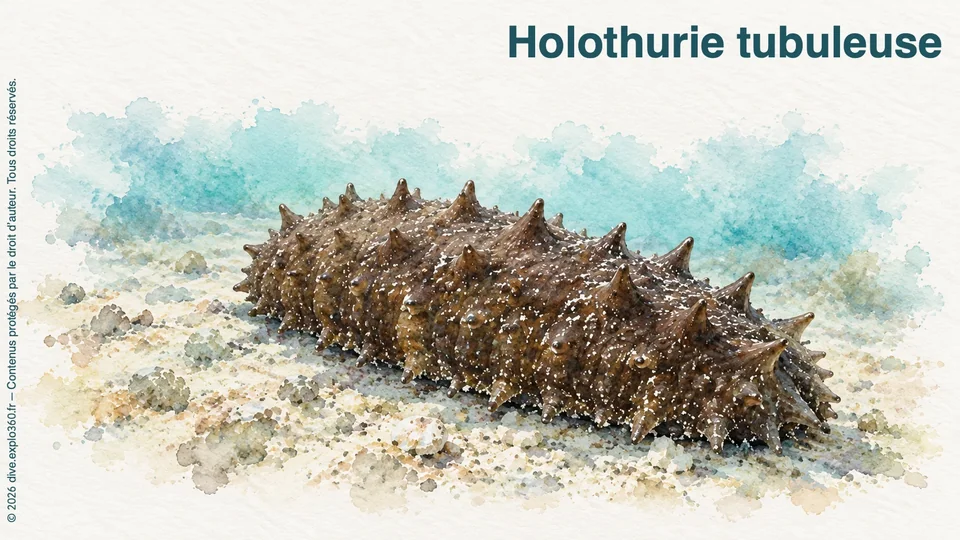
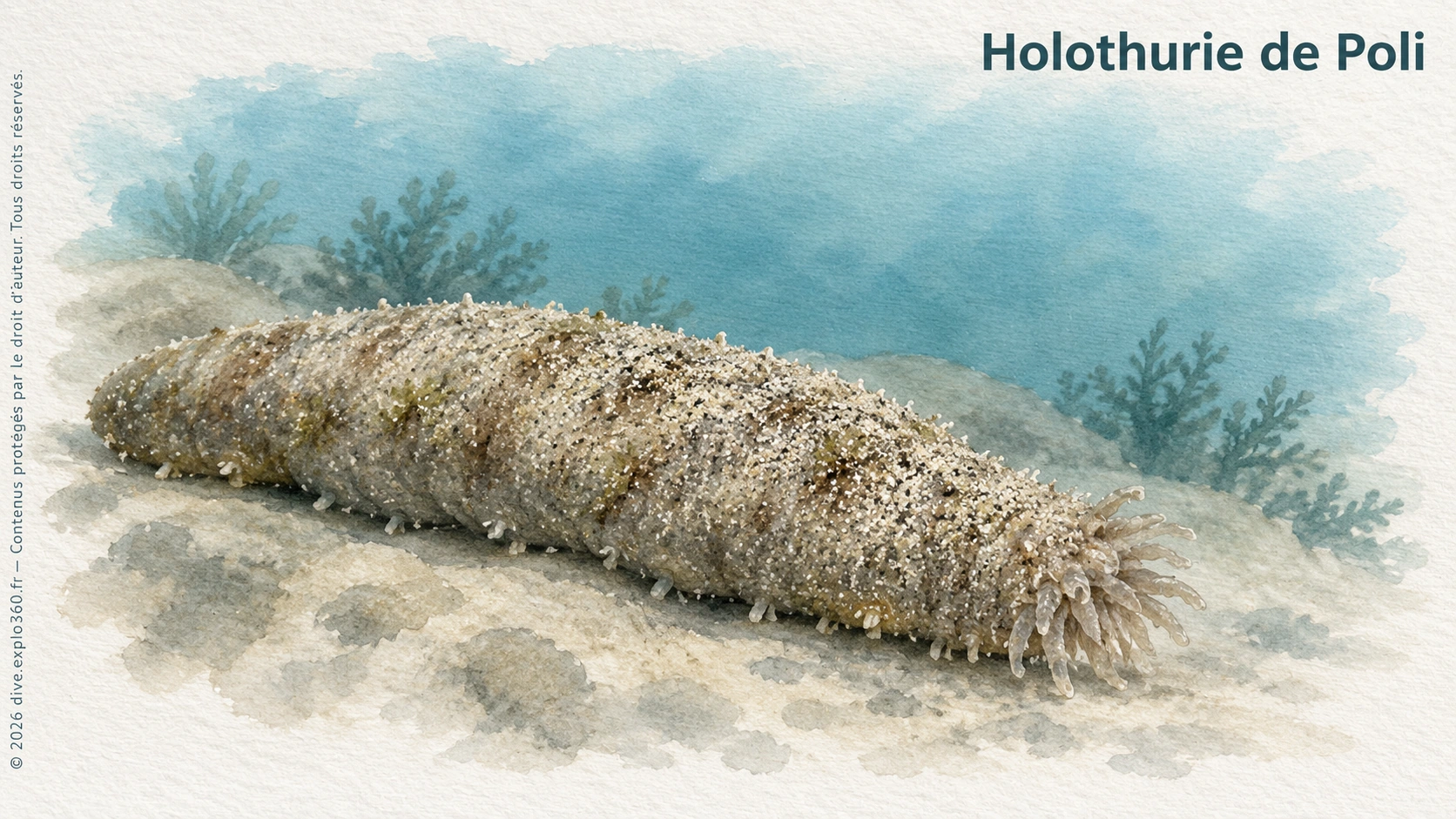
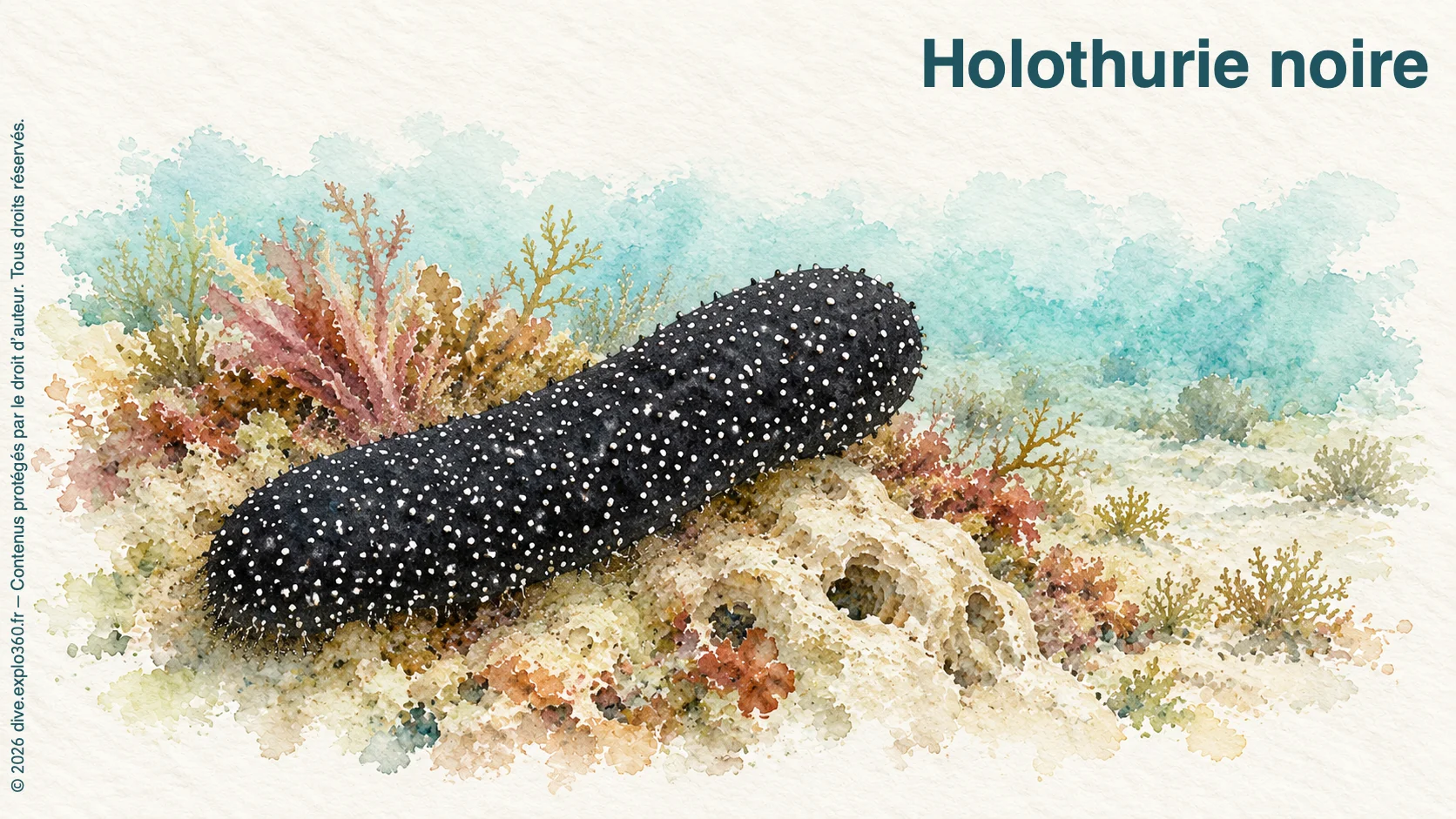
The brown sea cucumber (Holothuria (Holothuria) tubulosa) has large, sometimes pointed bumps called papillae. They cover an elongated, cylindrical brown body, sometimes with reddish or violet tinges.
The papilla tips lack white. Brown alone does not, however, distinguish this sea cucumber from all its close relatives.
WHERE DOES IT LIVE?
It mainly lives on soft seabeds such as sand or mud, as well as detrital areas. It occurs in coastal environments, from shallow water down to several tens of metres deep. It often rests on the seabed, sometimes lightly buried in the sediment.
WHAT DOES IT EAT?
The brown sea cucumber’s short tentacles bring a mixture of sediment and organic material to its mouth. Selection begins before ingestion, favouring food-rich components. The animal digests usable material and expels mineral grains in elongated casts. Feeding has no single schedule. Large individuals collect more at night in summer; in winter and among smaller animals, feeding is more continuous. The casts left on the seabed show how much sediment it swallows, although only the nutritious fraction is absorbed.
GO FURTHER WITH AMIGANSEAU
Unlock the full profile
Deepen your knowledge with the exclusive chapters and interactive resources included in an AMIGANSEAU licence.
- HOW DOES IT REPRODUCE?
- OUR OBSERVATIONS
- ARTICLE
Also included in the full profile
- Advanced navigation between description, ecological context, observations and behaviour
- Interactive food chain to explore the species’ feeding relationships
- Infographic and illustrated summary profile
 Understand the species