Habitat
 Depth
 Group
 Role
 Size
 Good to know
WHAT DOES IT LOOK LIKE?
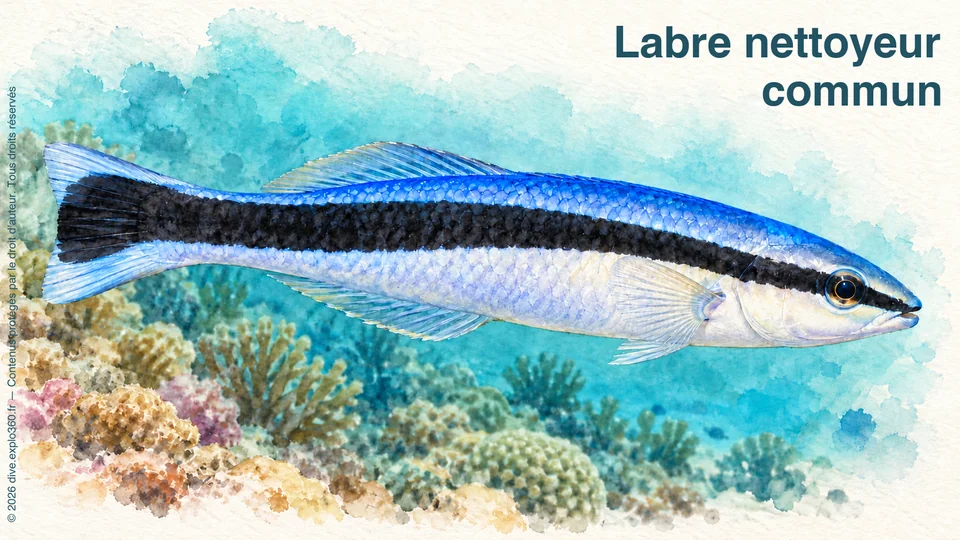
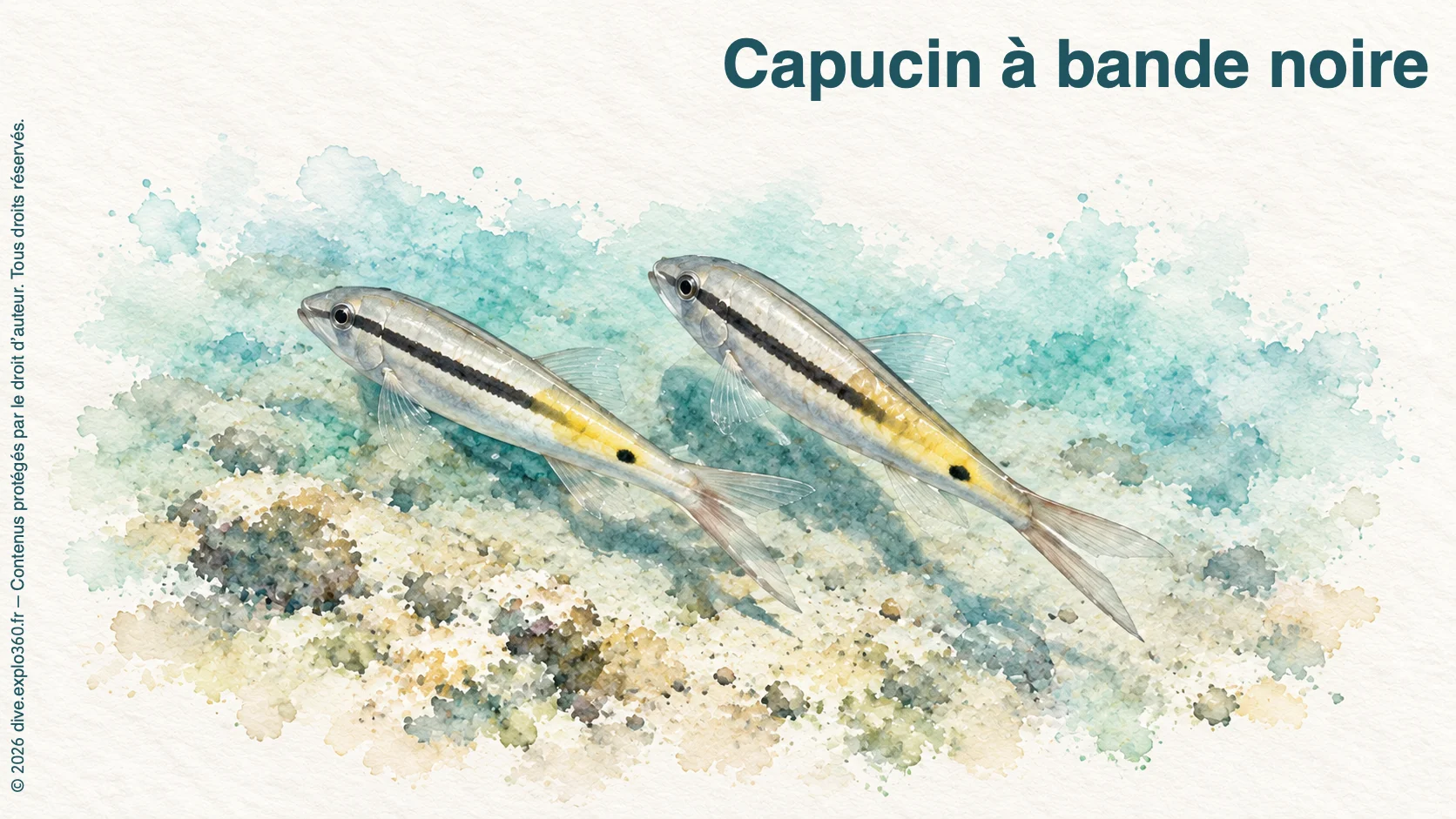
A little mouth at the snout tip accompanies the long black stripe of the bluestreak cleaner wrasse (Labroides dimidiatus). Its body is slender, pale and blue; young fish are darker with a vivid blue line. Up to 14 cm long, it resembles a blenny whose mouth faces downwards.
WHERE DOES IT LIVE?
It lives on coral reefs in the Red Sea and the Indian and Pacific oceans, including the Maldives. It uses lagoons, reef flats and outer slopes. It is most often found in the first few tens of metres but can descend to 100 metres. Its cleaning sites are in places visited by many fish.
WHAT DOES IT EAT?
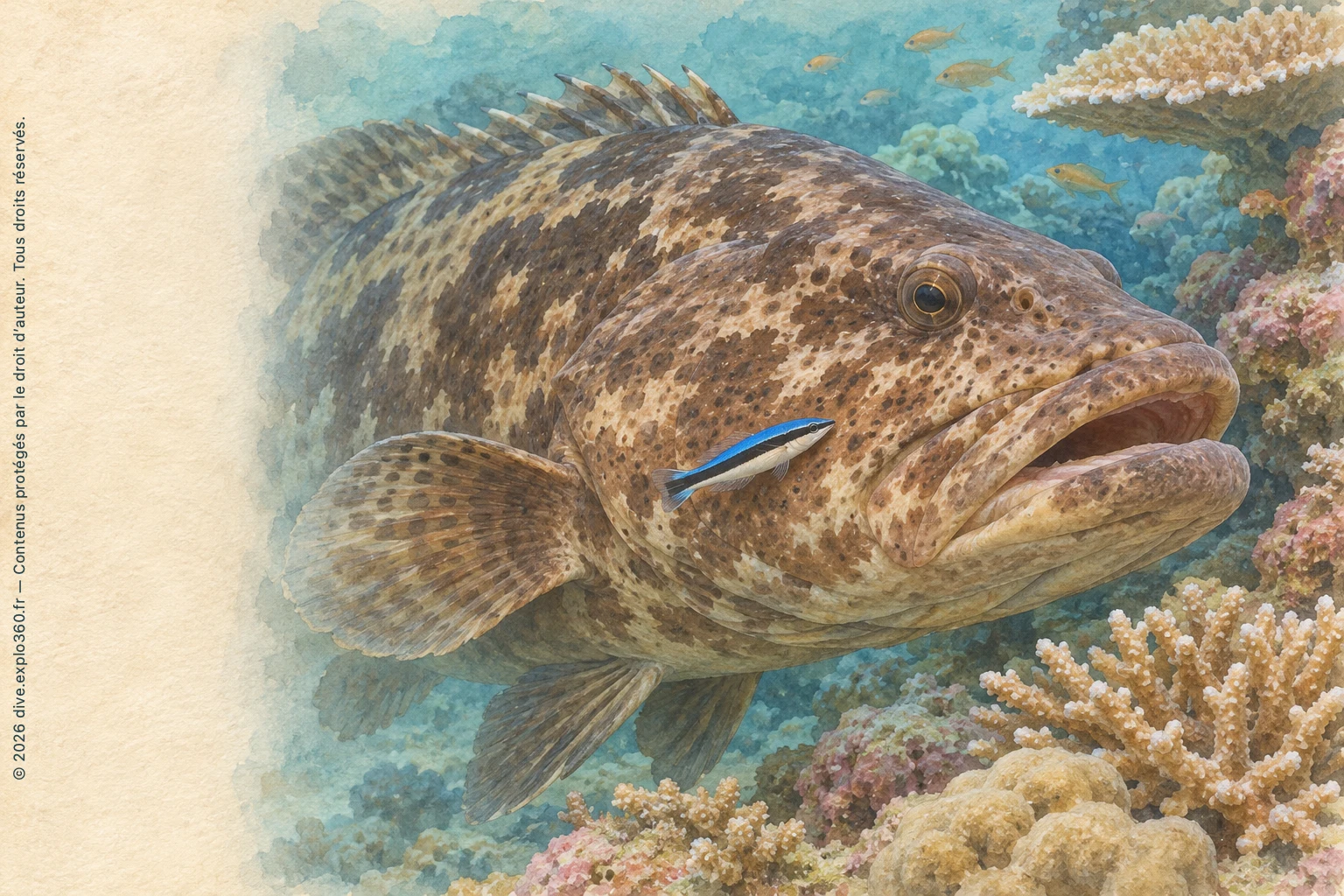
An inspection provides the bluestreak cleaner wrasse with food directly from another fish. It takes parasitic crustaceans from skin, fins, gills and mouth, and also consumes dead or infected tissue. Mucus and some living tissue can also be taken, causing the inspected fish to jolt or move away. These different foods underlie the range of movements during cleaning.
GO FURTHER WITH AMIGANSEAU
Unlock the full profile
Deepen your knowledge with the exclusive chapters and interactive resources included in an AMIGANSEAU licence.
- HOW DOES IT REPRODUCE?
- OUR OBSERVATIONS
- ARTICLE
Also included in the full profile
- Advanced navigation between description, ecological context, observations and behaviour
- Interactive food chain to explore the species’ feeding relationships
 Understand the species