


 Habitat
 Depth
 Group
 Role
 Average size
WHAT DOES IT LOOK LIKE?
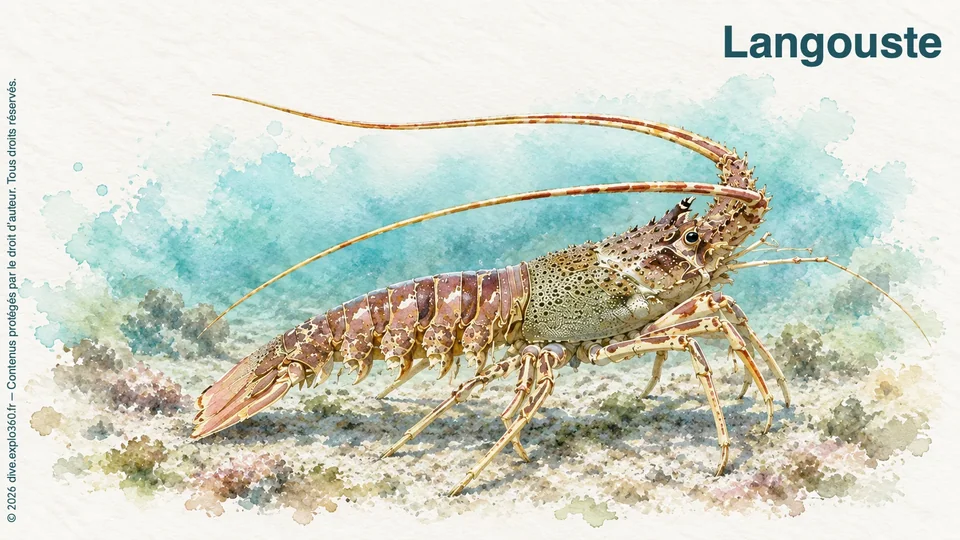
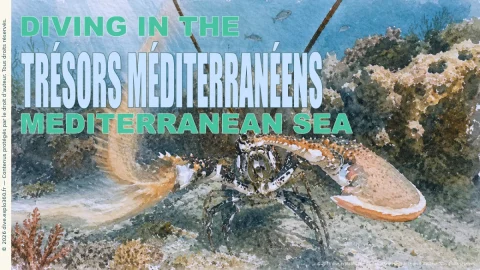
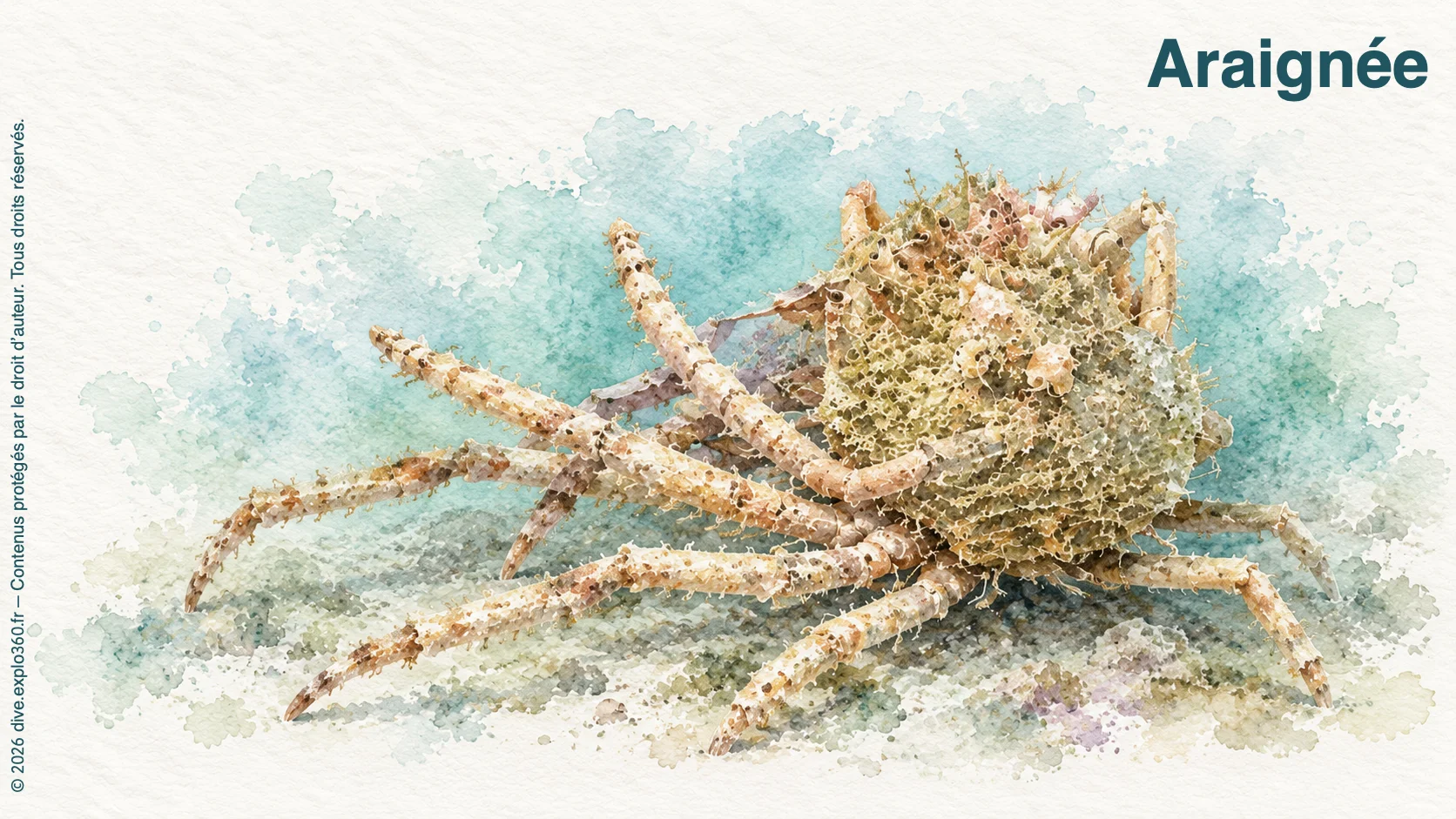
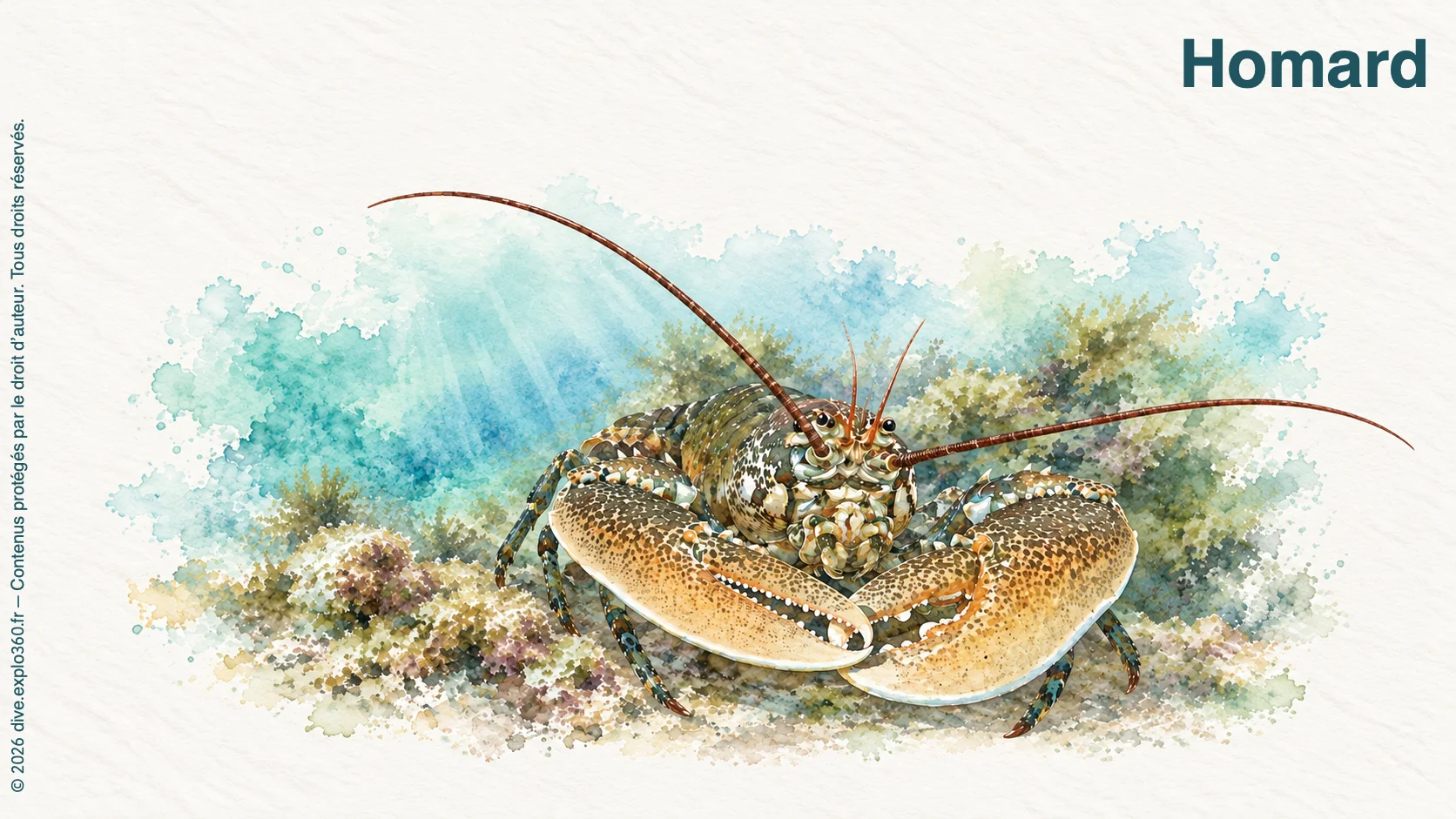
The shell spines and extremely long antennae shape the European spiny lobster (Palinurus elephas). Two strong triangular spines rise above the eyes, which rest on short movable stalks.
The rounded shell continues into a red to violet-brown body with paler areas. The abdomen, the jointed rear portion, ends in a fan. At the front, the legs do not carry large claws like those of the European lobster.
WHERE DOES IT LIVE?
It mainly lives on rocky seabeds, where it finds refuge in cracks, crevices or beneath boulders.
It occurs in the Mediterranean and the eastern Atlantic, generally from a few metres down to several tens of metres deep, sometimes deeper depending on the area.
WHAT DOES IT EAT?
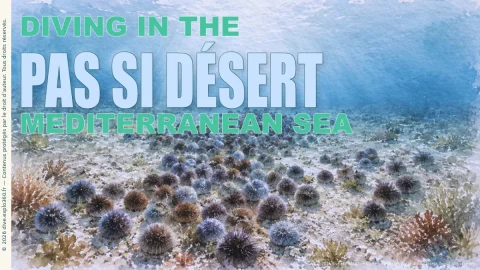
The European spiny lobster uses its strong mouthparts to open shellfish. Molluscs and echinoderms, notably sea urchins, are important foods. Worms, crustaceans, algae and various attached organisms can also enter its menu. Their contribution varies between locations. It also scavenges animal remains, using both live prey and dead food. Handling movements near the mouth are central to understanding how it prepares these varied meals.
GO FURTHER WITH AMIGANSEAU
Unlock the full profile
Deepen your knowledge with the exclusive chapters and interactive resources included in an AMIGANSEAU licence.
- HOW DOES IT REPRODUCE?
- OUR OBSERVATIONS
- ARTICLE
Also included in the full profile
- Advanced navigation between description, ecological context, observations and behaviour
- Interactive food chain to explore the species’ feeding relationships
- Infographic and illustrated summary profile
- Additional photographic observations






 Understand the species