Habitat
 Depth
 Group
 Role
WHAT DOES IT LOOK LIKE?
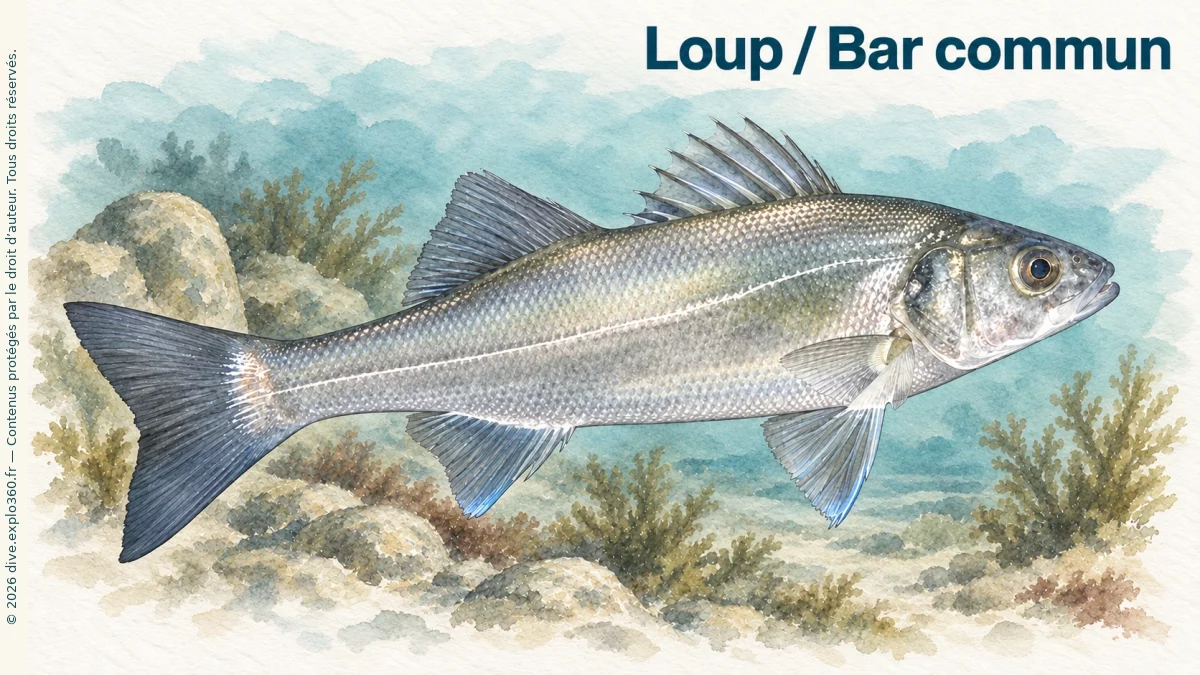
European seabass have elongated outlines, grey backs and silver sides that become paler towards the belly. A large mouth and slightly projecting lower jaw give the head a different profile from that of mullets.
Two clearly separate fins follow each other along the back: the first is spiny, the second softer. The tail is slightly notched. A dark patch may appear behind the head, although it is not always distinct.
Young fish sometimes have small dark spots on the body. They then need to be distinguished from spotted seabass, a separate species with more persistent markings.
WHERE DOES IT LIVE?
These fish mainly frequent inshore waters above sand or rock. They hunt among waves, facing currents and in eddies, from the surface down to a few tens of metres.
They also enter lagoons, ports and estuaries. They tolerate brackish water, the mixture of seawater and fresh water found in some of these places.
WHAT DOES IT EAT?
Young fish mainly catch crustaceans. As they grow, seabass add a larger proportion of fish to their meals; they also eat squid.
A seabass may wait for prey near the bottom or pursue it in open water. When several chase a shoal, the attacks sometimes take place very close to the shore.
GO FURTHER WITH AMIGANSEAU
Unlock the full profile
Deepen your knowledge with the exclusive chapters and interactive resources included in an AMIGANSEAU licence.
- HOW DOES IT REPRODUCE?
- OUR OBSERVATIONS
- ARTICLE
Also included in the full profile
- Advanced navigation between description, ecological context, observations and behaviour
- Interactive food chain to explore the species’ feeding relationships