Habitat
 Depth
 Group
 Role
WHAT DOES IT LOOK LIKE?
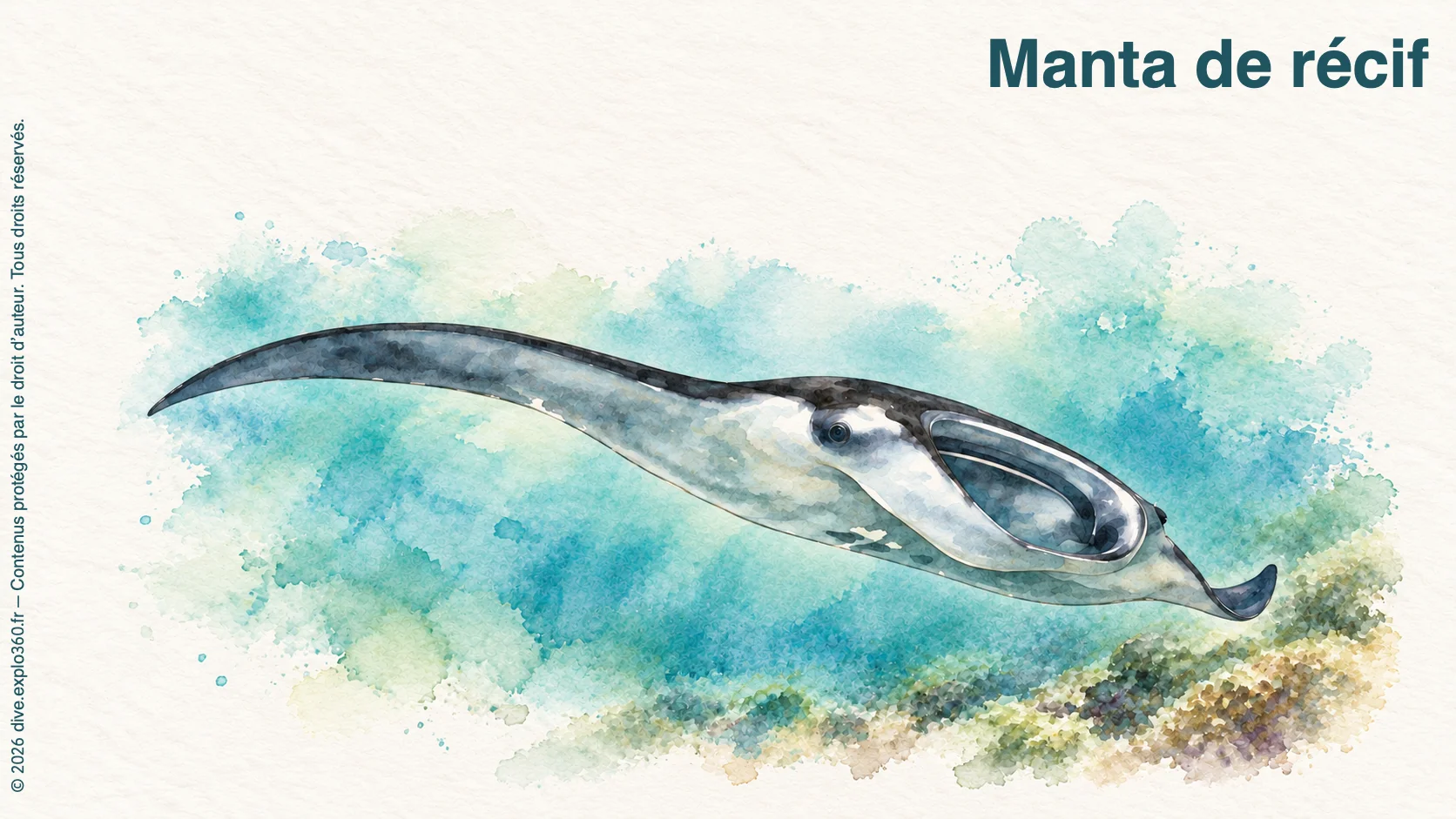
Broad pectoral fins form the disc, and two cephalic lobes flank the mouth. The pale, spotted underside is used for photo-identification. The relevant size measurement is wingspan, reaching about 5.5 m, rather than an ordinary fish body length.WHERE DOES IT LIVE?
It uses coastal and island habitats while also making deep excursions. Feeding aggregations and cleaning stations are particular parts of its activity. Its natural range includes the Red Sea, Indian Ocean and tropical Pacific.WHAT DOES IT EAT?
Its food is zooplankton, including small crustaceans. Cephalic lobes help channel water towards the mouth. Its large size does not make it a predator of the anemonefish or other reef fishes shown in the film.GO FURTHER WITH AMIGANSEAU
Unlock the full profile
Deepen your knowledge with the exclusive chapters and interactive resources included in an AMIGANSEAU licence.
- HOW DOES IT REPRODUCE?
- OUR OBSERVATIONS
Also included in the full profile
- Advanced navigation between description, ecological context, observations and behaviour
- Interactive food chain to explore the species’ feeding relationships
- Infographic and illustrated summary profile