Habitat
 Depth
 Group
 Role
 Size
WHAT DOES IT LOOK LIKE?
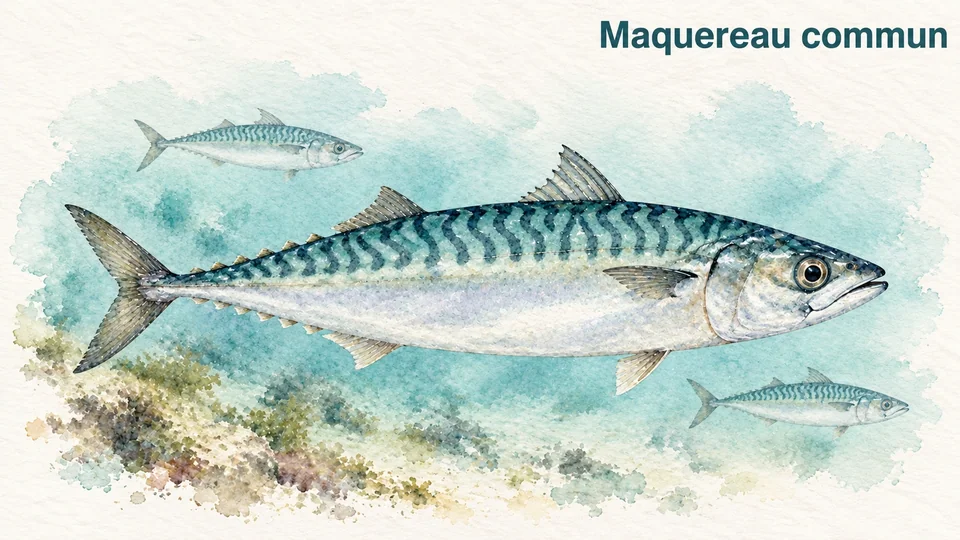
The contrast between striped back and plain belly highlights the Atlantic mackerel (Scomber scombrus). Dark chevrons cross the blue-green upper side; the flanks are pearly white. Two dorsal fins, on the back, are clearly spaced apart. Nearer the forked tail, five finlets, tiny fins, occupy each of the upper and lower edges.
WHERE DOES IT LIVE?
The species occurs in the North Atlantic, Mediterranean and Black Sea. Syntheses describe seasonal movements and depths reaching 250 m. Coastal, offshore and near-bottom phases vary by population and conditions. Detailed regional schedules cannot simply apply everywhere. Resource-following groups make occasional encounters difficult to interpret as residence.
WHAT DOES IT EAT?
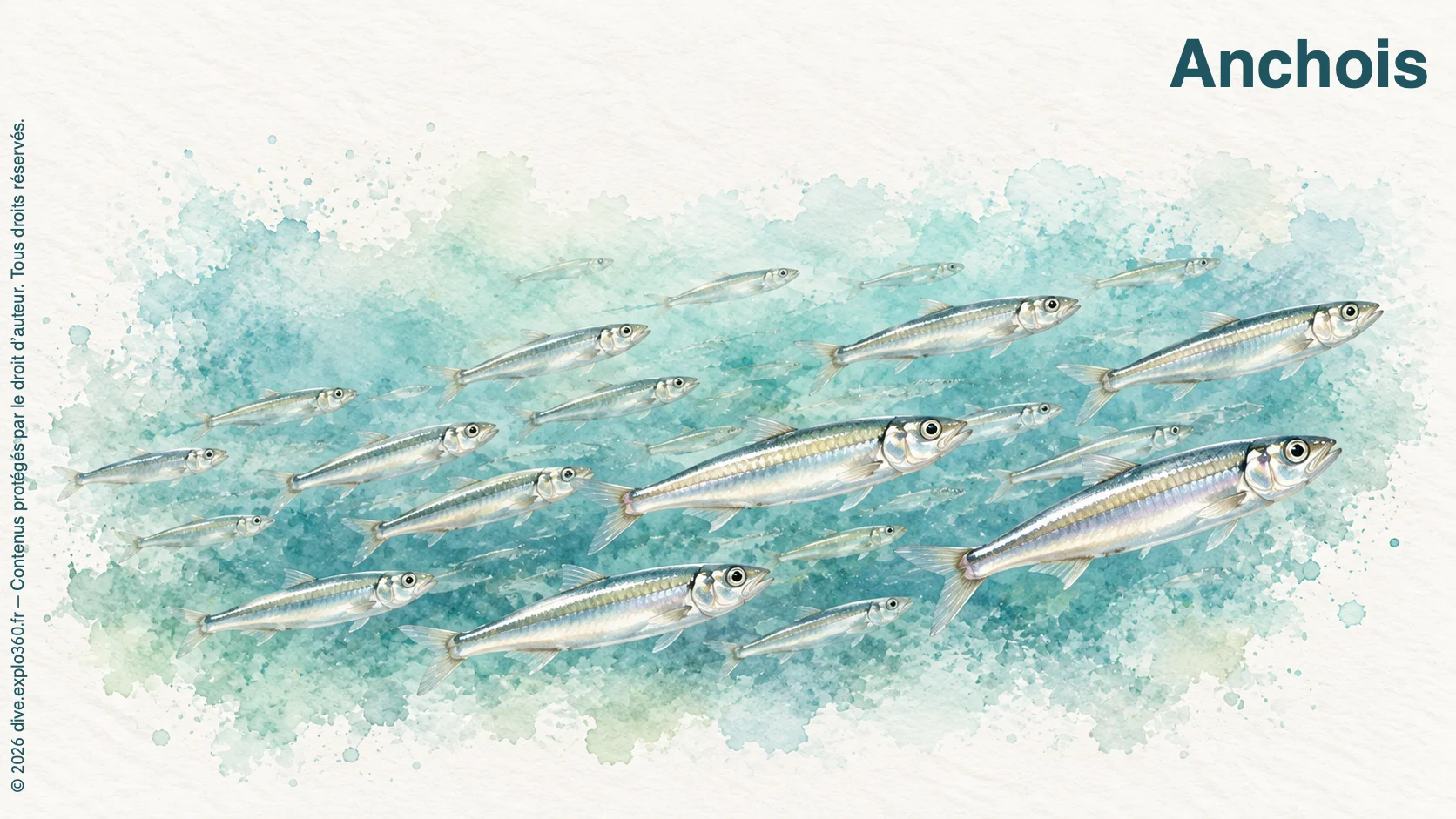
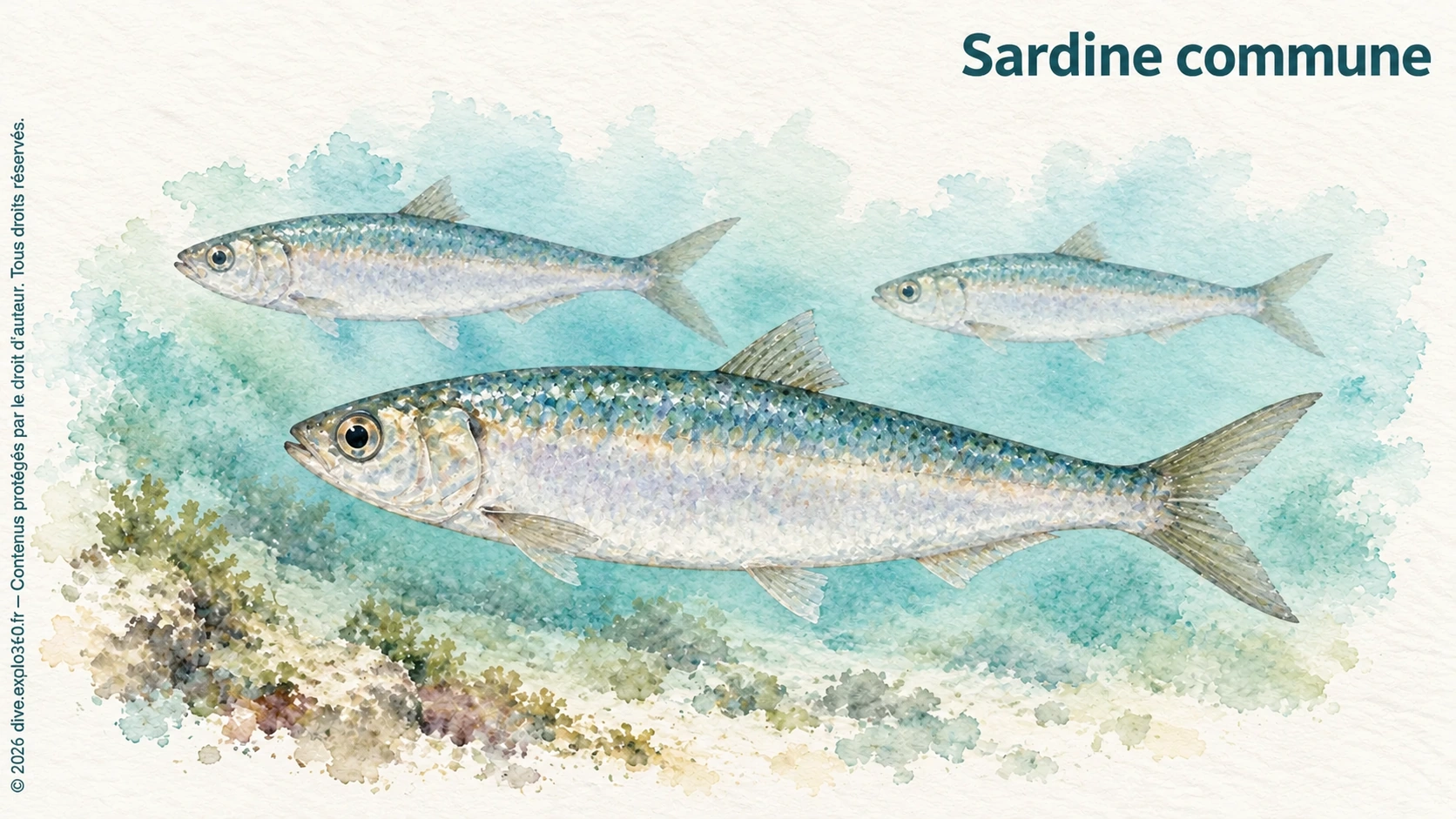
From tiny crustaceans to fish, the Atlantic mackerel uses resources of different sizes. Copepods feed early stages in particular. Adults also consume other planktonic crustaceans and small fish such as anchovies and sardines. Their contributions vary with accessible resources and season.
GO FURTHER WITH AMIGANSEAU
Unlock the full profile
Deepen your knowledge with the exclusive chapters and interactive resources included in an AMIGANSEAU licence.
- HOW DOES IT REPRODUCE?
- OUR OBSERVATIONS
- ARTICLE
Also included in the full profile
- Advanced navigation between description, ecological context, observations and behaviour
- Interactive food chain to explore the species’ feeding relationships
 Understand the species