


 Habitat
 Depth
 Group
 Role
 Average size
 Precautions
WHAT DOES IT LOOK LIKE?
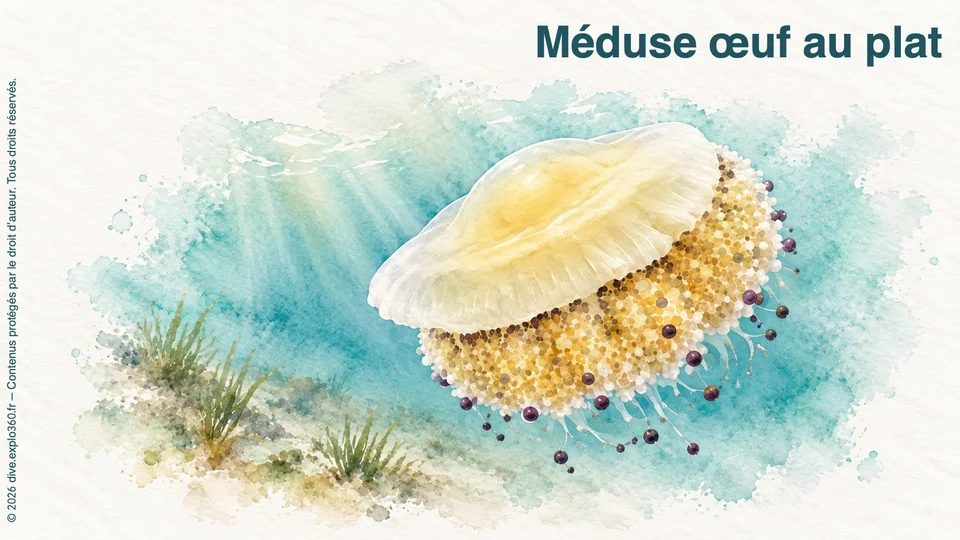
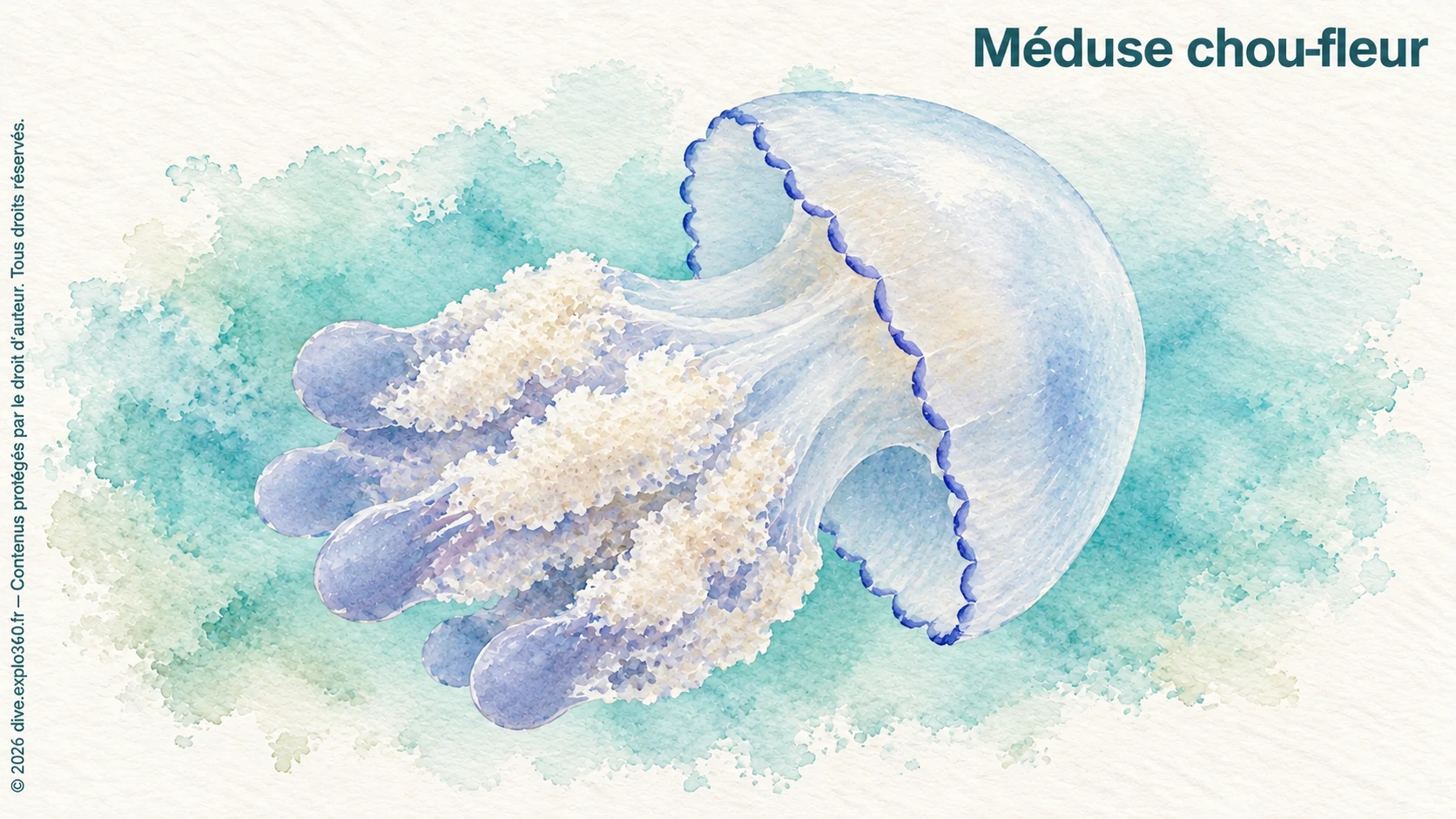
The raised centre of the fried egg jellyfish (Cotylorhiza tuberculata) stands above a flatter, paler disc. The contrast in shape and colour immediately recalls the egg in its name.
Underneath, eight branching arms form a dense bouquet of projections. Their terminal buttons are pale, often bluish or violet. The bell edge remains without long trailing tentacles.
WHERE DOES IT LIVE?
It lives in open water, most often in well-lit areas near the surface. It drifts with currents but can also move slowly. It is generally found between the surface and a few dozen metres deep.
WHAT DOES IT EAT?
Beneath the fried egg jellyfish’s bell, highly divided oral arms provide numerous food entrances. Tiny plankton enters through openings connected to the digestive cavity. The adult does not retain the single central mouth of earlier stages. Another resource lies in its tissues: symbiotic microalgae make organic substances using light and supply part to the jellyfish. Captured food and its partners’ photosynthetic production both contribute to nutrition.
GO FURTHER WITH AMIGANSEAU
Unlock the full profile
Deepen your knowledge with the exclusive chapters and interactive resources included in an AMIGANSEAU licence.
- HOW DOES IT REPRODUCE?
- OUR OBSERVATIONS
- ARTICLE
Also included in the full profile
- Advanced navigation between description, ecological context, observations and behaviour
- Interactive food chain to explore the species’ feeding relationships
- Infographic and illustrated summary profile
- Additional photographic observations
 Understand the species