Habitat
 Depth
 Group
 Role
 Average size
 Good to know
WHAT DOES IT LOOK LIKE?
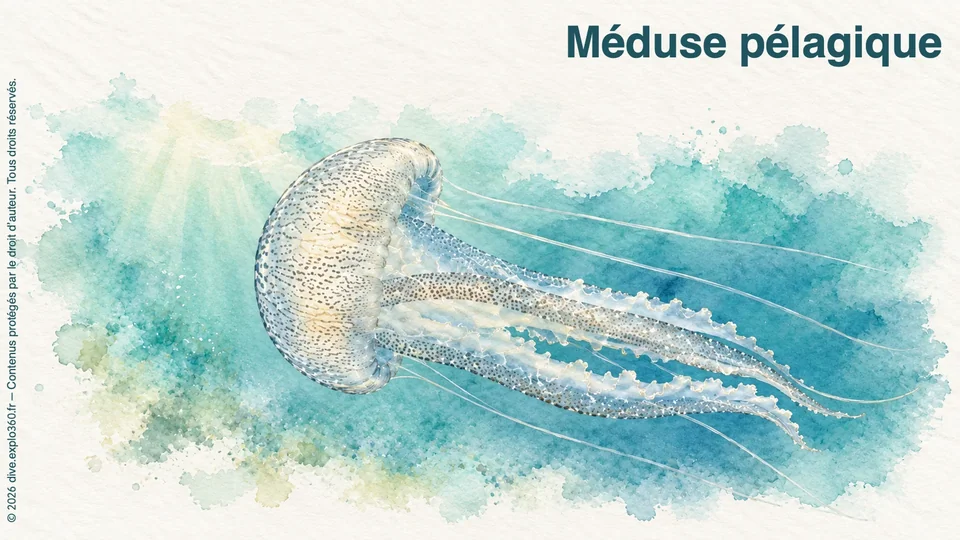
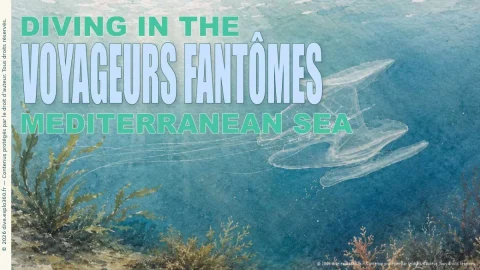
The long filaments of the mauve stinger (Pelagia noctiluca) contrast with four broader arms hanging in the centre. Eight fine tentacles arise from the edge of the umbrella, the rounded bell.
Pink and violet colour this bell and the scalloped arms with wavy edges. Small mauve bumps dot their surface, giving the spots actual relief.
WHERE DOES IT LIVE?
It lives in open water and occurs both offshore and near the coast. Present in the Mediterranean and the Atlantic Ocean, it may appear in large numbers depending on environmental conditions.
WHAT DOES IT EAT?
The mauve stinger’s long tentacles are only part of its feeding apparatus: stinging cells also cover the oral arms and bell. They help catch crustaceans and gelatinous prey, including comb jellies, other jellyfish and salps. Small fish can also be taken. Mucus then helps move food towards the mouth. Prey held near the oral arms reveals a transport stage after interception in water and before ingestion.
GO FURTHER WITH AMIGANSEAU
Unlock the full profile
Deepen your knowledge with the exclusive chapters and interactive resources included in an AMIGANSEAU licence.
- HOW DOES IT REPRODUCE?
- OUR OBSERVATIONS
- ARTICLE
Also included in the full profile
- Advanced navigation between description, ecological context, observations and behaviour
- Interactive food chain to explore the species’ feeding relationships
- Infographic and illustrated summary profile
 Understand the species