 Habitat
 Depth
 Group
 Role
 Average size
 Good to know
WHAT DOES IT LOOK LIKE?
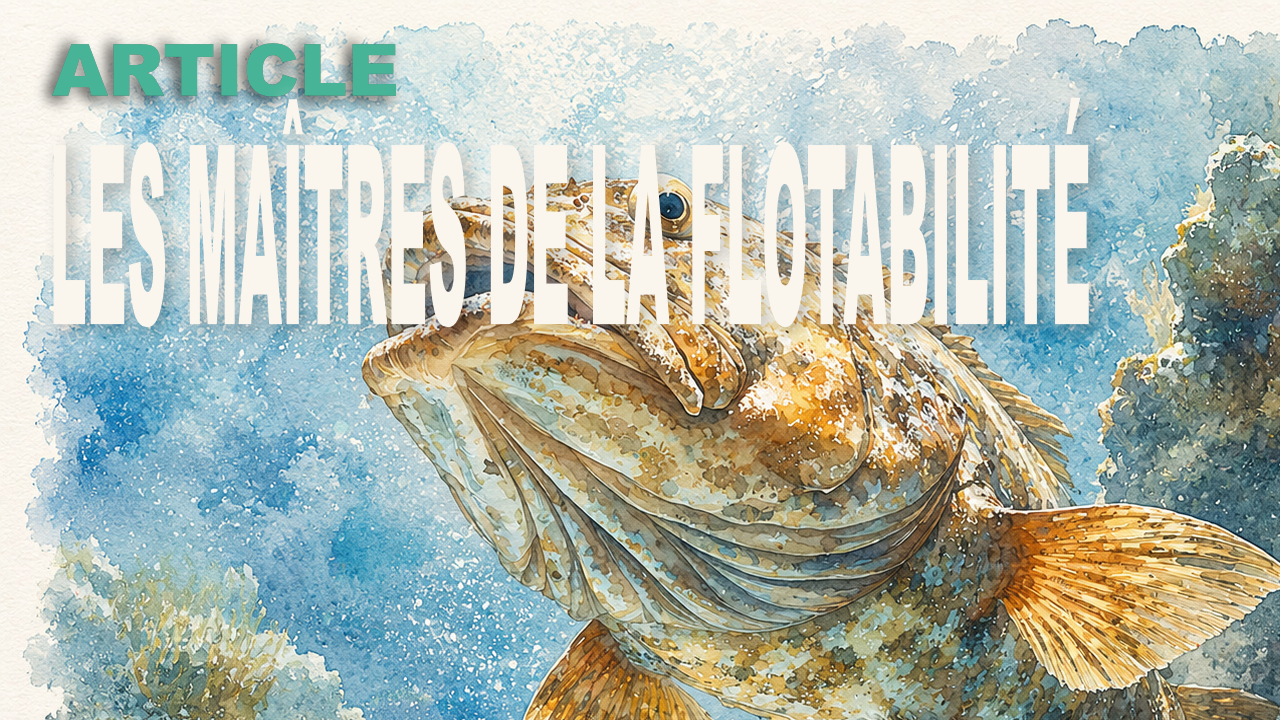
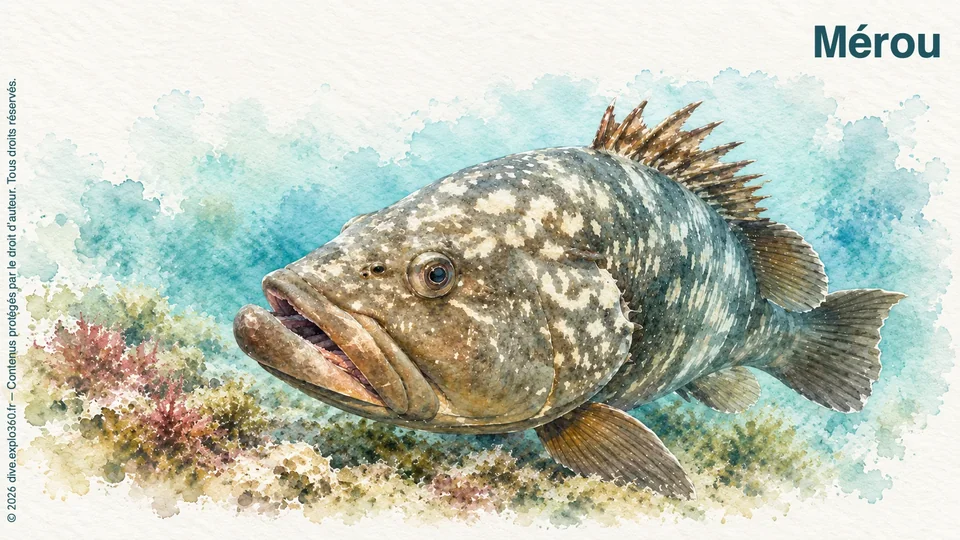
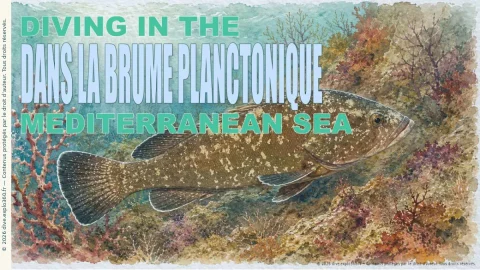
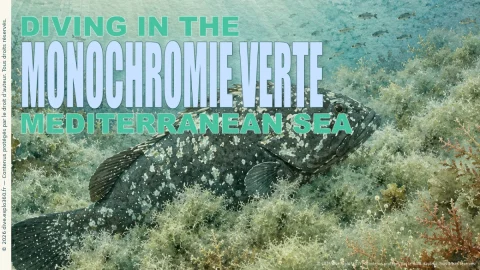
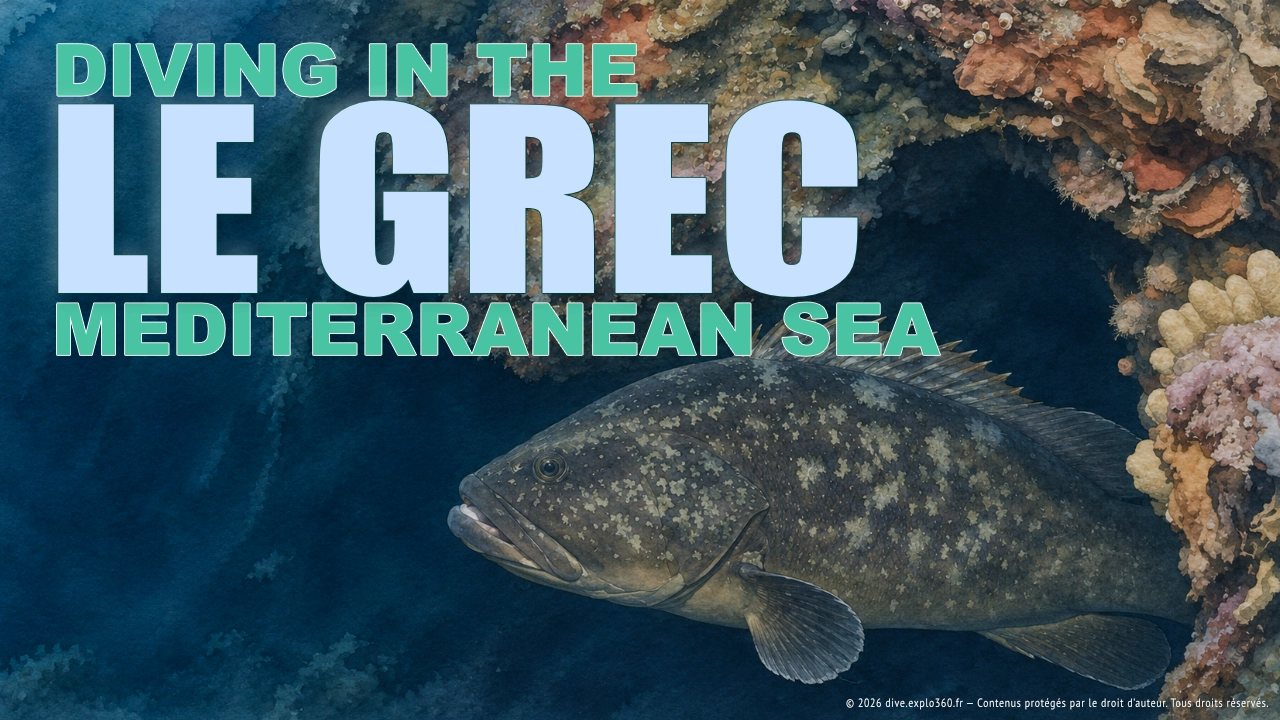
The broad head and thick lips give the dusky grouper (Epinephelus marginatus) a strong presence. Its heavy body has brown to dark brown colouring, patterned with irregular pale patches extending onto the head.
The tail is rounded and may have a fine pale border. In young fish, the colour contrasts are often sharper despite a less imposing outline.
WHERE DOES IT LIVE?
It mainly lives on rocky seabeds rich in shelters, such as caves, fissures or overhangs. It occurs from shallow water down to several dozen metres, sometimes deeper. It often remains faithful to a specific territory.
WHAT DOES IT EAT?
A motionless dusky grouper may be waiting in ambush for prey within reach. Crustaceans, fish and cephalopods feed this predator. Details change with growth: small crustaceans dominate early meals, crabs become important, and large individuals take more fish and cephalopods, including octopuses and cuttlefish. The prey taken also vary with local food availability.
GO FURTHER WITH AMIGANSEAU
Unlock the full profile
Deepen your knowledge with the exclusive chapters and interactive resources included in an AMIGANSEAU licence.
- HOW DOES IT REPRODUCE?
- OUR OBSERVATIONS
- ARTICLE
Also included in the full profile
- Advanced navigation between description, ecological context, observations and behaviour
- Interactive food chain to explore the species’ feeding relationships
- Infographic and illustrated summary profile
- Additional photographic observations

 Understand the species