Habitat
 Depth
 Group
 Role
WHAT DOES IT LOOK LIKE?
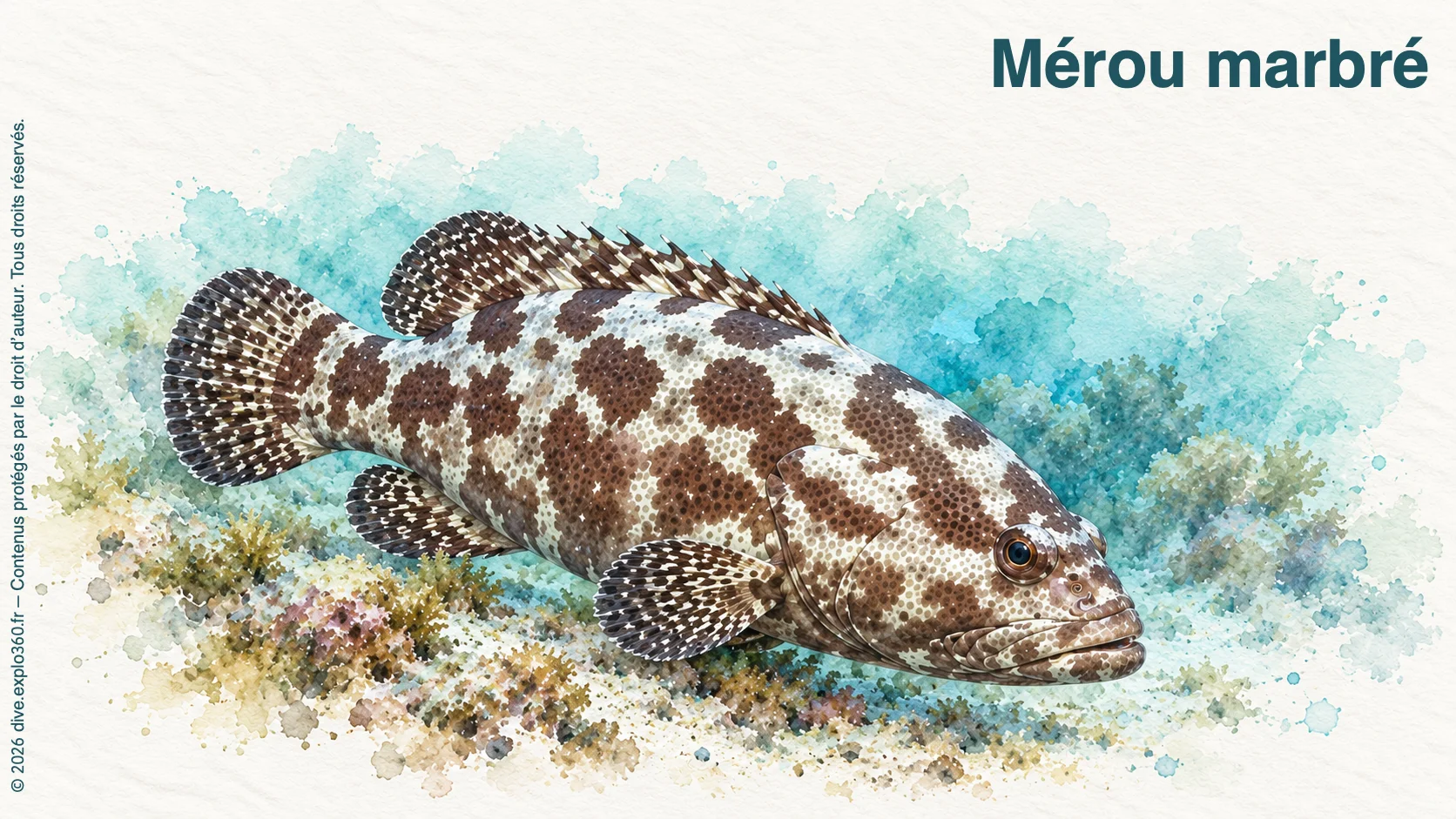
The heavy body carries broad irregular brown blotches over a paler background densely covered in small spots, including on the fins. The forehead becomes distinctly convex behind the eyes. The tail is rounded, with a small dark saddle at its base. Large individuals may reach about 1.2 m.WHERE DOES IT LIVE?
This grouper uses lagoon pinnacles, channels and outer reef slopes, generally in clear, coral-rich water. Juveniles may occupy seagrass beds. Changing habitat use during growth shows why reef conservation also involves neighbouring environments.WHAT DOES IT EAT?
References describe a diet of fishes, crabs and cephalopods. Prey size and availability affect capture opportunities. Links remain at the documented food-group level: a neighbouring fish in the film is not designated as prey without further evidence.GO FURTHER WITH AMIGANSEAU
Unlock the full profile
Deepen your knowledge with the exclusive chapters and interactive resources included in an AMIGANSEAU licence.
- HOW DOES IT REPRODUCE?
- OUR OBSERVATIONS
Also included in the full profile
- Advanced navigation between description, ecological context, observations and behaviour
- Interactive food chain to explore the species’ feeding relationships
- Infographic and illustrated summary profile