Habitat
 Depth
 Group
 Role
 Size
 Good to know
WHAT DOES IT LOOK LIKE?
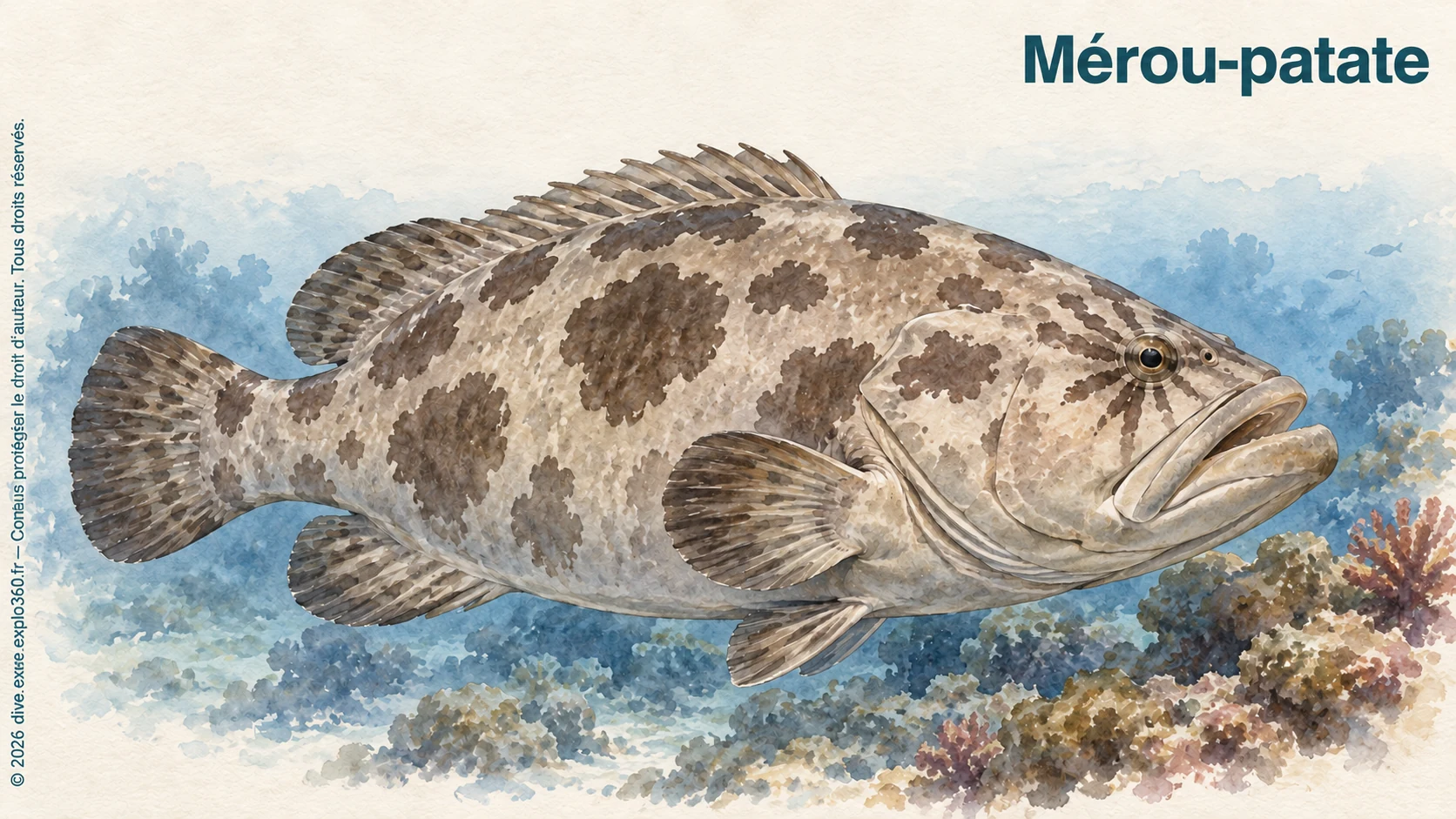
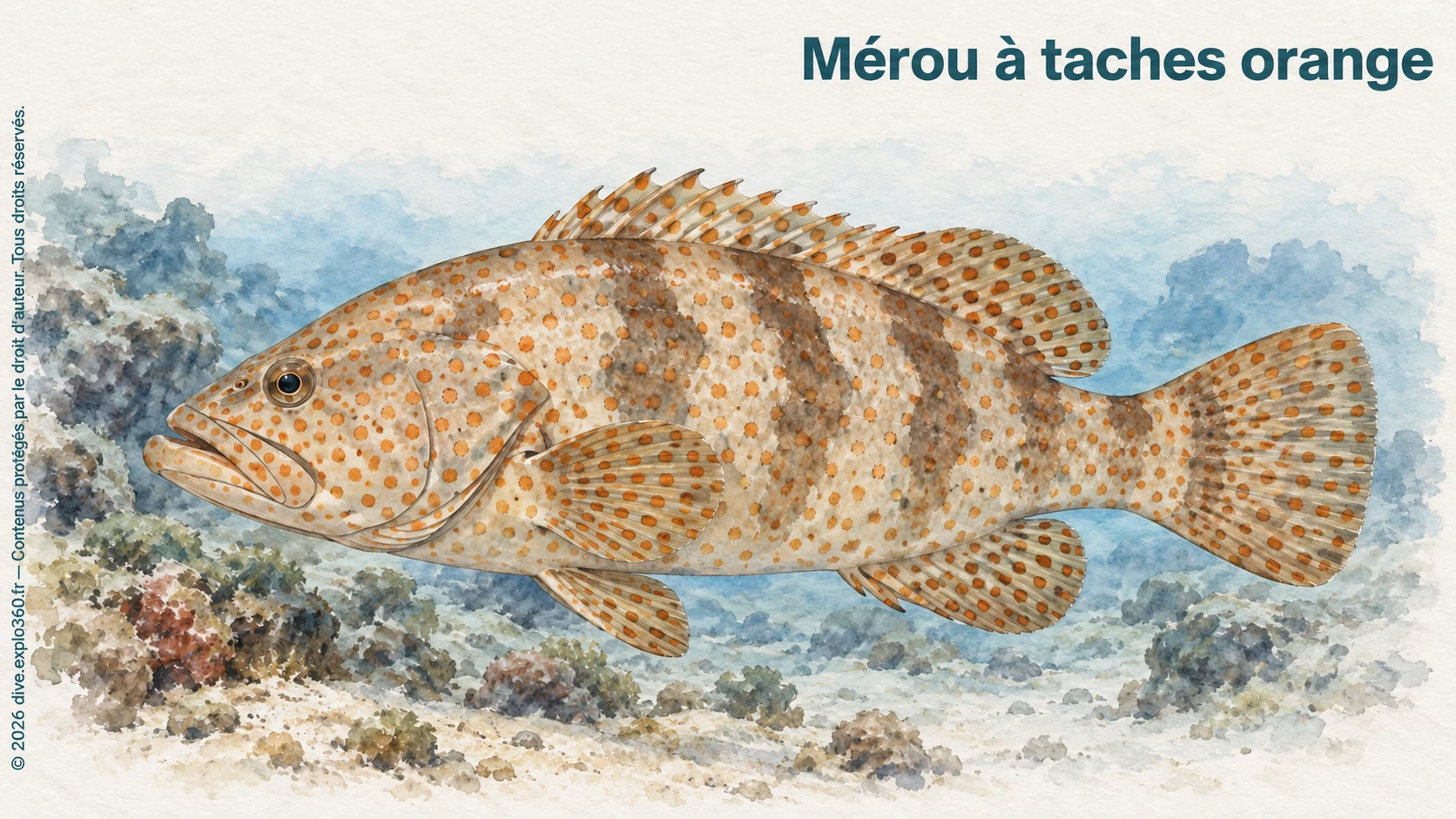
Very large adult potato groupers (Epinephelus tukula) may darken strongly. Large dark blotches, generally wider than the eye, show better against the grey-beige of paler colour forms. The head also carries radiating marks around the eyes. The massive body with a large mouth and rounded tail may reach about 2 m, including the tail.
WHERE DOES IT LIVE?
This species inhabits Red Sea and western Indo-Pacific reefs. Adults use reef channels, caves and overhangs. Adults are documented between ten and one hundred and fifty metres deep. Young fish can occur much nearer the surface, including tidal pools. Habitat use therefore changes as an individual grows rather than remaining identical throughout life.
WHAT DOES IT EAT?
Within mouth range, a fish or large crustacean may be sucked in by the potato grouper. Crabs and spiny lobsters are among its resources. This predator may hunt from ambush, with rays also recorded among its catches.
GO FURTHER WITH AMIGANSEAU
Unlock the full profile
Deepen your knowledge with the exclusive chapters and interactive resources included in an AMIGANSEAU licence.
- HOW DOES IT REPRODUCE?
- OUR OBSERVATIONS
- ARTICLE
Also included in the full profile
- Advanced navigation between description, ecological context, observations and behaviour
- Interactive food chain to explore the species’ feeding relationships
 Understand the species