


 Habitat
 Depth
 Group
 Role
 Size
 Good to know
WHAT DOES IT LOOK LIKE?
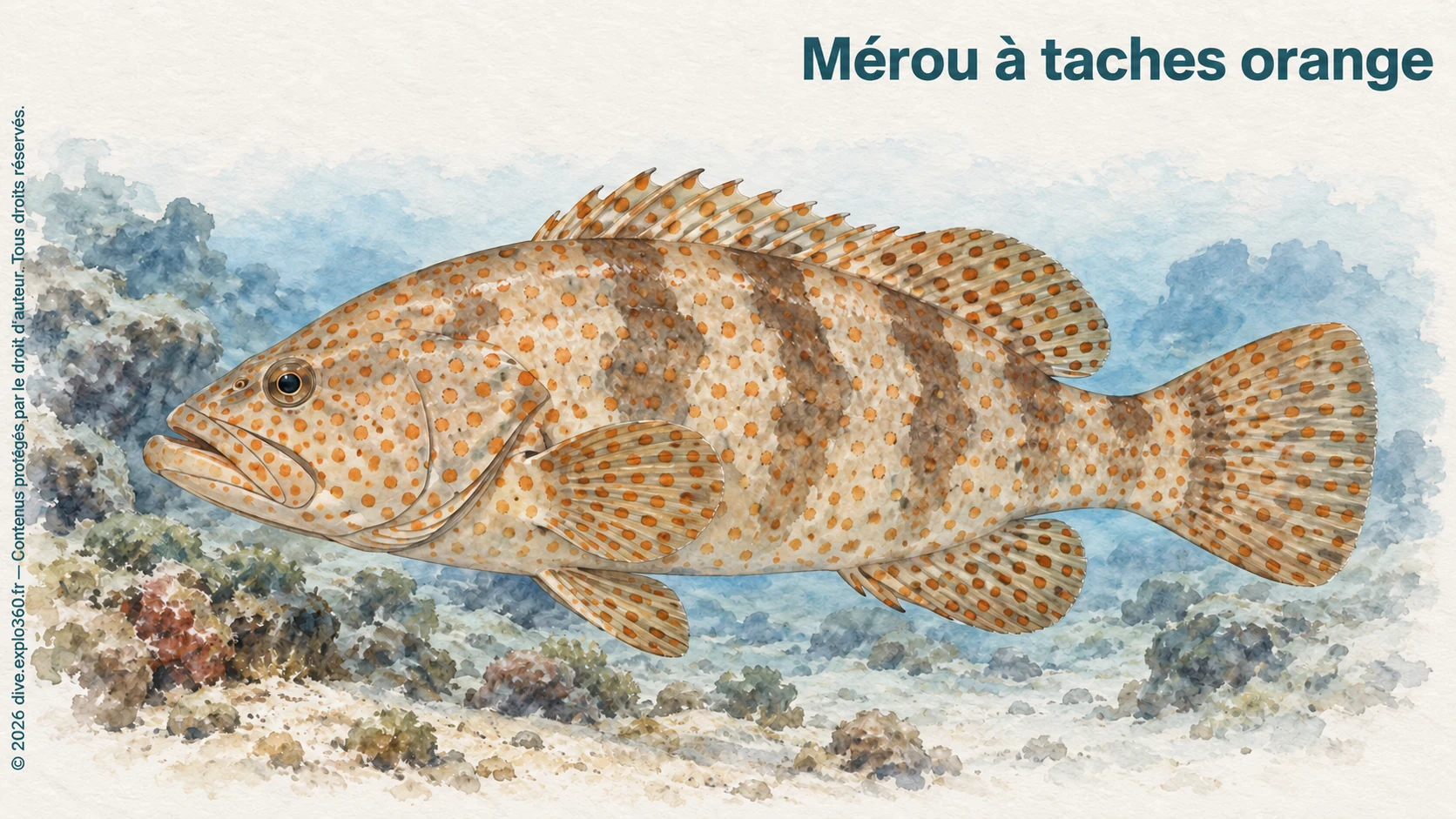
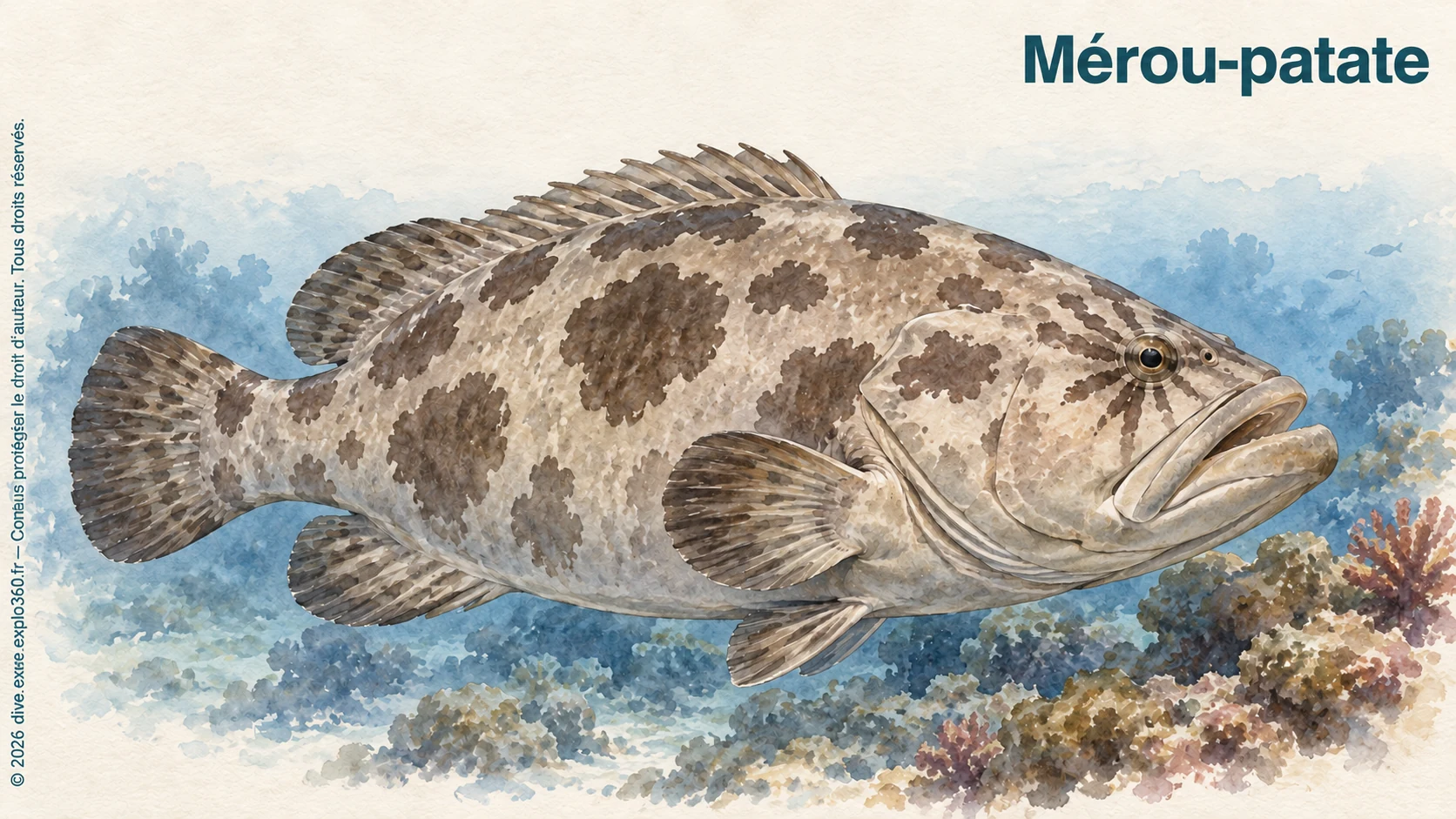
The little spots vary in colour in the orange-spotted grouper (Epinephelus coioides), from orange to reddish brown. Large fish may show less distinctly orange spots. Pale colouring also carries irregular dark bars, with a rounded tail. Several groupers resemble it, limiting recognition by colour alone. It reaches about 1.20 m, including the tail.
WHERE DOES IT LIVE?
The orange-spotted grouper occurs in the Red Sea and western Indo-Pacific. It uses coastal reefs, sometimes in cloudy water, and bottoms containing mud or rubble. Its occurrence is documented from around one to one hundred metres. Young fish also occupy estuaries and mangroves. Young fish can grow in these sheltered coastal waters. Conditions beside a river mouth differ from those on an outer reef. Tolerance of brackish water helps the species use this coastal environment.
WHAT DOES IT EAT?
Fish and crustaceans make up the orange-spotted grouper’s menu. It notably takes shrimps and crabs. Available prey around the seabed supply this animal diet in its coastal habitats.
GO FURTHER WITH AMIGANSEAU
Unlock the full profile
Deepen your knowledge with the exclusive chapters and interactive resources included in an AMIGANSEAU licence.
- HOW DOES IT REPRODUCE?
- OUR OBSERVATIONS
- ARTICLE
Also included in the full profile
- Advanced navigation between description, ecological context, observations and behaviour
- Interactive food chain to explore the species’ feeding relationships
 Understand the species

