Habitat
 Depth
 Group
 Role
WHAT DOES IT LOOK LIKE?
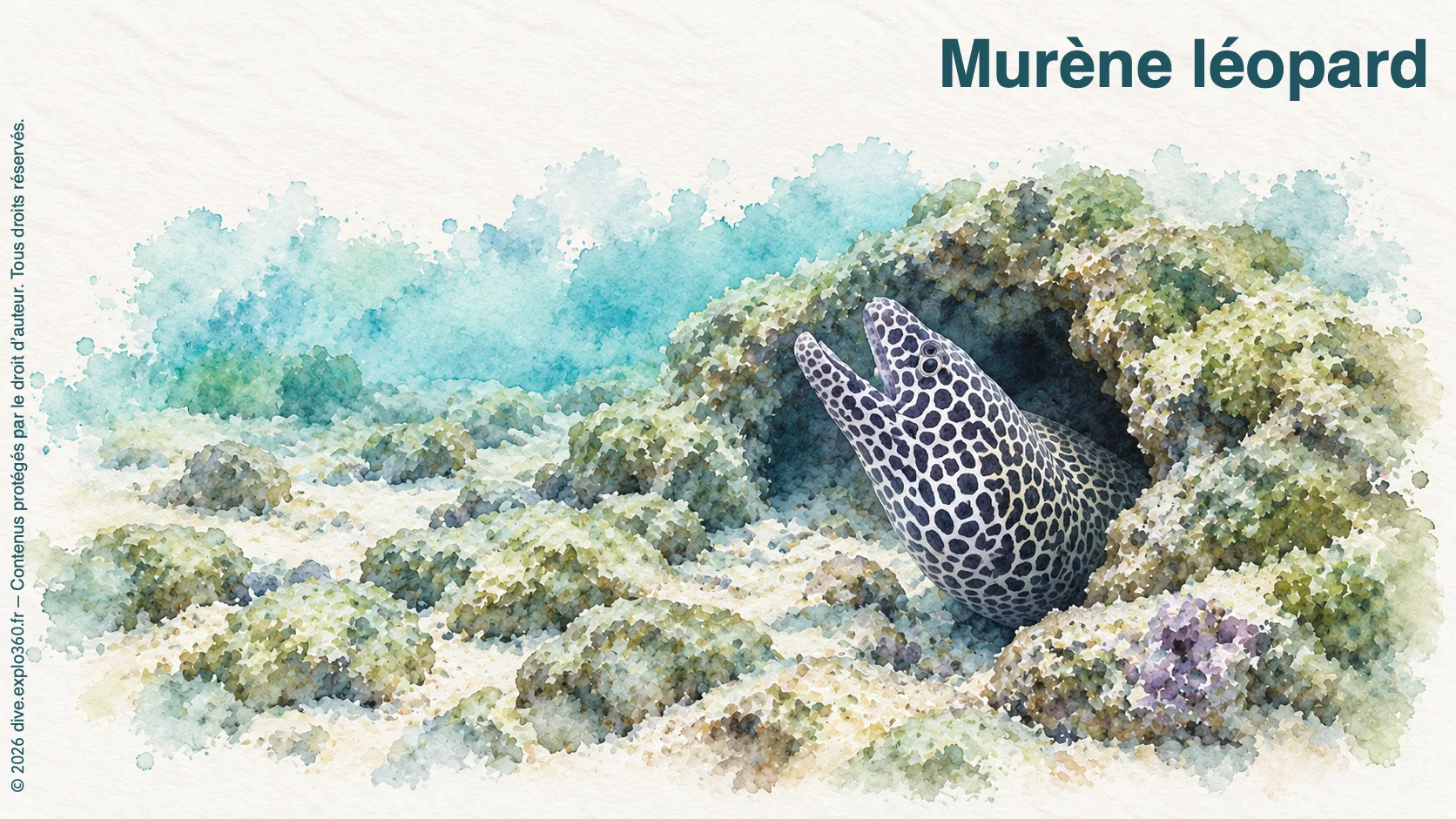
Dark interconnected markings cover a cream-to-grey background, varying with size and habitat. Pectoral fins are absent. Museum references support about 1.8 m, without confirming some larger estimates reported elsewhere.WHERE DOES IT LIVE?
Its habitat includes coral reefs and rocky structures with cavities. Its natural range covers the Indian Ocean and western Pacific. The Maldivian sighting is one local observation within this distribution.WHAT DOES IT EAT?
Its diet includes fishes and cephalopods. Regular mouth opening helps move water over the gills. That breathing movement alone is neither a threat nor evidence of hunting.GO FURTHER WITH AMIGANSEAU
Unlock the full profile
Deepen your knowledge with the exclusive chapters and interactive resources included in an AMIGANSEAU licence.
- HOW DOES IT REPRODUCE?
- OUR OBSERVATIONS
Also included in the full profile
- Advanced navigation between description, ecological context, observations and behaviour
- Interactive food chain to explore the species’ feeding relationships
- Infographic and illustrated summary profile