Habitat
 Depth
 Group
 Role
WHAT DOES IT LOOK LIKE?
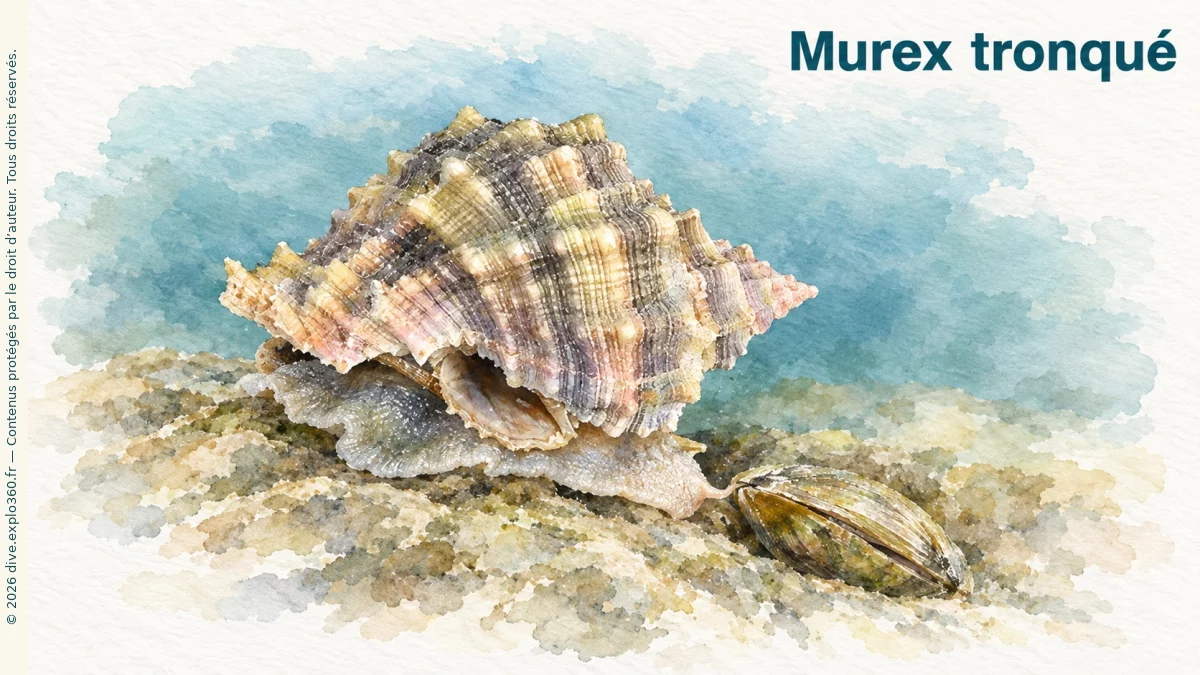
Its thick, heavy shell commonly measures four to seven and a half centimetres. A pointed spire rises above a large final whorl. A short curved siphonal canal extends from the opening, accommodating a tube involved in water exchange.
Thickened ridges carry bumps or spines, varying greatly in development. Attached organisms may conceal grey, brown or violet bands. A horny operculum closes the shell when the animal withdraws.
WHERE DOES IT LIVE?
It inhabits rock, mud and seagrass, from shallow water to around fifty metres. A muscular foot allows it to crawl over these surfaces.
Algae, sponges and small animals often colonise the shell. This covering forms part of the normal appearance of living individuals.
WHAT DOES IT EAT?
The murex captures prey, including bivalves, and also eats carcasses. It can detect food odours in the water.
It reaches bivalve tissues by opening or boring through the valves using mechanical action and secretions. Its extendable proboscis then brings the mouth and radula, a band of tiny teeth, into contact with the flesh.
GO FURTHER WITH AMIGANSEAU
Unlock the full profile
Deepen your knowledge with the exclusive chapters and interactive resources included in an AMIGANSEAU licence.
- HOW DOES IT REPRODUCE?
- OUR OBSERVATIONS
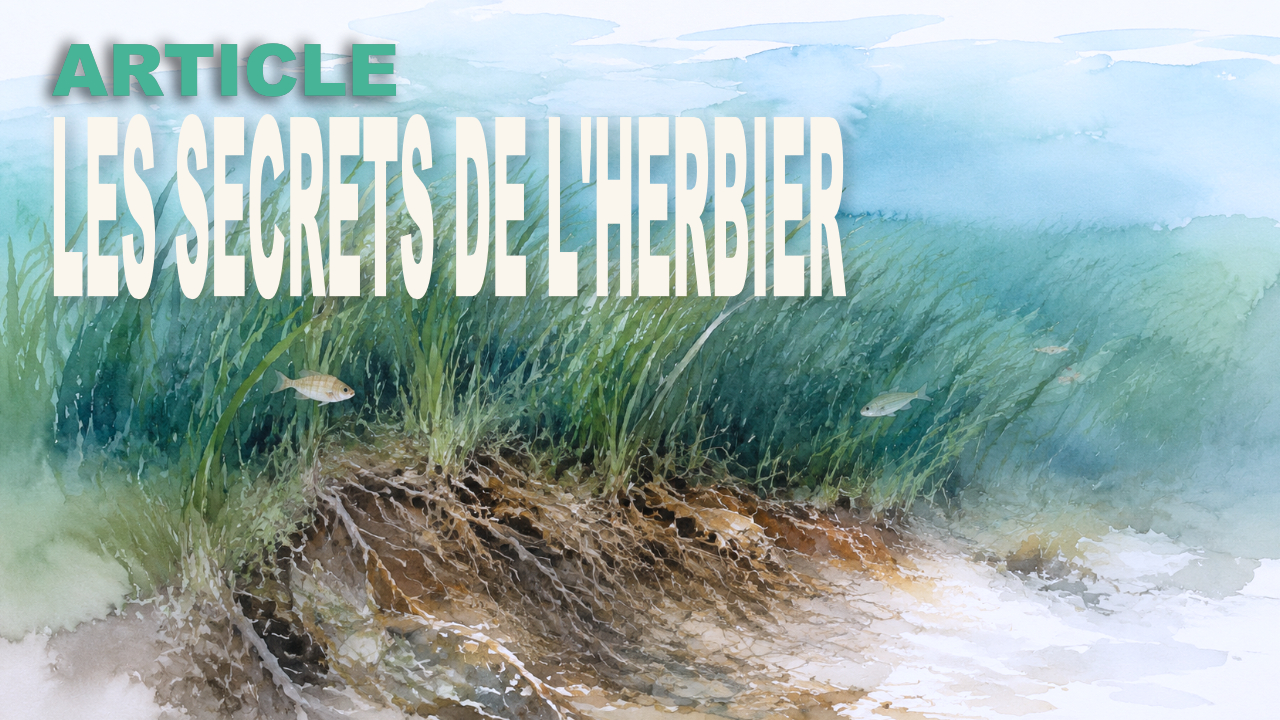
- ARTICLE
Also included in the full profile
- Advanced navigation between description, ecological context, observations and behaviour
- Interactive food chain to explore the species’ feeding relationships