


 Habitat
 Depth
 Group
 Role
 Average size
WHAT DOES IT LOOK LIKE?
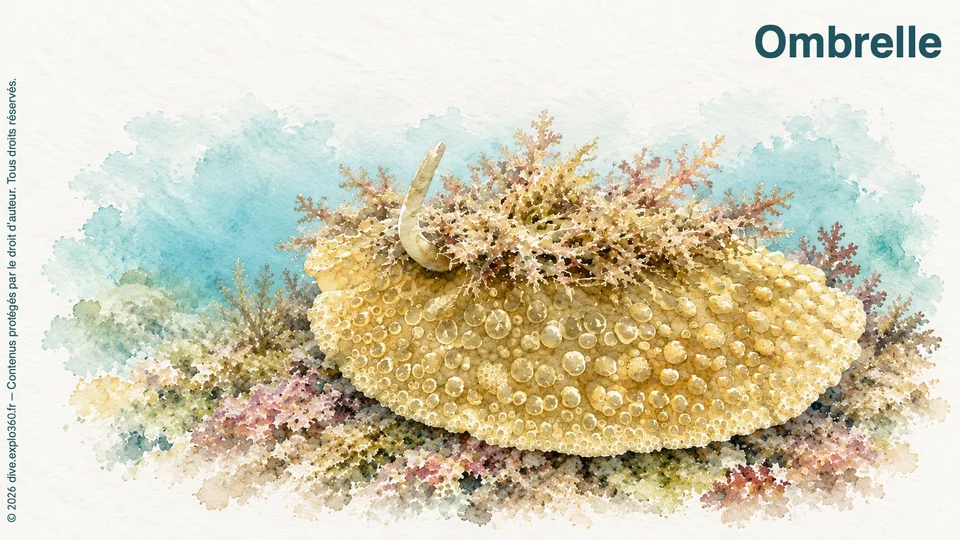
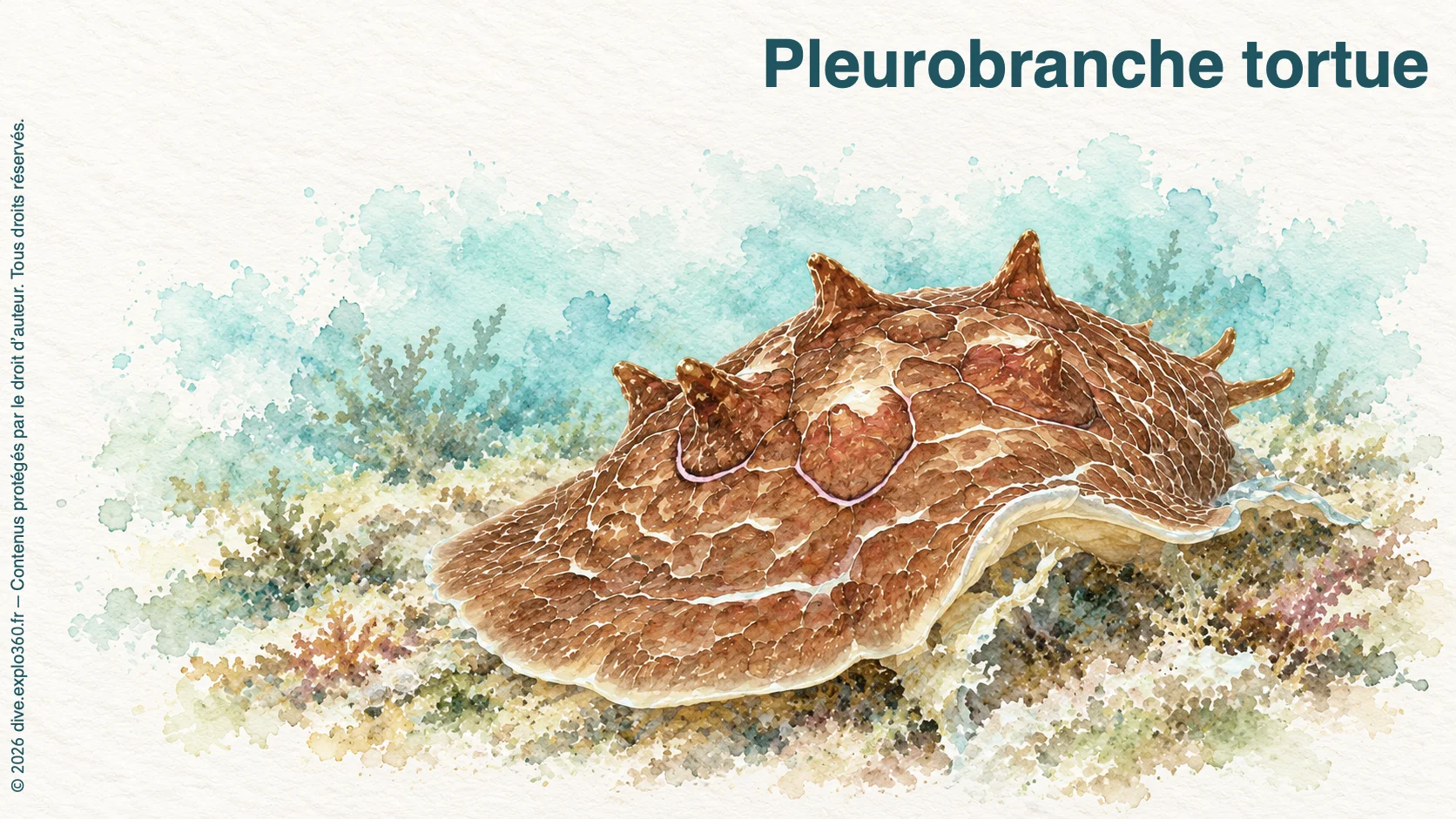
The small shell on the back of the umbrella slug (Umbraculum umbraculum) is external. Flat and rounded, it sits above a much broader fleshy body whose outline extends well beyond it.
Large irregular bumps give relief to the beige, brown or orange surface. The shell may blend visually with organisms covering it, but it is not hidden inside the body.
WHERE DOES IT LIVE?
The Umbrella slug lives on seabeds, mainly rocky ones, from shallow areas down to several dozen metres. It is often associated with sponge-rich environments. It can also occur on mixed seabeds combining sand and rock.
WHAT DOES IT EAT?
The umbrella slug can surround a sponge with the front of its mantle and rasp tissues using its radula. This grazing targets animal prey: sponges, particularly demosponges, provide its food. Several species are eaten, without a firmly established single preference. Processing leaves traces in casts, where mineral sponge spicules can form little mucus-bound packages. Feeding combines contact with the food surface, rasping and tissue ingestion.
GO FURTHER WITH AMIGANSEAU
Unlock the full profile
Deepen your knowledge with the exclusive chapters and interactive resources included in an AMIGANSEAU licence.
- HOW DOES IT REPRODUCE?
- OUR OBSERVATIONS
- ARTICLE
Also included in the full profile
- Advanced navigation between description, ecological context, observations and behaviour
- Interactive food chain to explore the species’ feeding relationships
- Infographic and illustrated summary profile
 Understand the species