


 Habitat
 Depth
 Group
 Role
 Average size
 Precautions
WHAT DOES IT LOOK LIKE?
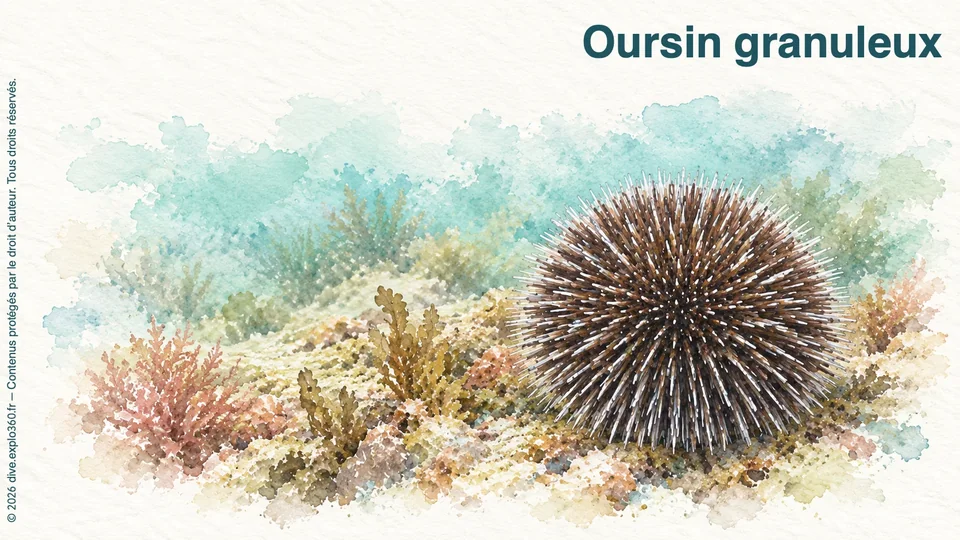
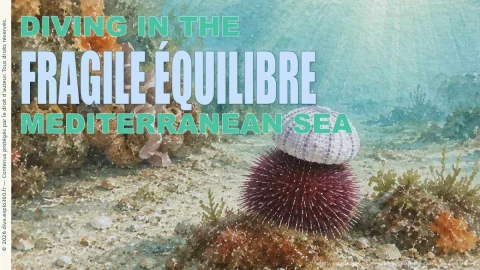
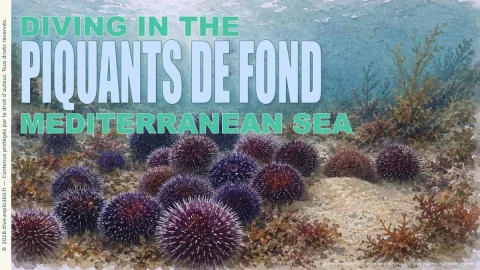
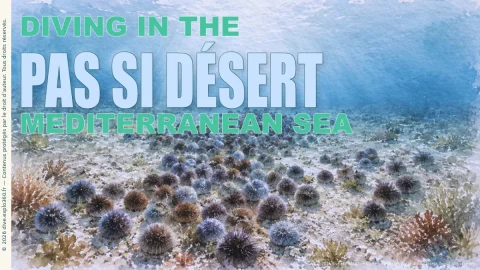
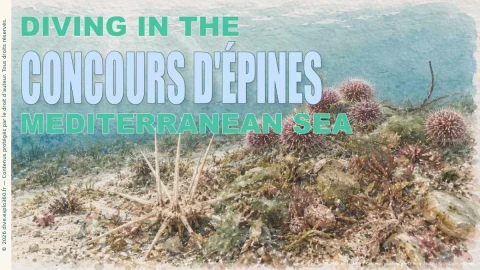
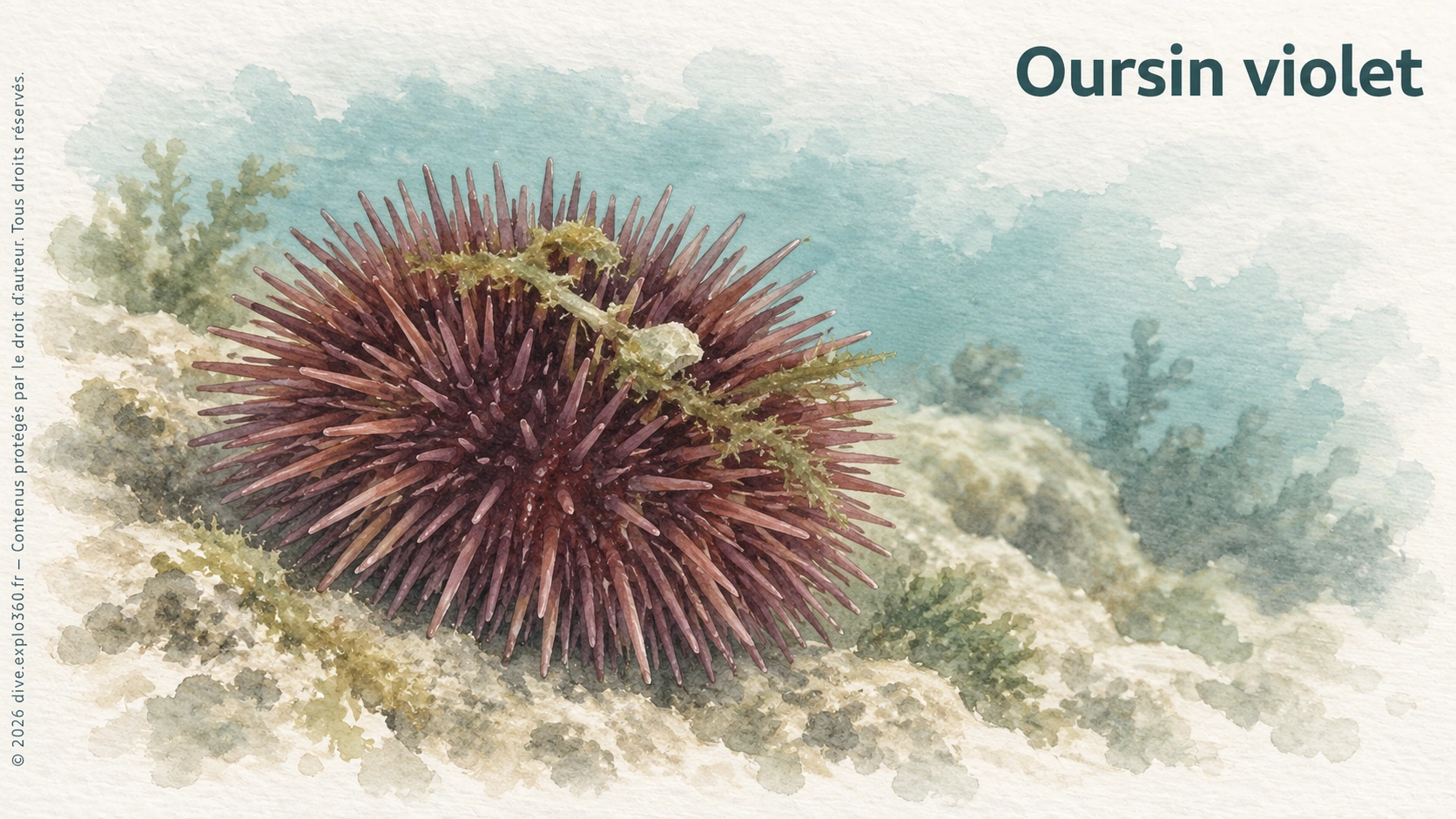
The blunt spine tips give the violet sea urchin (Sphaerechinus granularis) a compact appearance. Short and closely packed, they cover a rounded, fairly high body. Violet, pink or red tones may be dotted with white at the ends.
The outline is sometimes obscured by pieces of algae, leaves or shell covering the top. These then hide part of the natural pattern.
WHERE DOES IT LIVE?
It lives on varied seabeds, often made of sand, gravel or shell debris, but also near rocky areas. It occurs from shallow water to deeper areas.
WHAT DOES IT EAT?
The blunt sea urchin grazes surfaces covered by encrusting algae. In Neptune grass beds it also finds dead leaves and algae growing on them; rhizomes may be eaten when accessible. Its plant-based diet uses tissues of different kinds and positions, against rock or among leaf debris. The mouth beneath the body takes food. An urchin in seagrass is therefore not necessarily eating living leaves; its meal may be associated algae or dead plant material.
GO FURTHER WITH AMIGANSEAU
Unlock the full profile
Deepen your knowledge with the exclusive chapters and interactive resources included in an AMIGANSEAU licence.
- HOW DOES IT REPRODUCE?
- OUR OBSERVATIONS
- ARTICLE
Also included in the full profile
- Advanced navigation between description, ecological context, observations and behaviour
- Interactive food chain to explore the species’ feeding relationships
- Infographic and illustrated summary profile


 Understand the species