


 Habitat
 Depth
 Group
 Role
WHAT DOES IT LOOK LIKE?
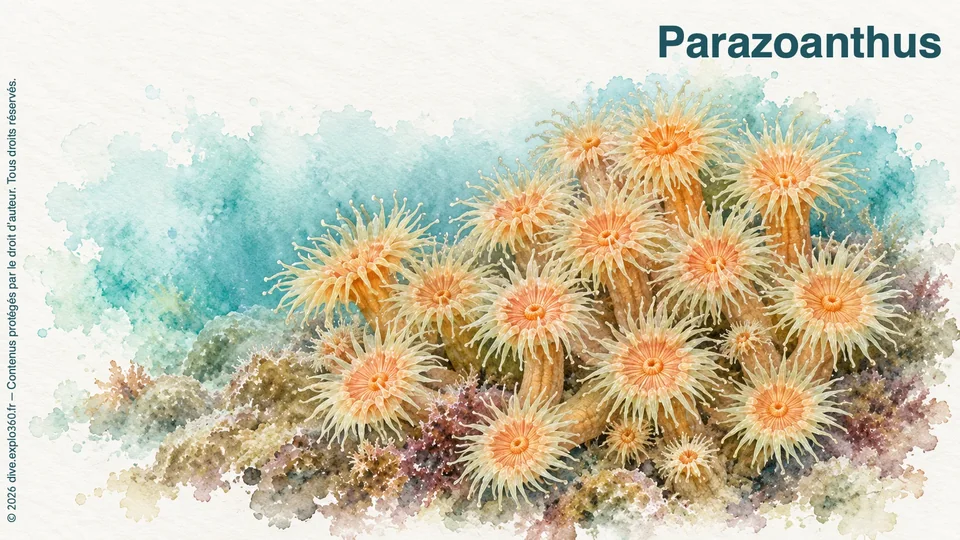
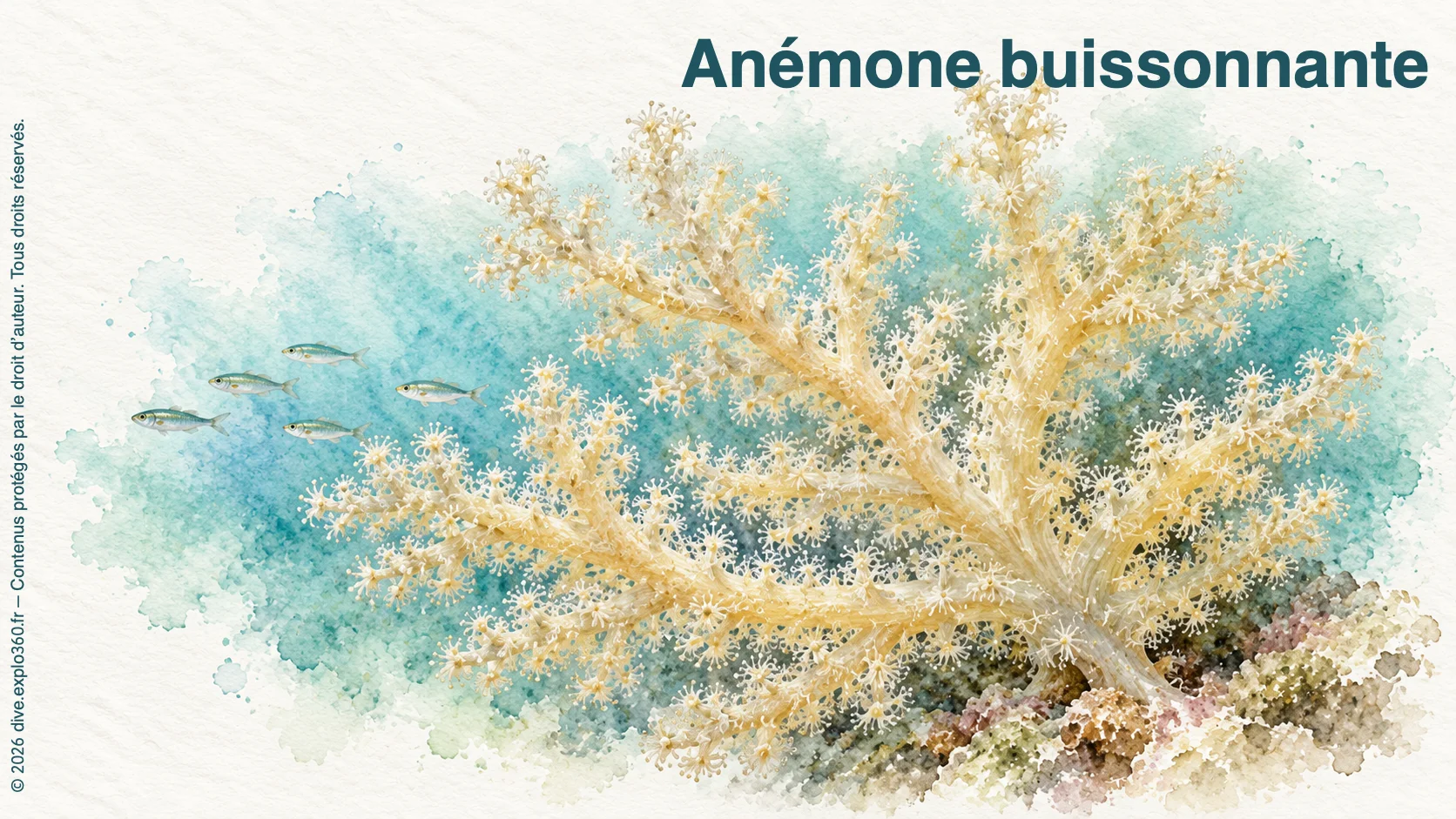
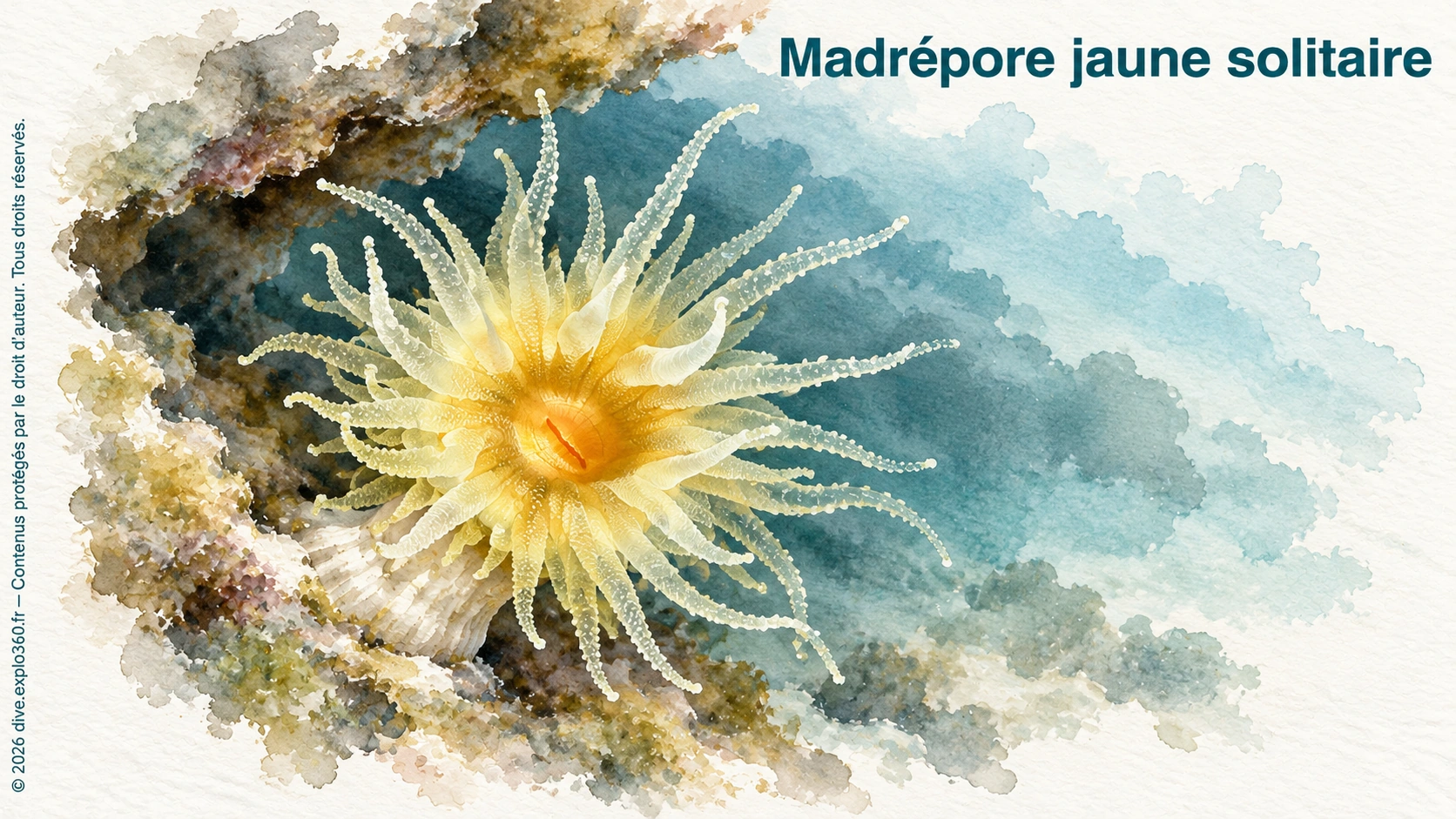
The crowns of the yellow cluster anemone (Parazoanthus axinellae) open like small yellow to orange flowers. Each polyp, the small animal making up the colony, has a tubular body topped with fine tentacles in two rows.
The crown’s centre marks the mouth. When many polyps are extended, the tubes merge visually into a dense carpet of tentacles.
WHERE DOES IT LIVE?
It develops on hard supports such as rocks, drop-offs or walls, often in dimly lit areas. It is frequently found beneath overhangs or at cavity entrances, where currents bring food.
WHAT DOES IT EAT?
The yellow crowns of this encrusting anemone are feeding structures. Currents deliver minute zooplankton; contact with tentacles triggers stinging cells that help retain prey before transfer to the mouth. Each polyp captures and digests small animals. When a colony covers a sponge, the scene can be misleading: the sponge is a support while food comes from water. Feeding occurs around the extended tentacles.
GO FURTHER WITH AMIGANSEAU
Unlock the full profile
Deepen your knowledge with the exclusive chapters and interactive resources included in an AMIGANSEAU licence.
- HOW DOES IT REPRODUCE?
- OUR OBSERVATIONS
- ARTICLE
Also included in the full profile
- Advanced navigation between description, ecological context, observations and behaviour
- Interactive food chain to explore the species’ feeding relationships
- Infographic and illustrated summary profile
- Additional photographic observations
 Understand the species