Habitat
 Depth
 Group
 Role
WHAT DOES IT LOOK LIKE?
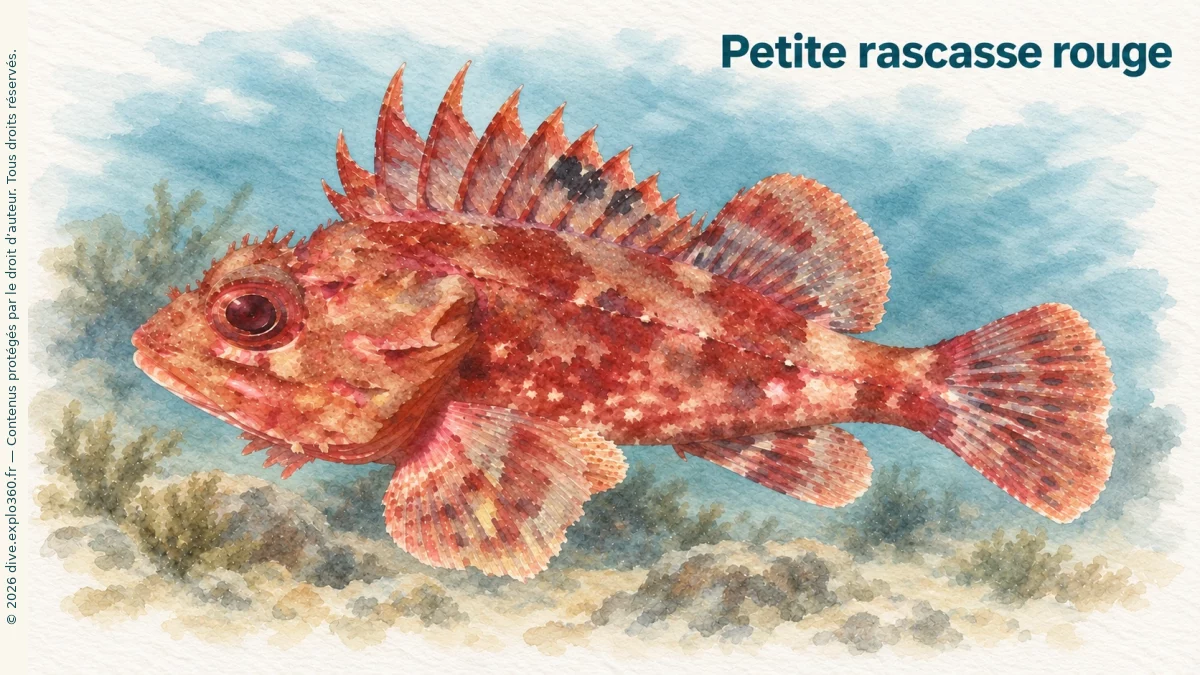
The small red scorpionfish generally measures around fifteen centimetres. Its strong, rounded, spiny head has large eyes and a wide mouth. Fairly large scales and skin flaps cover the body.
The appendages above the eyes are very short. This is a useful way to distinguish it from the black scorpionfish, which has long flaps there. Colour ranges from red to brown; a black dorsal-fin spot or pale band behind the head may add to the pattern but is not always visible.
WHERE DOES IT LIVE?
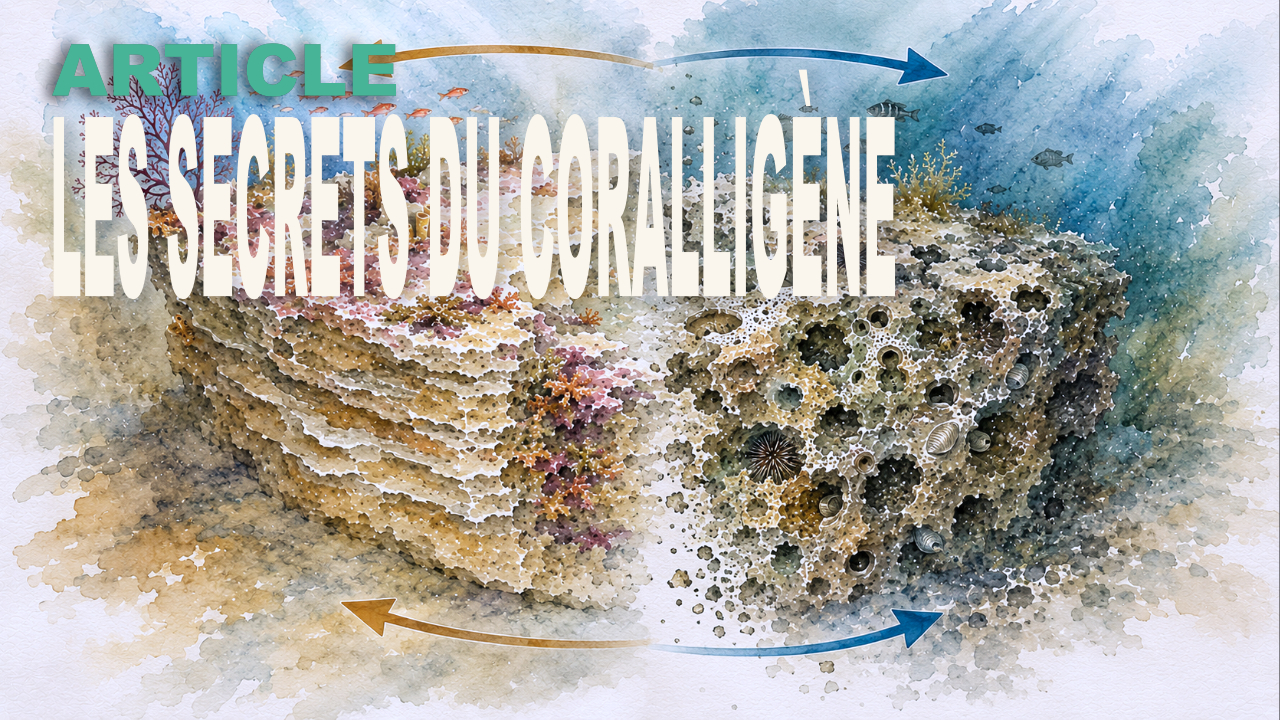
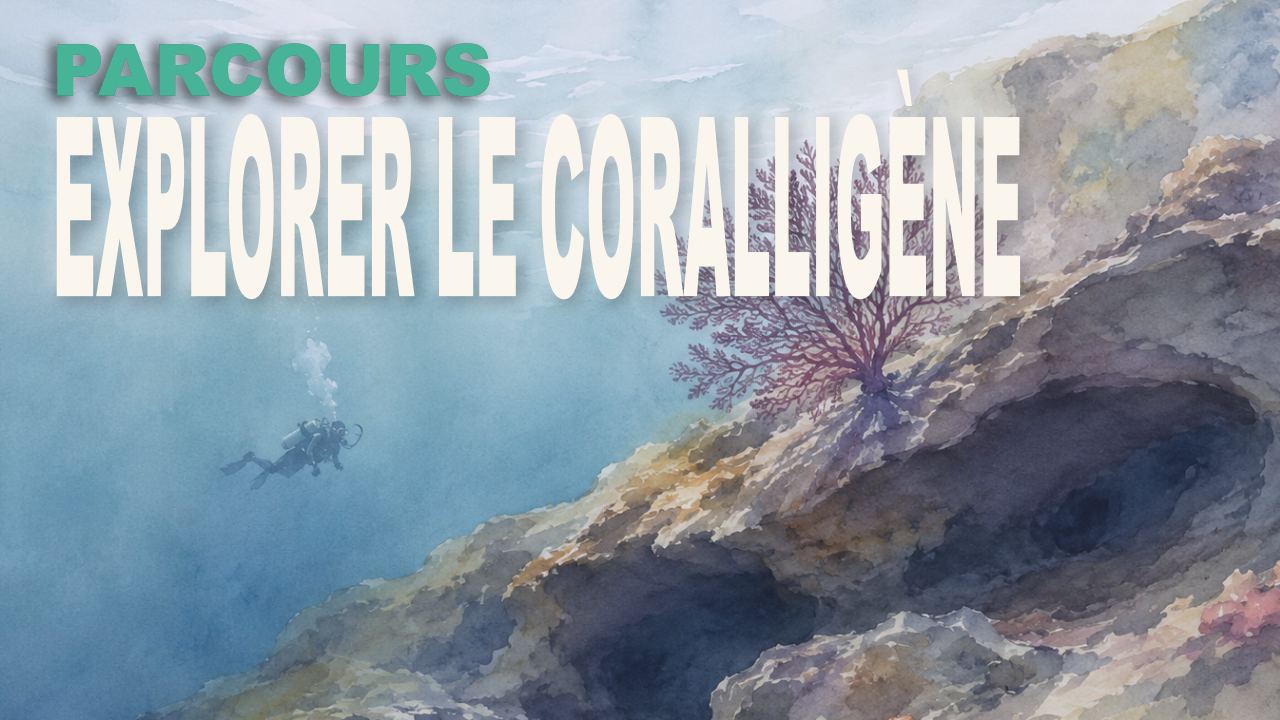
It occurs on rock, in cavities, near caves and on coralligenous formations, structures built partly by lime-producing algae. It also uses seabeds rich in red algae. It can be abundant in these habitats from around twenty metres down.
Its range includes the Mediterranean and eastern Atlantic. It occupies varied seabeds: diving encounters represent only some of the habitats used by the species.
WHAT DOES IT EAT?
It eats mainly crustaceans and also catches small fishes. Its mouth is protrusible, meaning it can extend forwards during capture. It hunts by ambush rather than after a lengthy chase.
A study in the eastern Adriatic found that smaller individuals mainly ate tiny crustaceans, while larger ones took more crabs, shrimps and fishes. The menu therefore changes with size.
GO FURTHER WITH AMIGANSEAU
Unlock the full profile
Deepen your knowledge with the exclusive chapters and interactive resources included in an AMIGANSEAU licence.
- HOW DOES IT REPRODUCE?
- OUR OBSERVATIONS
- ARTICLE
Also included in the full profile
- Advanced navigation between description, ecological context, observations and behaviour
- Interactive food chain to explore the species’ feeding relationships