Habitat
 Depth
 Group
 Role
WHAT DOES IT LOOK LIKE?
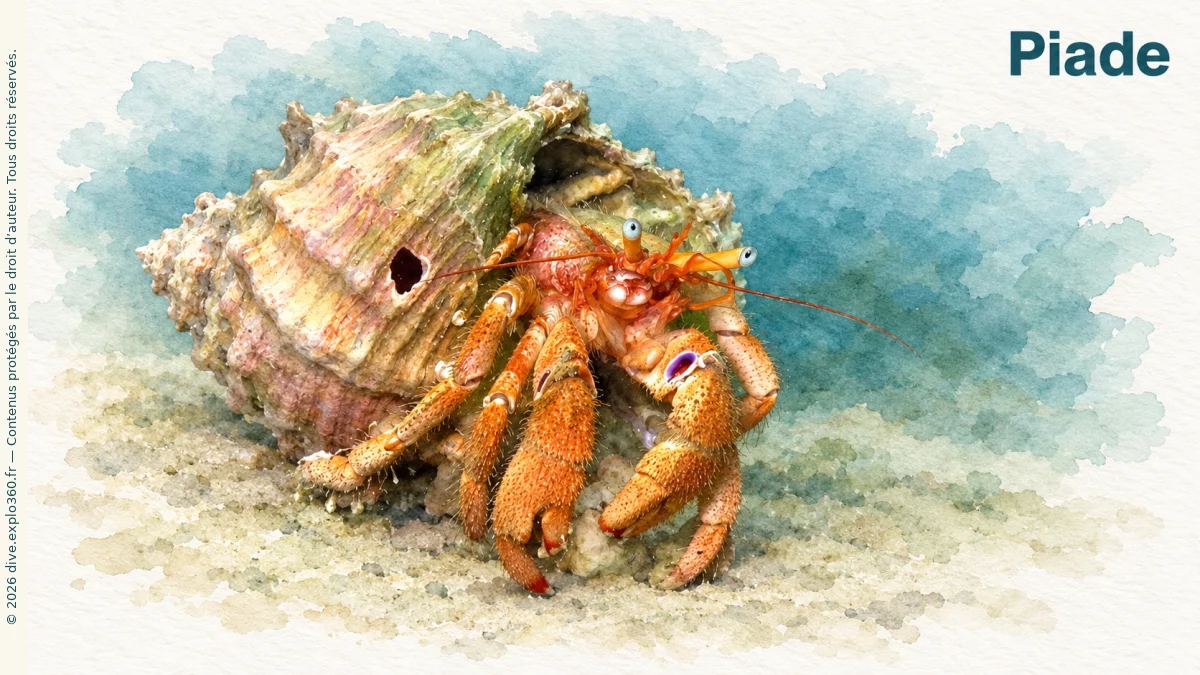
This medium-sized hermit crab measures around five to eight centimetres including legs and claws. Visible parts are brown to orange-red, with small granules and short hairs. The two claws are similar in size, the left being slightly larger.
Grey-blue eyes sit on long peduncles, movable yellow-orange to reddish stalks. A rounded blue-violet mark lies on the inner surface of each claw-bearing arm. This ocellus, an eye-like spot, is useful when the animal’s position allows it to be seen.
WHERE DOES IT LIVE?
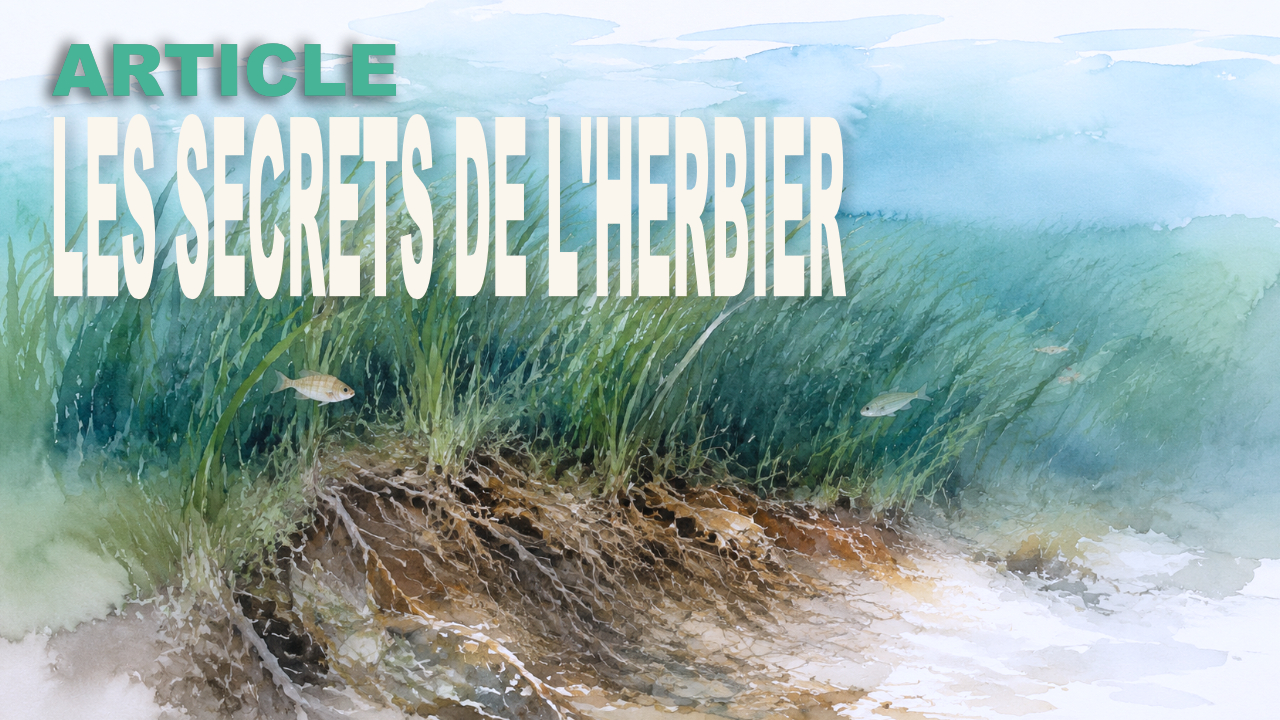
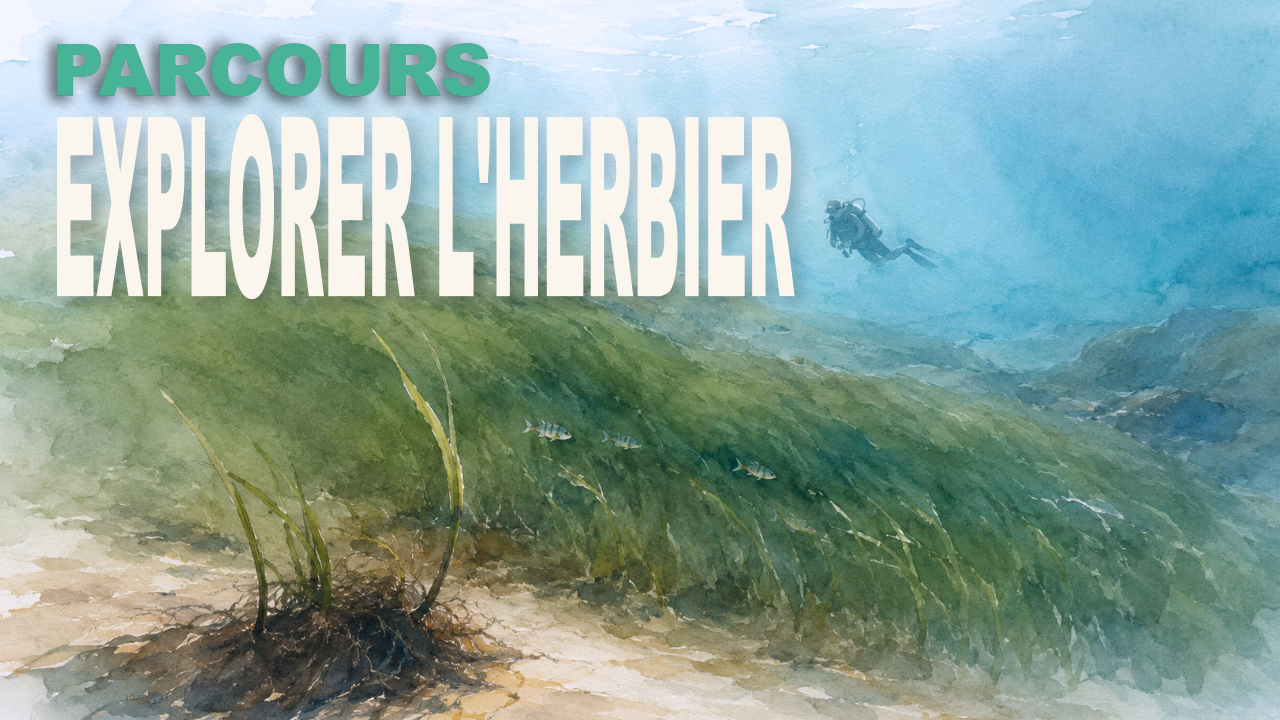
It uses sandy, muddy and debris-rich seabeds, as well as Posidonia seagrass. It is often observed between ten and fifty metres. Some encounters are much shallower, including in lagoons such as the Thau lagoon.
Its range includes the Mediterranean and nearby Atlantic. A gastropod shell, left by a mollusc such as a sea snail, protects its abdomen. Organisms growing on it alter the housing’s appearance, sometimes hiding the shell itself.
WHAT DOES IT EAT?
It is a detritivore: it eats remains of animals or plants. The claws grasp fragments and bring them towards the mouth. It thereby uses organic material available on the seabed.
Their presence represents optional cohabitation between organisms.
GO FURTHER WITH AMIGANSEAU
Unlock the full profile
Deepen your knowledge with the exclusive chapters and interactive resources included in an AMIGANSEAU licence.
- HOW DOES IT REPRODUCE?
- OUR OBSERVATIONS
- ARTICLE
Also included in the full profile
- Advanced navigation between description, ecological context, observations and behaviour
- Interactive food chain to explore the species’ feeding relationships