Habitat
 Depth
 Group
 Role
 Average size
WHAT DOES IT LOOK LIKE?
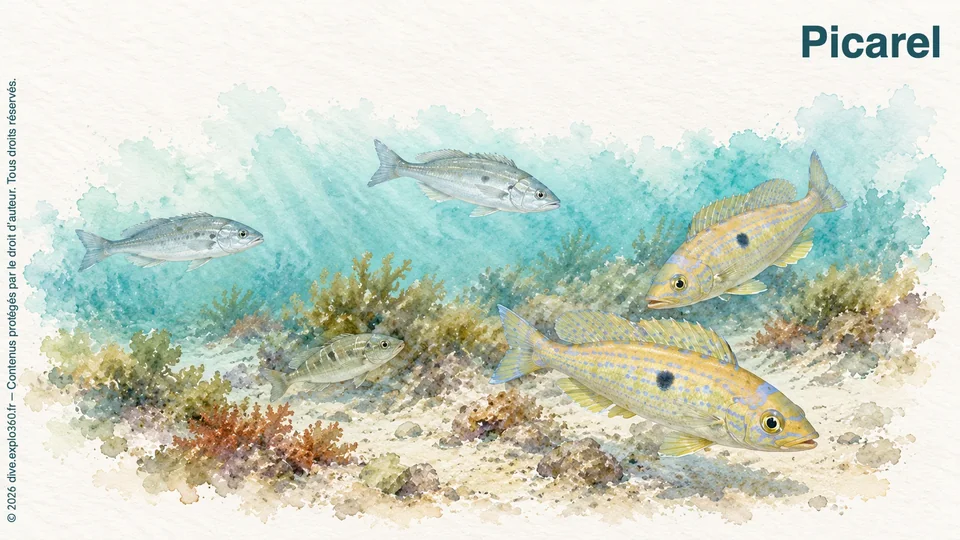
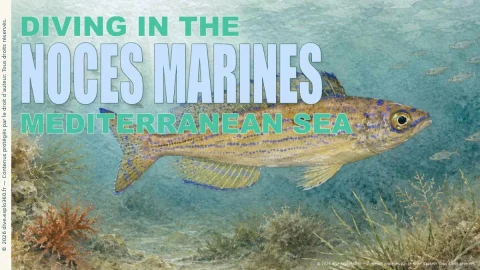
The slenderness of the picarel (Spicara smaris) continues into an elongated head and a very pointed mouth. This can extend forwards, briefly changing the profile.
The rectangular black patch on the sides contrasts with grey, brownish, yellowish or silvery tones. Colour intensity varies between individuals and periods, with brighter males during breeding.
WHERE DOES IT LIVE?
It lives in shoals above different seabed types, whether sandy, rocky or covered in seagrass. It is often encountered between the surface and a few dozen metres deep. At night, it moves closer to the seabed and becomes less visible.
WHAT DOES IT EAT?
The picarel’s mouth can extend into a tube while taking food. It seizes small animals: zooplankton and bottom-associated invertebrates, including crustaceans, molluscs and worms. It uses food scattered in water and food close to surfaces. Small captures punctuate its movements and are often less conspicuous than the school itself. Both food sources matter; the picarel is neither exclusively benthic nor exclusively plankton-feeding.
GO FURTHER WITH AMIGANSEAU
Unlock the full profile
Deepen your knowledge with the exclusive chapters and interactive resources included in an AMIGANSEAU licence.
- HOW DOES IT REPRODUCE?
- OUR OBSERVATIONS
- ARTICLE
Also included in the full profile
- Advanced navigation between description, ecological context, observations and behaviour
- Interactive food chain to explore the species’ feeding relationships
- Infographic and illustrated summary profile
 Understand the species