


 Habitat
 Depth
 Group
 Role
 Size
 Good to know
WHAT DOES IT LOOK LIKE?
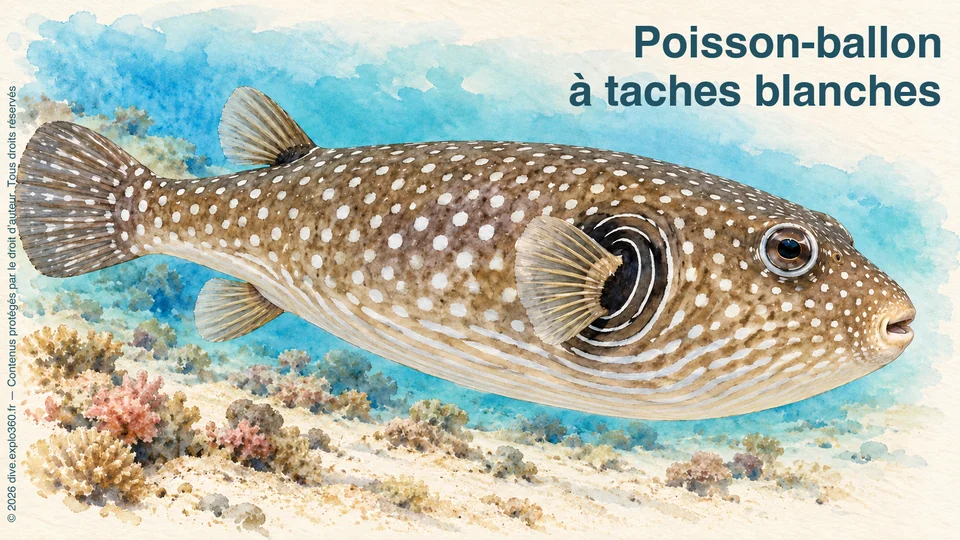
Pale rings and white spots make up the patterns of the white-spotted puffer (Arothron hispidus). The grey to brown body lightens on the belly, crossed by white lines. The little rear fins remain inconspicuous. It may reach 48 cm and lacks the long upright spines of porcupinefishes.
WHERE DOES IT LIVE?
It lives on mixed sandy and coral bottoms. It also occurs in seagrass beds, coastal bays and some estuaries.
The described range is 1–50 m. Juveniles (young animals) often use sheltered shallow water. It occurs in the Maldives, Red Sea and tropical Indian and Pacific oceans.
WHAT DOES IT EAT?
The white-spotted puffer’s beak supports a diverse diet. Algae accompany molluscs, crabs, sponges, tunicates and echinoderms, including some sea stars. Tube-dwelling worms and detritus are also consumed. Dental plates in both jaws bite food, including items with hard outer parts.
GO FURTHER WITH AMIGANSEAU
Unlock the full profile
Deepen your knowledge with the exclusive chapters and interactive resources included in an AMIGANSEAU licence.
- HOW DOES IT REPRODUCE?
- OUR OBSERVATIONS
- ARTICLE
Also included in the full profile
- Advanced navigation between description, ecological context, observations and behaviour
- Interactive food chain to explore the species’ feeding relationships
 Understand the species

