Habitat
 Depth
 Group
 Role
WHAT DOES IT LOOK LIKE?
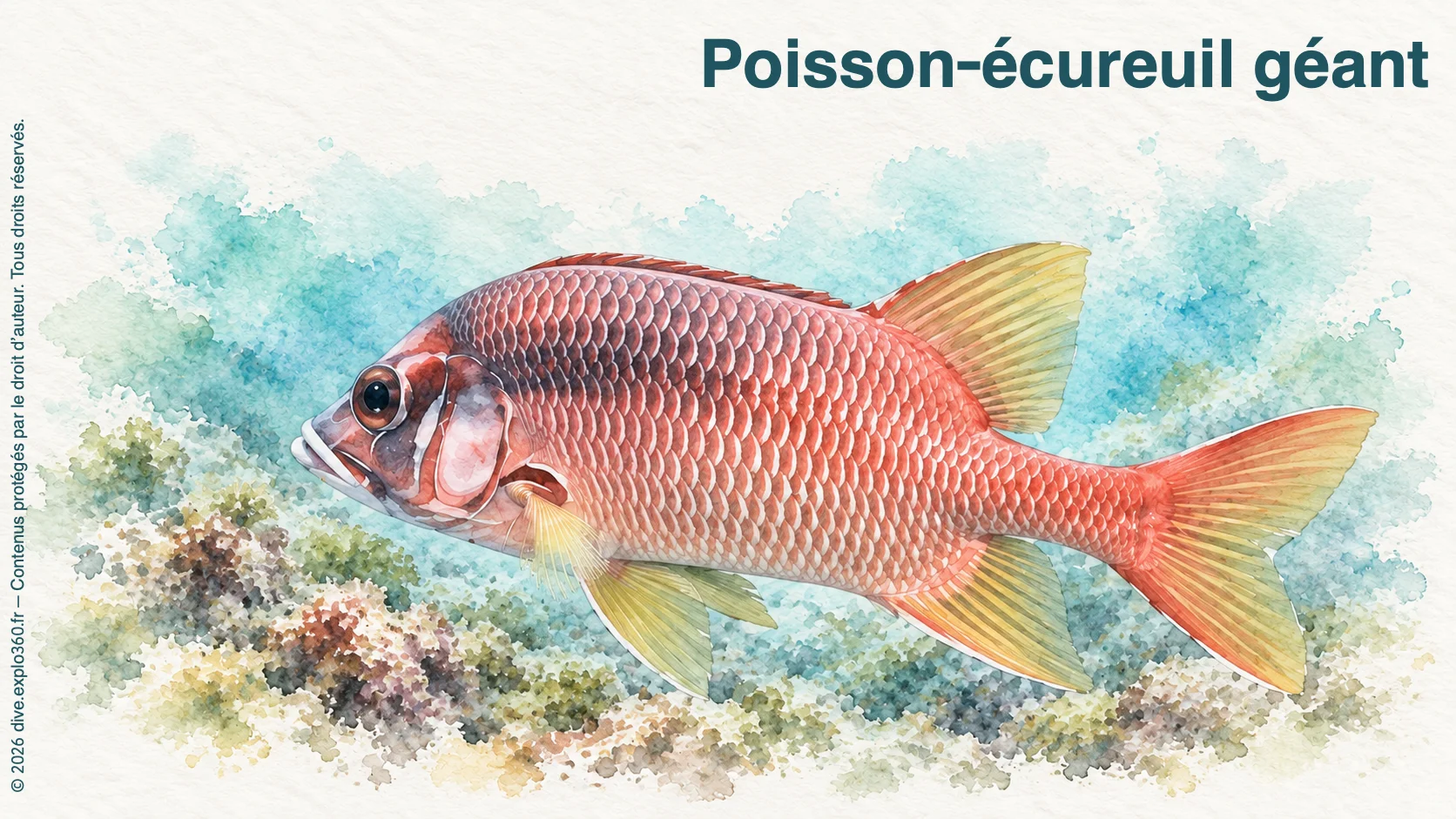
The deep, compressed orange-red body has large silver-edged scales and a darker mark behind the eye. A long preopercular spine is present. References report differing common sizes, with a published maximum around 51 cm.WHERE DOES IT LIVE?
It occupies coral reefs from lagoons to outer slopes, sheltering in shade by day. Juveniles use shallower water. Its natural distribution includes the Red Sea and tropical Indo-Pacific.WHAT DOES IT EAT?
Documented prey include crabs, shrimps and small fishes, caught mainly at night. Food groups are shown without assigning a particular prey species when references do not establish one.GO FURTHER WITH AMIGANSEAU
Unlock the full profile
Deepen your knowledge with the exclusive chapters and interactive resources included in an AMIGANSEAU licence.
- HOW DOES IT REPRODUCE?
- OUR OBSERVATIONS
Also included in the full profile
- Advanced navigation between description, ecological context, observations and behaviour
- Interactive food chain to explore the species’ feeding relationships
- Infographic and illustrated summary profile