


 Habitat
 Depth
 Group
 Role
 Average size
WHAT DOES IT LOOK LIKE?
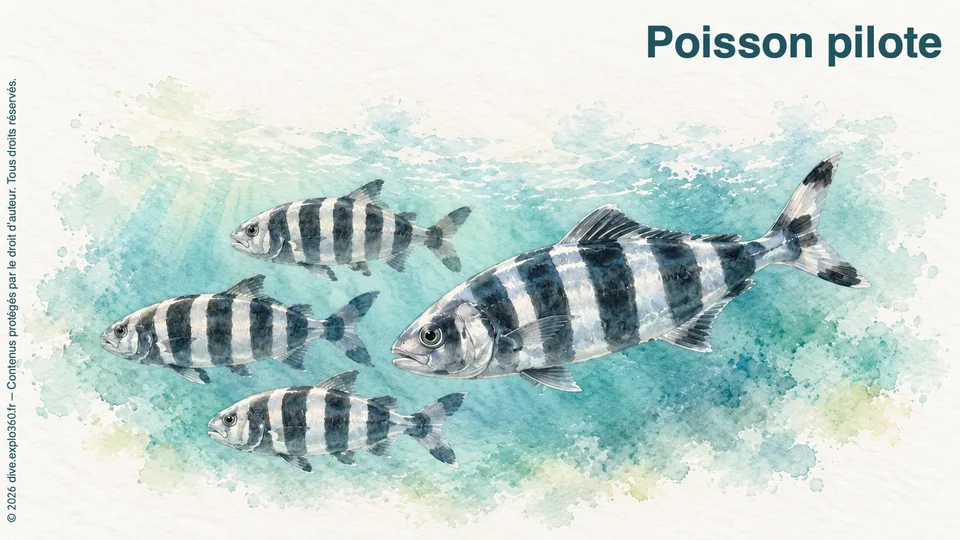
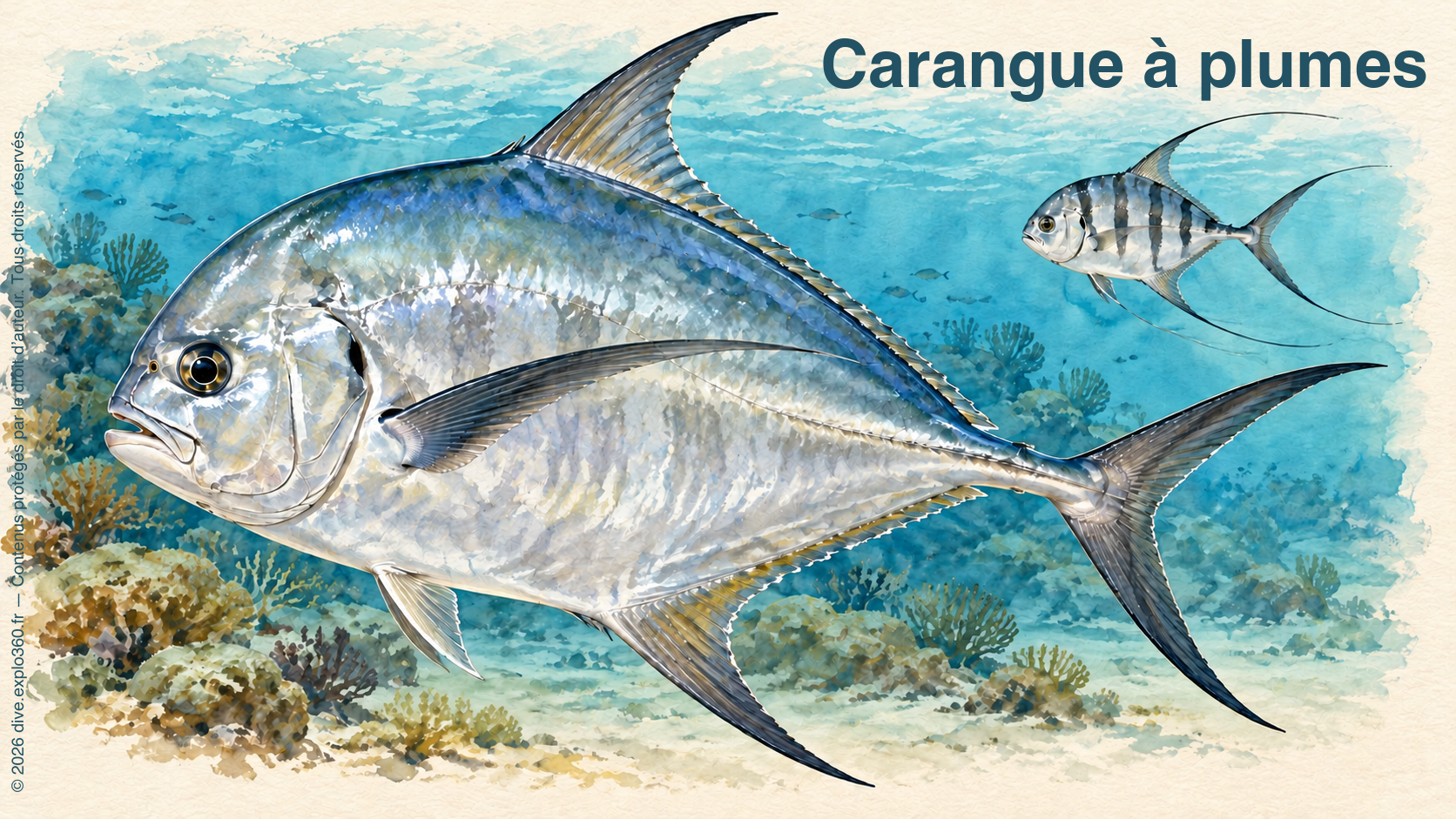
The dark bands of the pilotfish (Naucrates ductor) stripe the silvery body vertically. The slender body narrows towards the front and the tail base.
The tail is deeply forked, with white marks at both tips. This contrast continues the regular flank pattern.
WHERE DOES IT LIVE?
It mainly lives in the open sea, but may also be seen near the coast. It is frequently found near floating objects, buoys or the marine animals it accompanies.
WHAT DOES IT EAT?
Swimming near a large animal gives the pilotfish access to several foods: meal fragments, parasites and faecal material. Small fish and invertebrates are also eaten. Food does not all have the same origin; some depends on the companion’s activity, while other items are captured prey. This mixture means following a shark involves more than waiting for a dropped morsel at each meal.
GO FURTHER WITH AMIGANSEAU
Unlock the full profile
Deepen your knowledge with the exclusive chapters and interactive resources included in an AMIGANSEAU licence.
- HOW DOES IT REPRODUCE?
- OUR OBSERVATIONS
- ARTICLE
Also included in the full profile
- Advanced navigation between description, ecological context, observations and behaviour
- Interactive food chain to explore the species’ feeding relationships
- Infographic and illustrated summary profile
 Understand the species