


 Habitat
 Depth
 Group
 Role
 Average size
WHAT DOES IT LOOK LIKE?
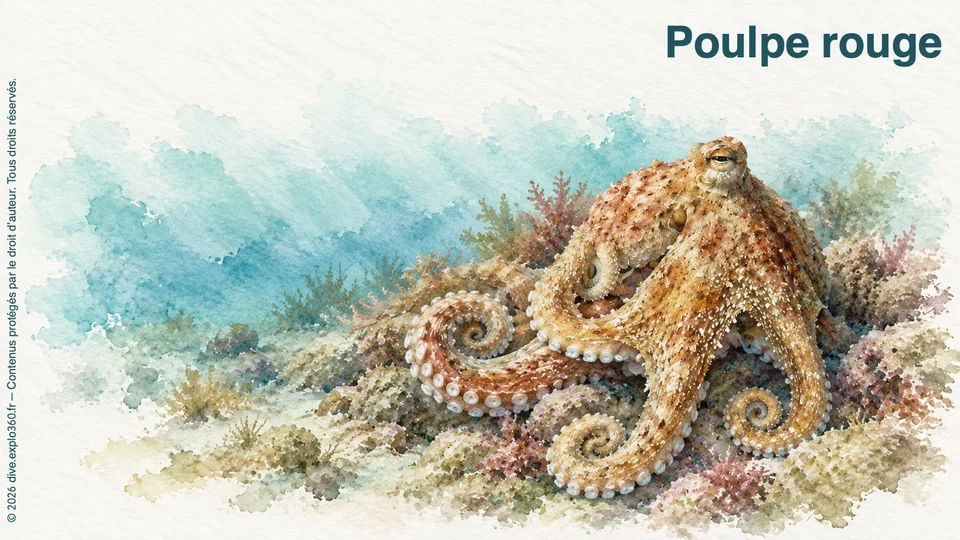
Very slender arms extend far beyond the body proportions of the white-spotted octopus (Callistoctopus macropus), giving it a stretched outline. White spots scatter across the red to reddish brown body and arms.
The skin can change shade rapidly. Small contrasting spots and arm length complete its outline, while colour alone is not decisive.
WHERE DOES IT LIVE?
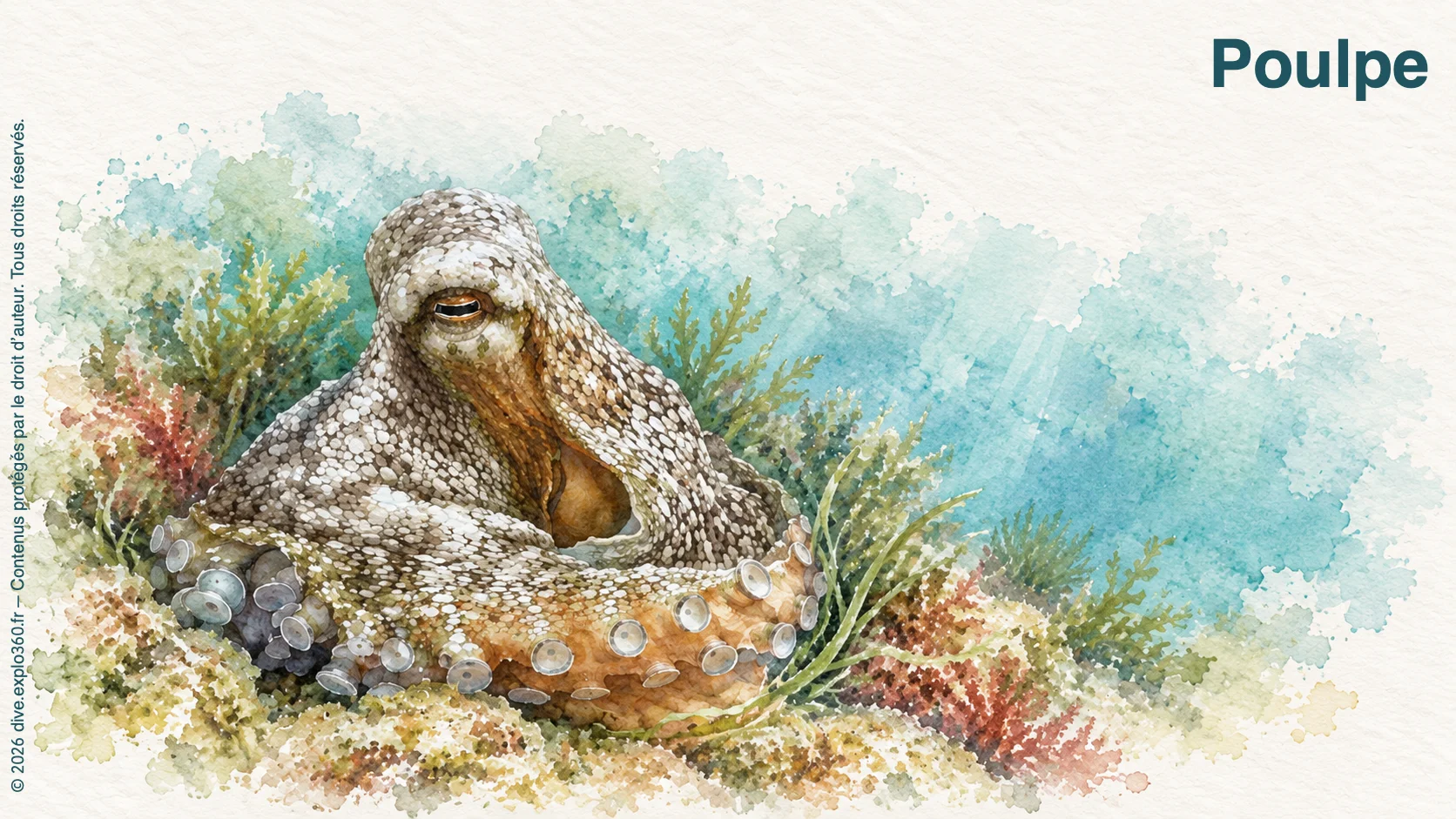
It frequents different seabed types, particularly sandy, rocky or seagrass-covered ones. Inconspicuous by day, it stays hidden in a shelter, beneath a stone or in a cavity, and becomes active at nightfall.
WHAT DOES IT EAT?
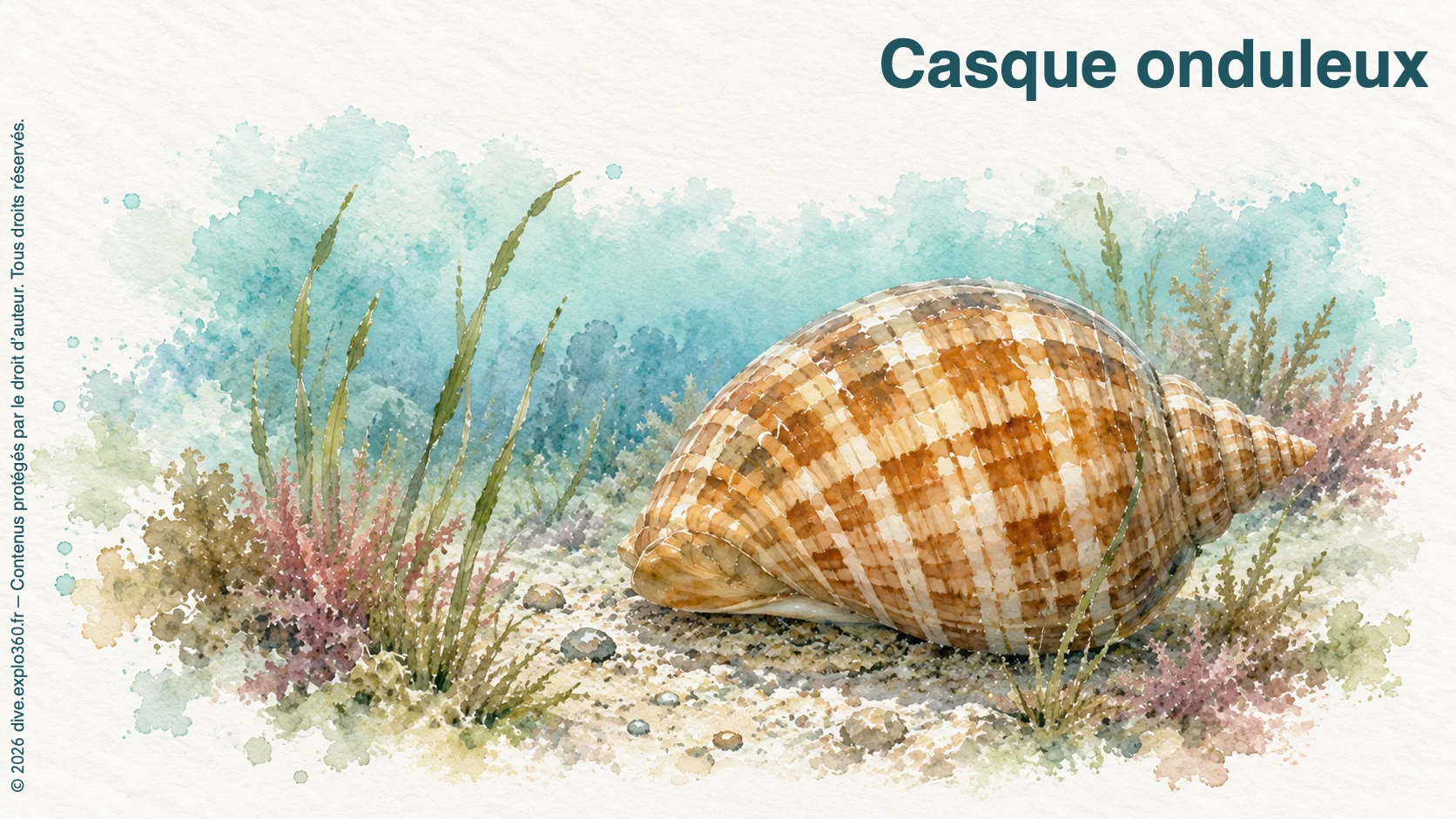
With arms spread over sand, the Atlantic white-spotted octopus explores the seabed at night. It can search for buried bivalves, hold them with its suckers and carry them to the den before eating. Crustaceans, fish and other octopuses also enter its menu. Shellfish are only part of its diet, but their collection provides a well-documented sequence: exploring a sandy patch, holding a catch beneath the arms and moving away with it. Night offers more opportunities to follow this activity than daytime encounters.
GO FURTHER WITH AMIGANSEAU
Unlock the full profile
Deepen your knowledge with the exclusive chapters and interactive resources included in an AMIGANSEAU licence.
- HOW DOES IT REPRODUCE?
- OUR OBSERVATIONS
- ARTICLE
Also included in the full profile
- Advanced navigation between description, ecological context, observations and behaviour
- Interactive food chain to explore the species’ feeding relationships
- Infographic and illustrated summary profile
 Understand the species
