


 Habitat
 Depth
 Group
 Role
 Average size
WHAT DOES IT LOOK LIKE?
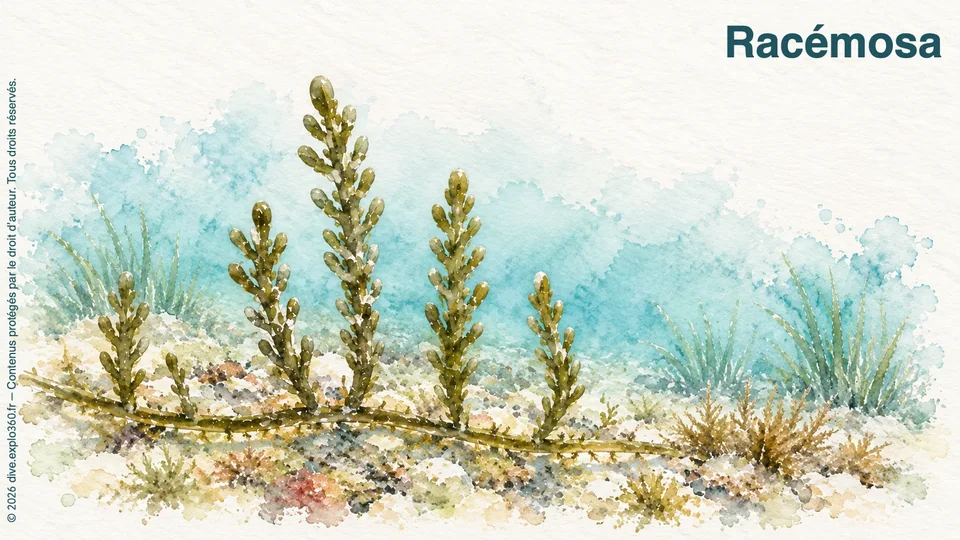
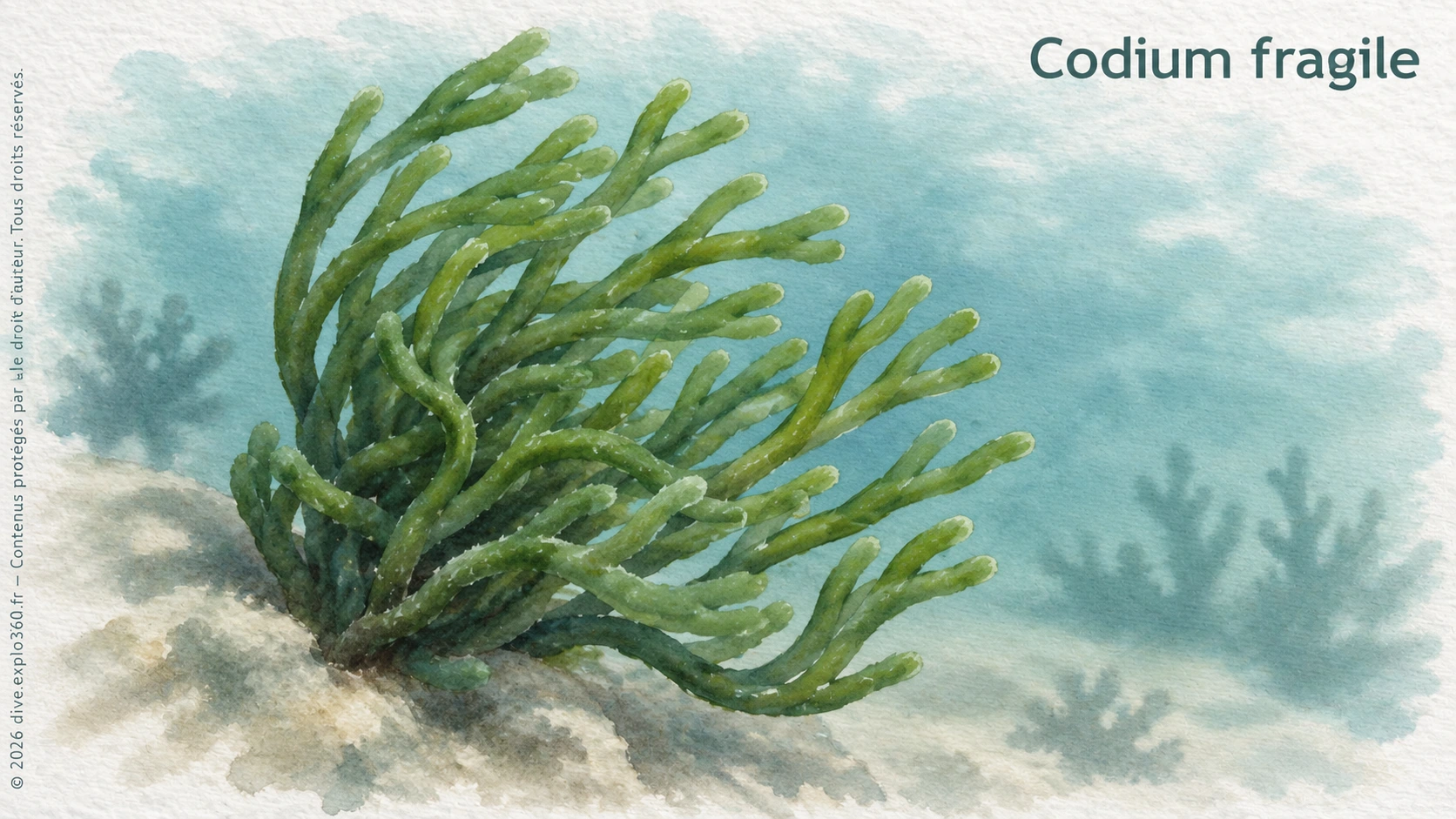
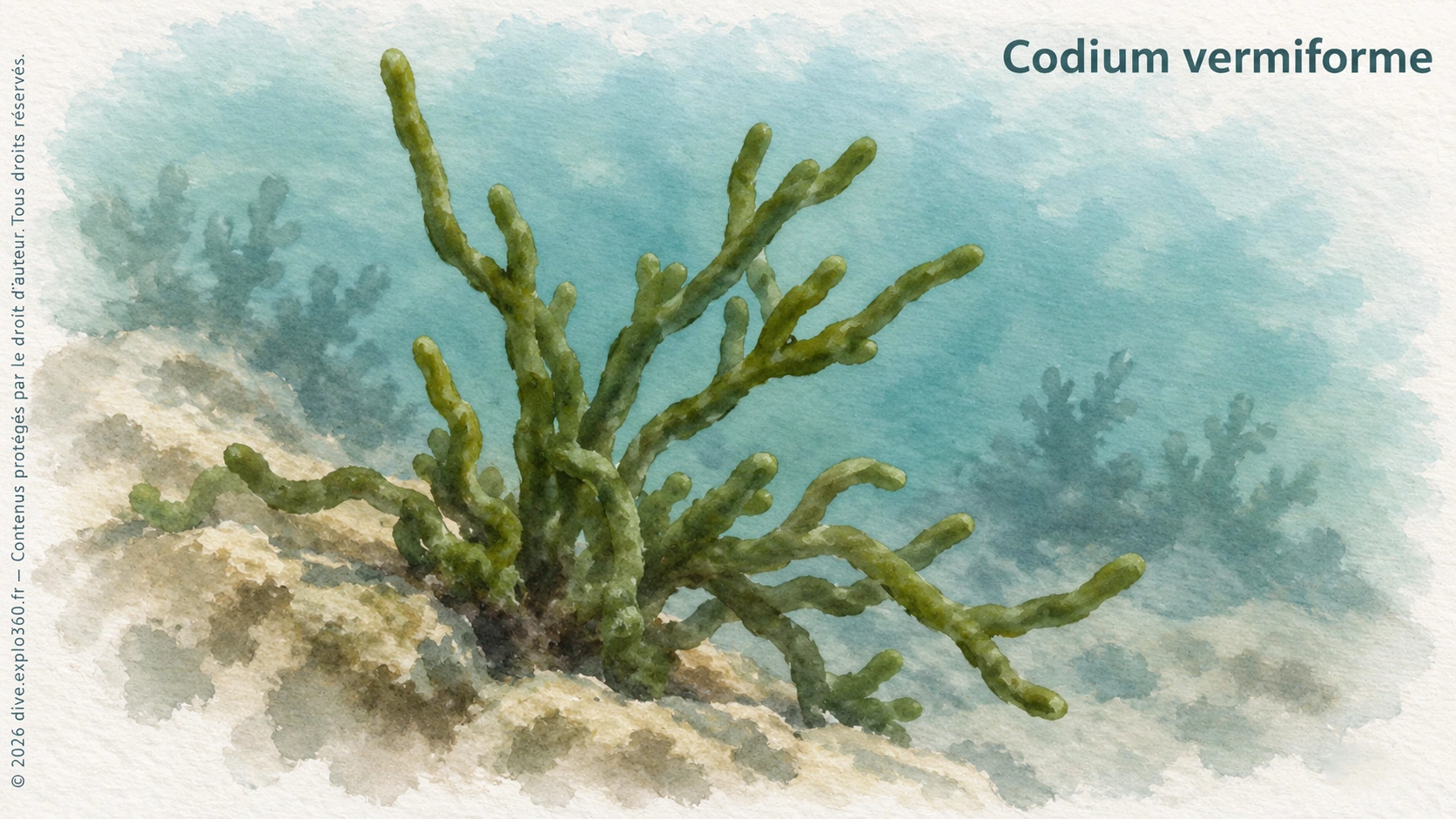
Swollen branchlets give grape caulerpa (Caulerpa cylindracea) the look of elongated grapes or little clubs. They line upright green axes, forming narrow bunches.
These axes are linked by a stolon, a creeping strand. Short rhizoids, the alga’s fine attachment filaments, anchor it to the surface. Closely packed upright parts give the whole growth a mat-like appearance.
WHERE DOES IT LIVE?
It colonises a wide variety of environments: rocks, seagrass beds and sandy or muddy seabeds, from shallow water down to several dozen metres. It tolerates varied conditions, including disturbed areas.
WHAT DOES IT EAT?
Grape caulerpa uses light to produce sugars from water and dissolved carbon. It also takes up nitrogen and phosphorus and redistributes resources through its thallus, the alga’s continuous body. Experiments show rapid nutrient uptake and reallocation. Under reduced illumination, pigments and photosynthetic performance can change. This adjustment modifies light use while retaining a need for light. Organic production and nutrient absorption together supply its growing parts.
GO FURTHER WITH AMIGANSEAU
Unlock the full profile
Deepen your knowledge with the exclusive chapters and interactive resources included in an AMIGANSEAU licence.
- HOW DOES IT REPRODUCE?
- OUR OBSERVATIONS
- ARTICLE
Also included in the full profile
- Advanced navigation between description, ecological context, observations and behaviour
- Interactive food chain to explore the species’ feeding relationships
- Infographic and illustrated summary profile
 Understand the species