AMIGANSEAU Explorer – Personal
Strictly for private and family use.
This profile is available under the personal licence. Any professional, commercial, association, institutional or training use requires an appropriate licence.
Distribution : Red Sea, Indian Ocean and tropical Pacific. The Atlantic spotted eagle ray belongs to another species.
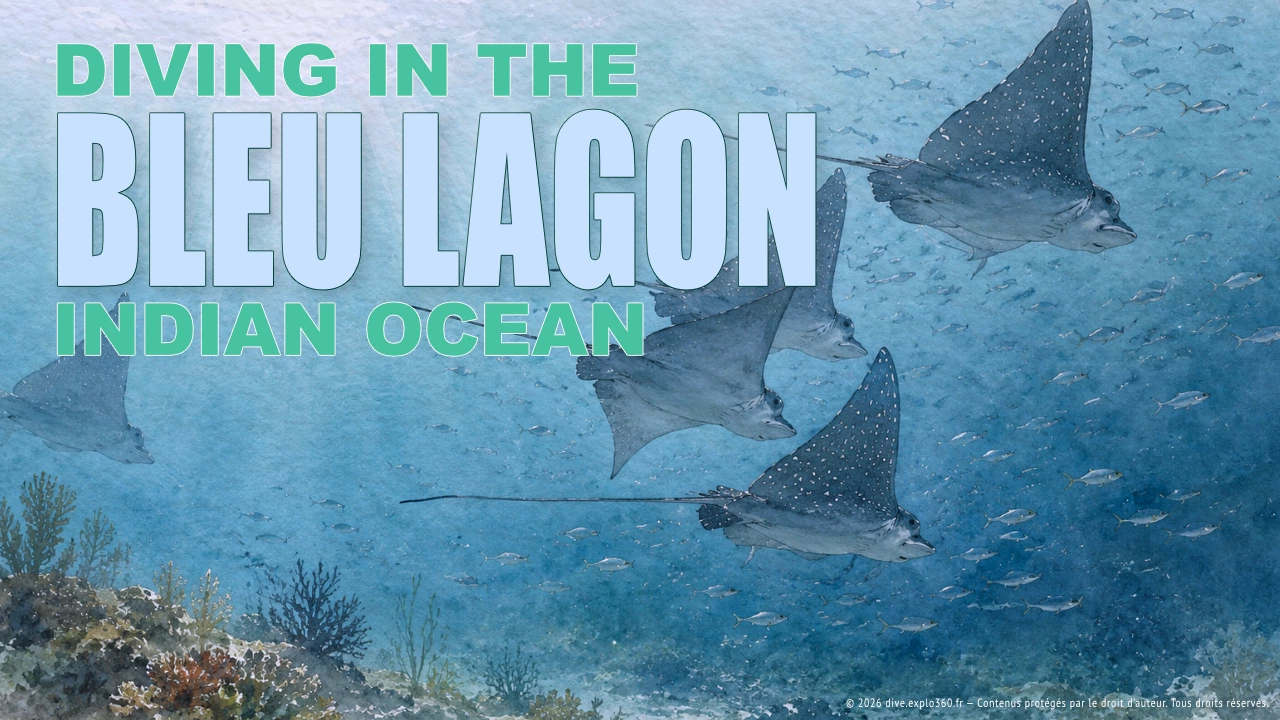
A group of eagle rays resembles underwater flight, yet feeding brings them back to the sand and the animals hidden there. This life linking the seabed and open water explains the demersal position used in the guide. Published records extend from the surface to about 80 metres.
Habitat
Open water, Sand, Coral reef
Depth
0-80 m
Group
Role
Predator
This level has not yet been published in this language. The French content is displayed.
WHAT DOES IT LOOK LIKE?
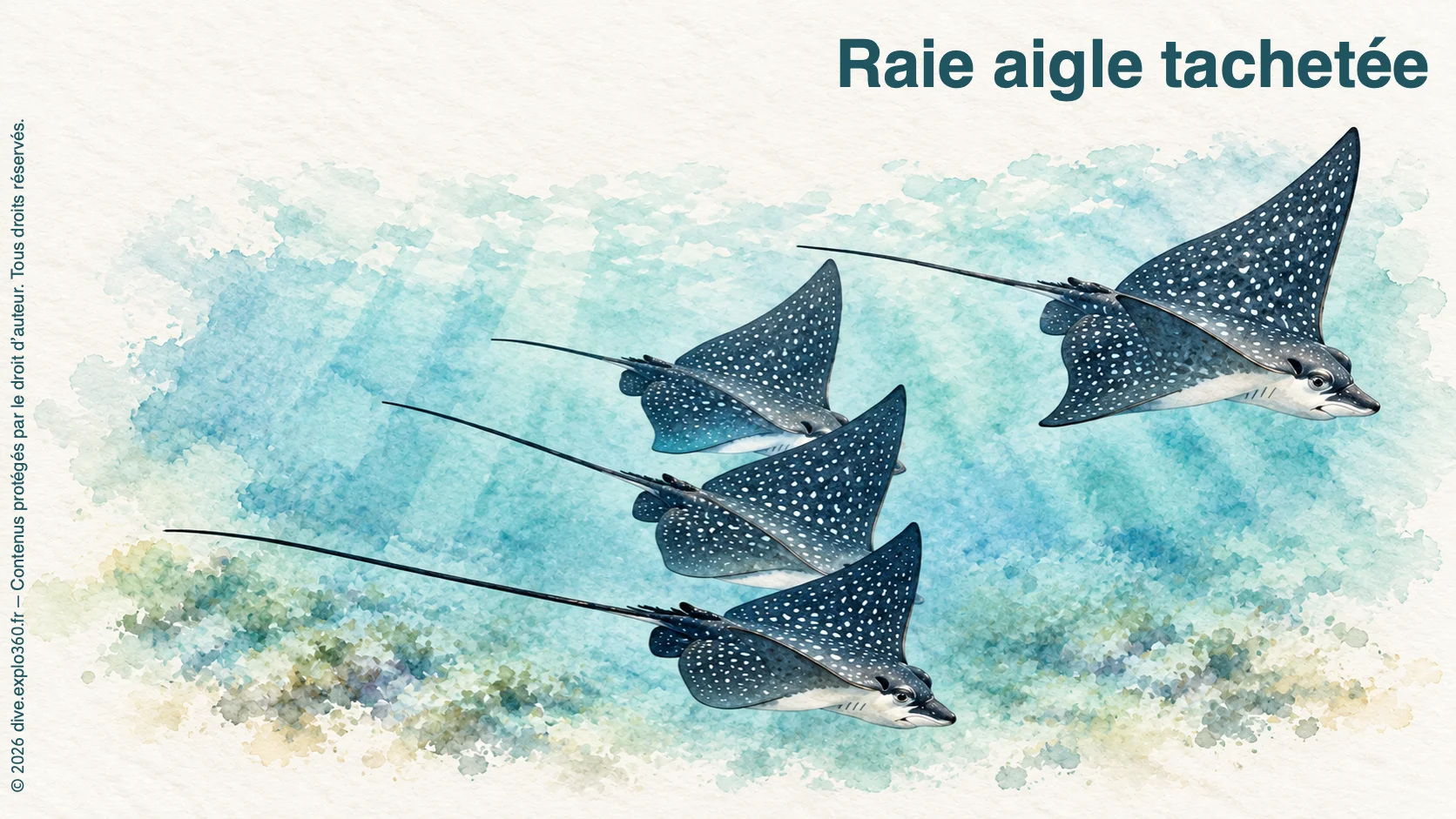
The diamond-shaped disc has a grey-to-brown upper surface with white spots or rings and a pale underside. The flattened snout resembles a duckbill. The thin tail carries spines near its base. Disc width of about 1.5 m is common; the reported maximum reaches 3.3 m.
WHERE DOES IT LIVE?
This ray occupies coastal waters, lagoons and reef margins while also crossing open-water areas. Feeding depends largely on the seabed. The retained species identity concerns the Indo-Pacific: older references applying one name to all spotted eagle rays require careful geographical interpretation.
WHAT DOES IT EAT?
Shelled molluscs and crabs are important prey. Documented food also includes worms, octopuses and fishes. The snout and underside mouth help search for buried animals, which dental plates then crush. The filmed passage shows travelling rather than feeding.
GO FURTHER WITH AMIGANSEAU
Unlock the full profile
Deepen your knowledge with the exclusive chapters and interactive resources included in an AMIGANSEAU licence.



 Habitat
 Depth
 Group
 Role