


 Habitat
 Depth
 Group
 Role
 Average size
WHAT DOES IT LOOK LIKE?
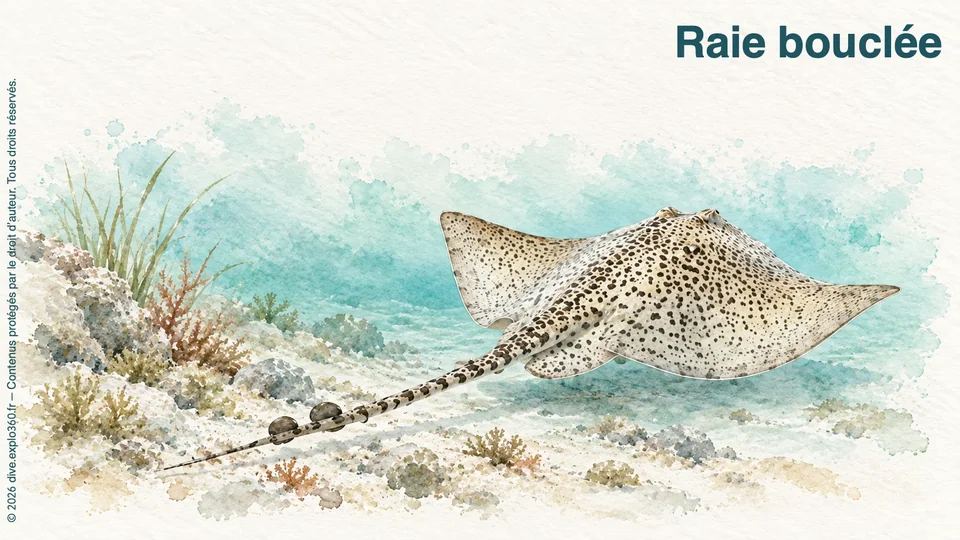
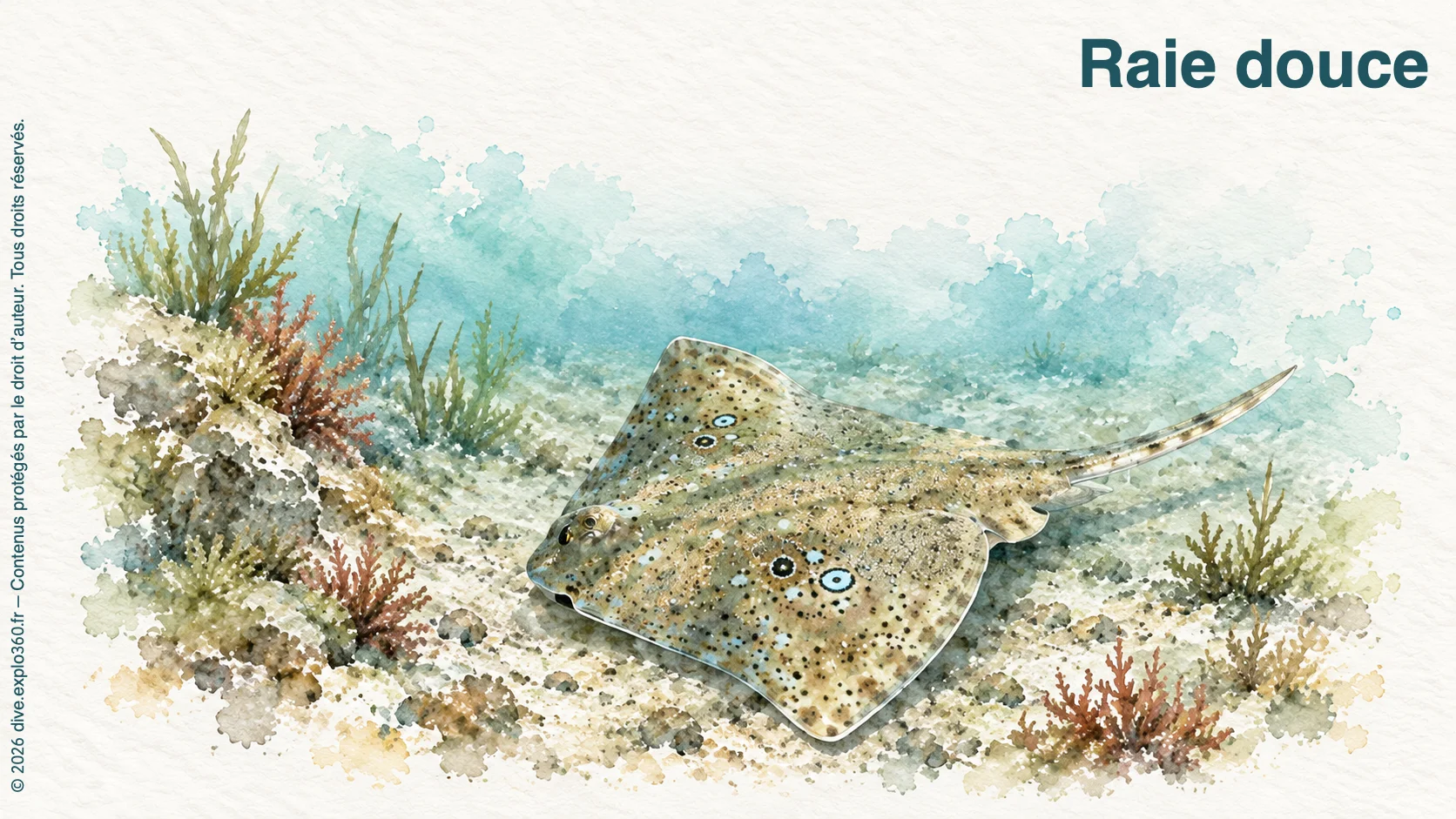
The large thorns of the thornback ray (Raja clavata) curve back from broad oval bases. They lie irregularly across adult backs, adding to the rough appearance of the skin.
The diamond-shaped body is greyish to brown, patterned with dark and yellowish spots. A short pointed snout marks the front; behind, pale and dark tail rings accompany two small fins.
WHERE DOES IT LIVE?
It lives on continental-shelf seabeds, most often between a few metres and about one hundred metres deep, but can descend farther. It mainly frequents soft seabeds such as sand, mud or gravel, where it can conceal itself.
WHAT DOES IT EAT?
Crabs, shrimps, molluscs and small fish make up thornback ray meals. Predator size influences their balance: small rays use many small crustaceans, then gain access to a broader prey range. Ambush hunting is documented, but digestive remains show food extending beyond stationary sediment animals. Geographic differences also matter. Large rays may continue to consume many crabs, while fish become more important elsewhere. Growth broadens feeding opportunities without producing the same adult menu everywhere.
GO FURTHER WITH AMIGANSEAU
Unlock the full profile
Deepen your knowledge with the exclusive chapters and interactive resources included in an AMIGANSEAU licence.
- HOW DOES IT REPRODUCE?
- OUR OBSERVATIONS
- ARTICLE
Also included in the full profile
- Advanced navigation between description, ecological context, observations and behaviour
- Interactive food chain to explore the species’ feeding relationships
- Infographic and illustrated summary profile
 Understand the species