


 Habitat
 Depth
 Group
 Role
 Average size
WHAT DOES IT LOOK LIKE?
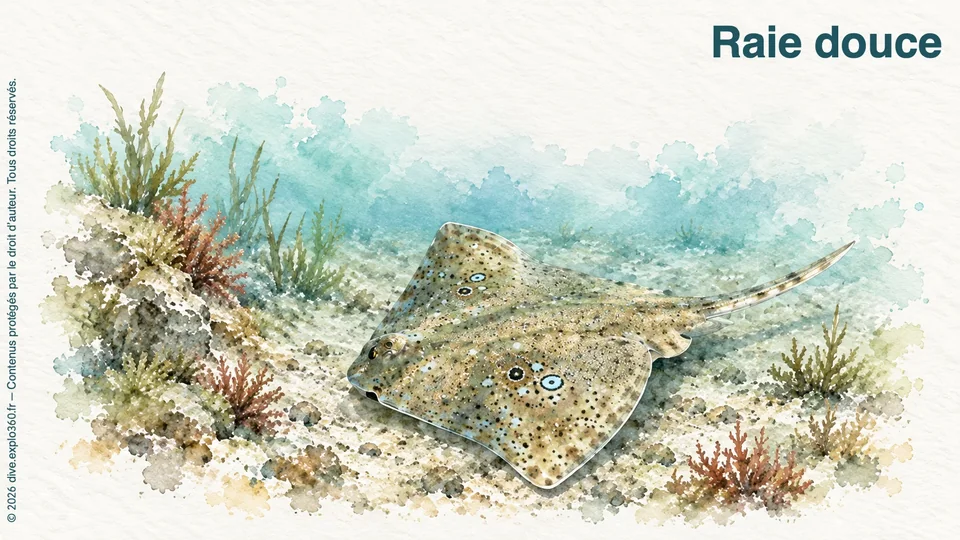
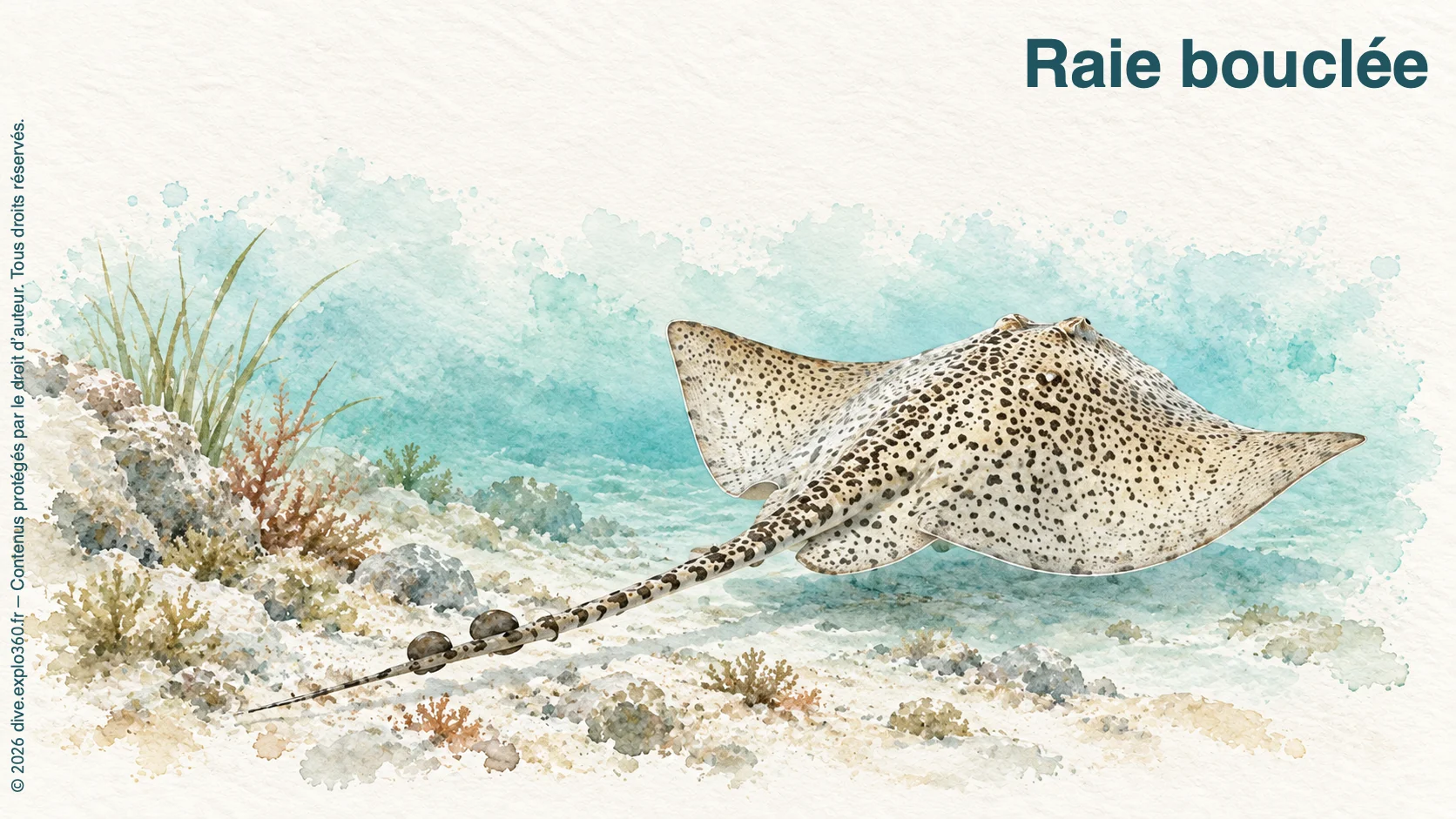
An unspotted disc margin adds detail to the spotted ray (Raja montagui). Against beige to greyish brown colouring, dark marks stop before the wing outline; some form a ring around a pale area.
The disc, the flattened body and side fins together, makes a diamond shape. The snout projects into a modest point, and the slender tail carries two small fins on top.
WHERE DOES IT LIVE?
It lives on soft seabeds such as sand, mud or detrital bottoms, generally between a few metres and more than one hundred metres deep. It frequents continental-shelf areas where it can easily conceal itself.
WHAT DOES IT EAT?
Shrimps are prominent in small spotted rays’ meals. With growth, prey becomes more diverse and includes more crabs and fish. Northeast Atlantic and Mediterranean studies demonstrate the importance of these animal resources, with proportions varying among samples. Some prey is closely associated with the seabed; other animals, such as small fish, move above it. Feeding therefore involves more than collection from sediment. Ray size and region help explain the menu without identifying the prey taken in every capture.
GO FURTHER WITH AMIGANSEAU
Unlock the full profile
Deepen your knowledge with the exclusive chapters and interactive resources included in an AMIGANSEAU licence.
- HOW DOES IT REPRODUCE?
- OUR OBSERVATIONS
- ARTICLE
Also included in the full profile
- Advanced navigation between description, ecological context, observations and behaviour
- Interactive food chain to explore the species’ feeding relationships
- Infographic and illustrated summary profile
 Understand the species